The Idemitsu Maru, carrying about 2 million barrels of Saudi crude, became the first Japan-linked crude tanker to cross the Strait of Hormuz since the conflict began. Japan depends heavily on Middle East oil.
First tankers slip through Hormuz Strait in oil lifeline to Asia
China and Japan cargoes test waters as Hormuz slowly reopens after conflict
Last updated:
2 MIN READ
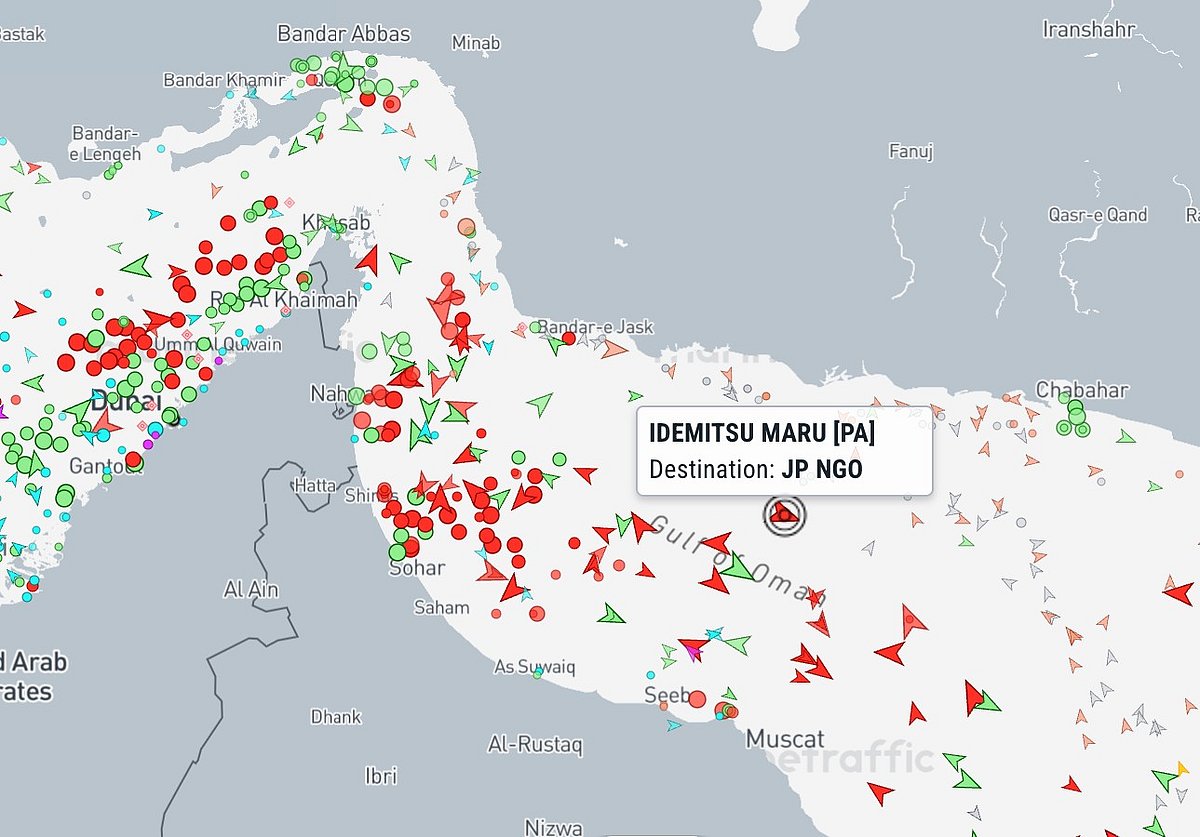
The Japan-bound crude tanker Idemitsu Maru's location as of 1.35 am GST on Wednesday (April 29, 2026), after exiting the Hormuz Strait.
MarineTraffic.org
The first oil and gas shipments are beginning to move through the Strait of Hormuz after weeks of disruption, signaling a possible easing of tensions following a two-month conflict between the United States and Iran.
Ship-tracking data compiled by Bloomberg shows that the LNG tanker Mubaraz has successfully exited the chokepoint, marking the first such transit since hostilities began.
The vessel, loaded at ADNOC’s Das Island facility in Abu Dhabi, had gone dark in late March before reappearing this week near Sri Lanka, with China listed as its destination.
Separately, the crude supertanker Idemitsu Maru, operated by Japan’s Idemitsu Kosan, has also begun exiting the waterway. The vessel departed a holding position in the Gulf and was tracked moving through Hormuz earlier this week.
Larak Channel avoided
Analysts say both movements are significant early indicators that energy flows could gradually resume, though activity remains far below normal levels.
Notably, the Idemitsu Maru avoided the Larak Channel — a northern route near Iran’s Larak and Qeshm islands — suggesting continued caution among shipping operators navigating waters still considered high-risk.
The developments come as US officials review a potential framework agreement with Iran aimed at ending the conflict and reopening the vital maritime corridor.
The proposed deal would reportedly focus first on restoring shipping access, while deferring more contentious nuclear-related negotiations.
Chokepoint
While the successful transit of these vessels may reflect tentative de-escalation, analysts caution that risks remain elevated.
Shipping traffic through the strait is still heavily reduced, and many operators continue to avoid the route amid uncertainty over security conditions.
Still, the movements of both the LNG tanker and crude supertanker may signal that major energy consumers such as China and Japan are regaining confidence that a broader reopening of the waterway could be imminent.
The Strait of Hormuz is one of the world’s most critical energy chokepoints, handling a substantial portion of global oil and liquefied natural gas shipments that even limited or symbolic disruptions can send shockwaves through global markets.
Japan depends heavily on Middle East oil, so it's not just a tanker movement; it's also a sign of energy security. As traffic in Hormuz is still far below normal. Every loaded tanker now becomes part of the risk calculation.
Fact File:
Location: Hormuz Strait is located between the Arabia Gulf and Gulf of Oman, 33km at its narrowest point
Idemitsu Maru: loaded with about 2 million barrels of Saudi crude, bound for Japan
First crossing: It's the first Japan-linked crude tanker to cross the Strait of Hormuz since the conflict began.
Global Importance: One of the world’s busiest oil transit routes
Key Players: Iran, United States, Gulf states, major energy importers
Recent Conflict Impact: Sharp decline in tanker traffic and energy flows
Current Signal: First LNG and crude shipments exiting since hostilities began
Sign up for the Daily Briefing
Get the latest news and updates straight to your inbox
Network Links
GN StoreAbout Gulf NewsTerms & ConditionsReach by GNSitemapContact usPrivacy PolicyGN FocusHave your sayWork with usAdvertise with usGulf News epaperPrinting Services
Download our app
© Al Nisr Publishing LLC 2026. All rights reserved.