Major blow: How Larijani’s death could fracture Iran’s power structure
Veteran power broker’s killing exposes fragility at the heart of Iran’s ruling system
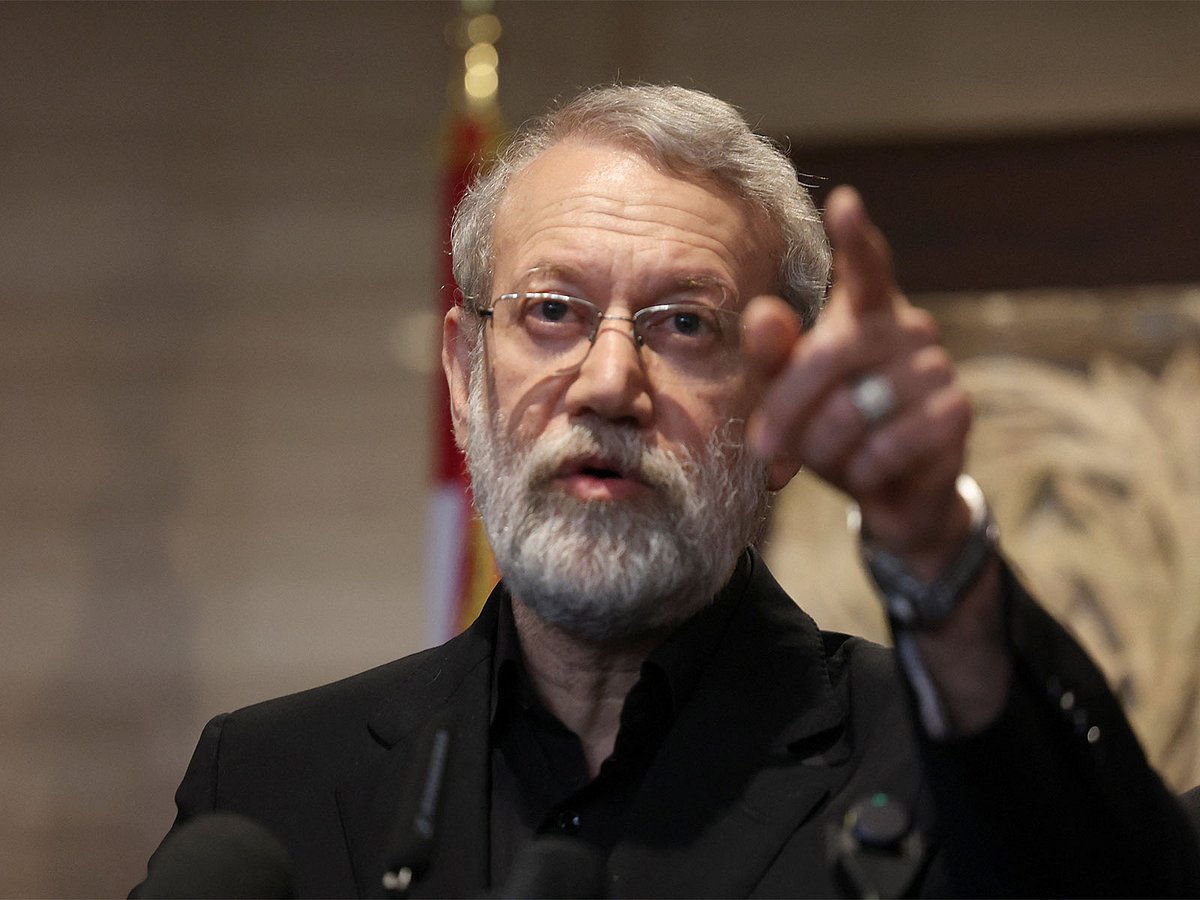
Dubai: Iran confirmed early Wednesday that its security chief Ali Larijani — a central pillar of the country’s power structure — and Basij commander Gholamreza Soleimani have been killed, marking one of the most significant blows to Tehran’s wartime leadership.
The announcement, made late Tuesday, came hours after Israel’s Defence Minister Israel Katz said Larijani, 67, was killed in an overnight strike in Tehran.
In a statement carried by the semi-official Mehr news agency, Iran’s Supreme National Security Council said: “The pure souls of the martyrs embraced the purified soul of God’s righteous servant, Martyr Dr Ali Larijani,” adding that his son and bodyguards were also killed.
“After a lifetime of striving for the elevation of Iran and the Islamic Revolution, he finally reached his long-cherished wish, answered the call of truth, and proudly attained the blessed rank of martyrdom,” the statement said.
Strikes on Basij positions
Israel’s military said it had carried out strikes on Basij paramilitary positions across Tehran.
“The air force has attacked, in recent hours, soldiers and positions of the Basij unit that were deployed throughout Tehran,” it said in a post online, alongside footage it described as showing the strikes.
Earlier Tuesday, Israel said it had killed Basij commander Gholamreza Soleimani in an air strike, alongside Larijani.
Unlike Ayatollah Ali Khamenei, whose authority was ultimately rooted in his position at the apex of the system, Larijani’s power came from his ability to operate across it. For decades, he served as a bridge between Iran’s competing centres of authority — the clerical establishment, the Islamic Revolutionary Guard Corps (IRGC), elected institutions and foreign partners.
That made him uniquely valuable in a moment of crisis.
Ali Larijani: Achievements vs criticism
Achievements
Power broker across factions: Maintained influence across Iran’s clerical establishment, IRGC and political class — a rare bridge figure.
Key role in nuclear diplomacy: Supported negotiations with the West and helped secure parliamentary backing for the 2015 nuclear deal.
Longtime parliament speaker: Led the Majlis for 12 years (2008–2020), shaping legislation and political direction during turbulent periods.
Strategic international outreach: Built ties with China and Russia and played a role in long-term cooperation agreements.
Crisis-era coordinator: As national security council chief, linked military strategy with political decision-making during wartime.
Criticism
Linked to repression: Associated with a system accused of suppressing dissent and restricting political freedoms.
Limited diplomatic success: Outreach to global powers did not prevent Iran’s growing isolation or sanctions pressure.
Part of entrenched elite: Seen by critics as part of an ageing political establishment resistant to reform.
Failed political bids: Blocked from running in presidential elections, reflecting internal power struggles and waning influence at times.
Balancing act had limits: Despite his pragmatism, he could not fully restrain hardliners or alter the system’s trajectory.
As secretary of the Supreme National Security Council, Larijani occupied a critical node linking military strategy with political decision-making. He was not just a policymaker but a coordinator — someone capable of translating battlefield realities into diplomatic messaging and vice versa.
His influence expanded further after the war began. While the new supreme leader Mojtaba Khamenei has remained largely out of public view, Larijani stepped into the vacuum, projecting stability and continuity. His public appearances and messaging signalled that the system still had a functioning command structure despite successive leadership losses.
That role — part strategist, part stabiliser — is now difficult to replace.
Ties with key global players
Larijani also stood apart because of his relationships beyond Iran’s borders. Over years, he cultivated ties with key global players including China and Russia, positioning himself as one of Tehran’s most credible interlocutors. At a time when the regime faces deep isolation, that diplomatic capital carried significant weight.
“Larijani would have been the man to get that job done,” Ellie Geranmayeh of the European Council on Foreign Relations told The Guardian, referring to his role in potential negotiations.
Equally important was his ability to balance factions at home.
Though rooted in the conservative establishment, Larijani was seen as more pragmatic than many hardliners. He supported negotiations such as the 2015 nuclear deal while maintaining the trust of the IRGC — a rare combination in Iran’s fragmented political landscape.
In recent succession manoeuvres, he reportedly worked to slow or shape the transition of power following Khamenei’s death, reflecting his role as an internal counterweight.
His removal therefore risks tilting the system further toward hardline dominance.
Without a figure capable of mediating between competing centres, decision-making could become more rigid and more heavily concentrated within the security apparatus, particularly the IRGC. That may strengthen short-term control but weaken the regime’s ability to adapt — especially if domestic unrest resurfaces.
There is also a strategic cost.
Larijani was widely viewed as one of the few figures capable of engaging in serious negotiations with external powers. His absence narrows the pool of credible intermediaries at a time when backchannel diplomacy could be critical to de-escalation.
In that sense, his death does more than remove an individual. It exposes a deeper vulnerability: A system increasingly reliant on a shrinking circle of ageing power brokers, with few obvious successors able to navigate its complexity.
Whether Iran can quickly regenerate that kind of political capital — internally and externally — may prove decisive in shaping the next phase of the conflict.

Sign up for the Daily Briefing
Get the latest news and updates straight to your inbox
Network Links
GN StoreDownload our app
© Al Nisr Publishing LLC 2026. All rights reserved.