Members of the Iran-backed Shiite militia Kataib Hezbollah in a file photo.
Inside Iraq’s Iran-backed militias: Tehran’s terror tools behind Barakah attack
From drones to proxy attacks, militias emerge as growing threat to Gulf stability
Last updated:
4 MIN READ
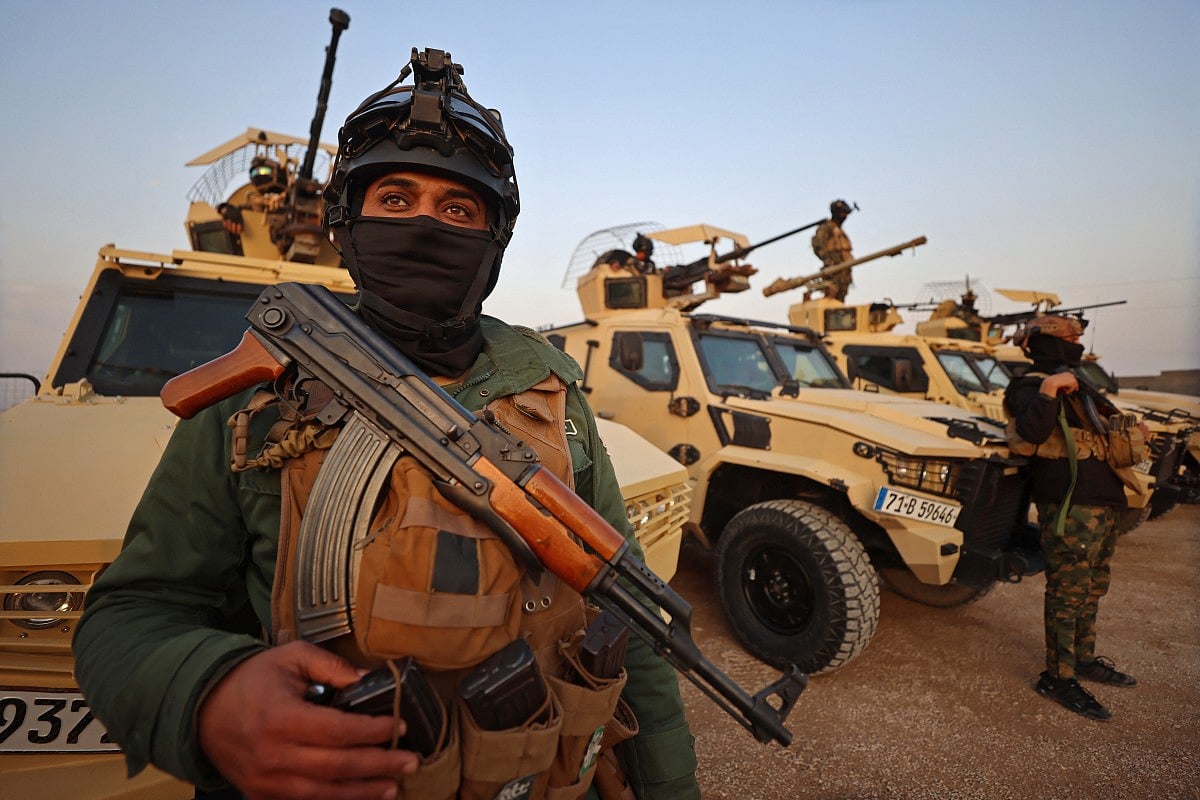
Members of the Popular Mobilization Forces stand guard at a military base near the Iraqi-Syrian border in Al Qaim, west of Iraq on January 23, 2026.
AFP
Dubai: The drone attack on the UAE’s Barakah Nuclear Power Plant has once again thrust Iraq’s Iran-backed militias into the regional spotlight, reviving fears that Tehran’s vast network of proxy groups is widening the conflict far beyond Iran’s borders.
UAE officials said the drone involved in the Barakah attack was launched from Iraqi territory — a claim that has intensified scrutiny of the militias operating there under the umbrella of the Popular Mobilization Forces (PMF).
Saudi Arabia on Sunday said it intercepted three drones after they entered its territory from Iraqi airspace.
The kingdom’s defence ministry said it would take the necessary operational measures to respond to any attempt to violate its sovereignty and security.
While hostilities during the Iran conflict have largely been scaled down since a ceasefire came into effectin April, drones have been launched from Iraq towards Gulf countries, including Saudi Arabia and Kuwait.
Originally formed to fight Daesh terror group (ISIS) in 2014, many of the militias have since evolved into heavily armed factions aligned with Iran’s Islamic Revolutionary Guard Corps (IRGC), with access to drones, missiles and sophisticated regional networks.
Today, analysts say they form one of Tehran’s most important tools for projecting power across the Middle East.
Key Iran-backed militias in Iraq
Kataib Hezbollah (KH): One of the most powerful and hardline Iran-backed groups. The US designates it a terrorist organisation. It has been repeatedly accused of attacks on US bases and diplomatic facilities.
Asaib Ahl Al Haq (AAH): A powerful militia and political movement closely linked to Iran’s IRGC. It strongly opposes the US military presence in Iraq.
Harakat Hezbollah Al Nujaba (HHN): Led by Akram Al Kaabi, the group openly aligns itself with Iran’s “Axis of Resistance” and has operated in both Iraq and Syria.
Badr Organization: One of the oldest and most influential Iran-linked groups in Iraq. Formed in Iran during the Iran-Iraq war, it later became deeply embedded in Iraqi politics and security institutions.
Kataib Sayyid Al Shuhada: A smaller but active Iran-backed militia involved in regional operations and part of the broader “Islamic Resistance in Iraq.”
Kataib Al Imam Ali: Another Iran-linked armed faction operating under the PMF umbrella.
Among the most powerful Iran-aligned groups in Iraq are Kataib Hezbollah, Asaib Ahl Al Haq, Harakat Hezbollah Al Nujaba and the Badr Organization.
Several openly identify themselves as part of Iran’s so-called “Axis of Resistance” and have repeatedly threatened the US, Israel and Gulf states.
Over the years, the groups have been accused of carrying out or supporting attacks on US military bases, diplomatic compounds, energy infrastructure and commercial shipping routes across the region.
The militias have also increasingly embraced drone warfare — a tactic that Gulf security officials say poses one of the biggest threats to regional stability.
Iran-backed Iraqi groups were blamed for a string of drone and rocket attacks on US positions in Iraq and Syria, as well as the deadly 2024 Tower 22 attack in Jordan that killed three American soldiers.
The threat now appears to be expanding beyond the region itself.
US plot
Last week, US authorities charged an Iraqi national identified as Mohammad Baqer Saad Dawood Al Saadi — described by prosecutors as a senior operative linked to the Iran-backed Kataib Hezbollah militia — with helping coordinate or support nearly 20 planned attacks in the US and Europe.
According to US prosecutors, the plots targeted Jewish institutions and American interests in cities including New York, Los Angeles and London. Investigators alleged he discussed bombings, shootings and arson attacks through networks tied to Iran-aligned militias.
The case intensified Western concerns that Iraq’s Iran-backed groups are no longer confined to regional conflicts but are increasingly connected to transnational operations.
Despite being officially incorporated into Iraq’s security structure through the PMF, many factions continue to maintain independent command structures and close operational ties with Iran’s Quds Force.
Retaliation
Several groups have repeatedly demanded the withdrawal of US troops from Iraq and threatened retaliation if Washington resumes military action against Tehran.
During the current Iran conflict, drones launched from Iraq have repeatedly targeted Gulf countries and US-linked facilities, according to regional officials.
Reuters previously reported that some militia factions had grown cautious about entering a direct regional war, fearing devastating retaliation and the loss of political influence inside Iraq.
But analysts warn that Tehran’s influence over the groups — even if not absolute — still gives Iran the ability to pressure adversaries across multiple fronts without direct confrontation.
Critics say Iraq now risks becoming both a launchpad and battleground in Iran’s expanding shadow war with the US and its Gulf allies.
The Barakah attack has only deepened those fears.
The UAE described the targeting of the civilian nuclear facility as a terrorist attack on peaceful infrastructure that powers homes, hospitals and industries across the country.
Security experts warn that attacks originating from Iraq could mark a dangerous new phase in the regional conflict — one where Iran-backed militias increasingly target strategic Gulf infrastructure while operating from beyond Iran’s borders.
Sign up for the Daily Briefing
Get the latest news and updates straight to your inbox
Network Links
GN StoreAbout Gulf NewsTerms & ConditionsReach by GNSitemapContact usPrivacy PolicyGN FocusHave your sayWork with usAdvertise with usGulf News epaperPrinting Services
Download our app
© Al Nisr Publishing LLC 2026. All rights reserved.