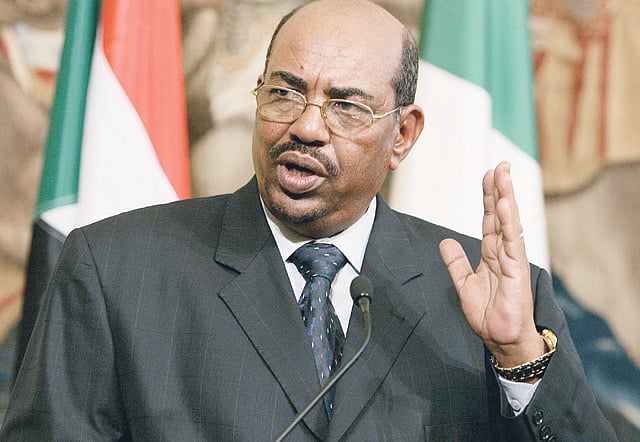
Khartoum: Appeals judges at the International Criminal Court (ICC) yesterday opened the door to charging Sudanese President Omar Al Bashir with committing genocide during the country's Darfur conflict.
The judges said the court's pre-trial chamber must decide again on whether to add genocide to the president's charge sheet, reversing an earlier ruling that dismissed the prosecution's genocide case.
Khartoum accused the ICC of trying to affect peace talks with Darfur rebels and reform in Sudan.
"The ICC wants to impact the political process in Sudan and the ongoing negotiations in Doha," Kamal Obaid, state minister for information, was quoted as saying.
"If you look to the time of this process, it shows that the ICC wants to stop the political development in Sudan, but I believe it will help Sudanese to be more committed to the democratic transformation," he said.
The Hague-based court has already issued an arrest warrant for Al Bashir to face seven counts of crimes against humanity and war crimes relating to the conflict.
Following is a look at the consequences an additional genocide charge could have.
A genocide charge would leave an indelible stain on Al Bashir's international reputation.
The emotive force of the word ‘genocide' would eat away at early expressions of support and make it nearly impossible for Western powers to consider any significant rapprochement with Sudan while Al Bashir is in power.
Sudan has so far managed to sidestep the war crimes charges imposed in March. The most visible impact was on Al Bashir's travel plans — he has avoided countries signed up to the ICC.
It would be harder for Sudan to pull off a similar trick this time.
In the short term inside Sudan, a genocide charge could boost Al Bashir's popularity among parts of the electorate in the run up to presidential and legislative votes in April.
The Obama administration would come under pressure to take a more aggressive stance against Sudan. The US Envoy to Sudan, Scott Gration, has up to now taken a relatively conciliatory approach, praising progress and promising unspecified "carrots". But there are other figures in Washington who have talked about tougher economic and even military sanctions, including the imposition of a no-fly zone over Darfur.
Economic sanctions
Activists could urge the European Union to follow the United States in imposing economic sanctions on Sudan. Current major investors include French oil giant Total.
It is still unclear when the ICC's pre-trial chamber will reconsider the genocide charge, or what its decision might be.
An African Union panel headed by former South African president Thabo Mbeki has proposed people accused of war crimes in Darfur should be tried by a special court inside Sudan that includes foreign judges.
Sudan could decide to back this proposal and argue that the ICC no longer has jurisdiction over the case. (The ICC is only supposed to prosecute cases in the absence of legitimate national investigations or prosecutions.) But many will be sceptical about whether a Sudan-based court would ever have the independence to give Al Bashir a proper trial.
Al Bashir could use his dominance of the army and security services to cling on to power, taking Sudan further down the road of international isolation. The 74-year-old president could also retreat into an orchestrated retirement, while his supporters retain power.
Activists have suggested Al Bashir could be deposed and handed over to The Hague by plotters keen to bring Sudan back to the international fold.
Have your say
Should Sudanese President Omar Al Bashir be tried for war crimes? Do you think the ICC is heavily politicised? Is it an important body to carry out justice? Tell us.
Sign up for the Daily Briefing
Get the latest news and updates straight to your inbox
Network Links
GN StoreDownload our app
© Al Nisr Publishing LLC 2026. All rights reserved.