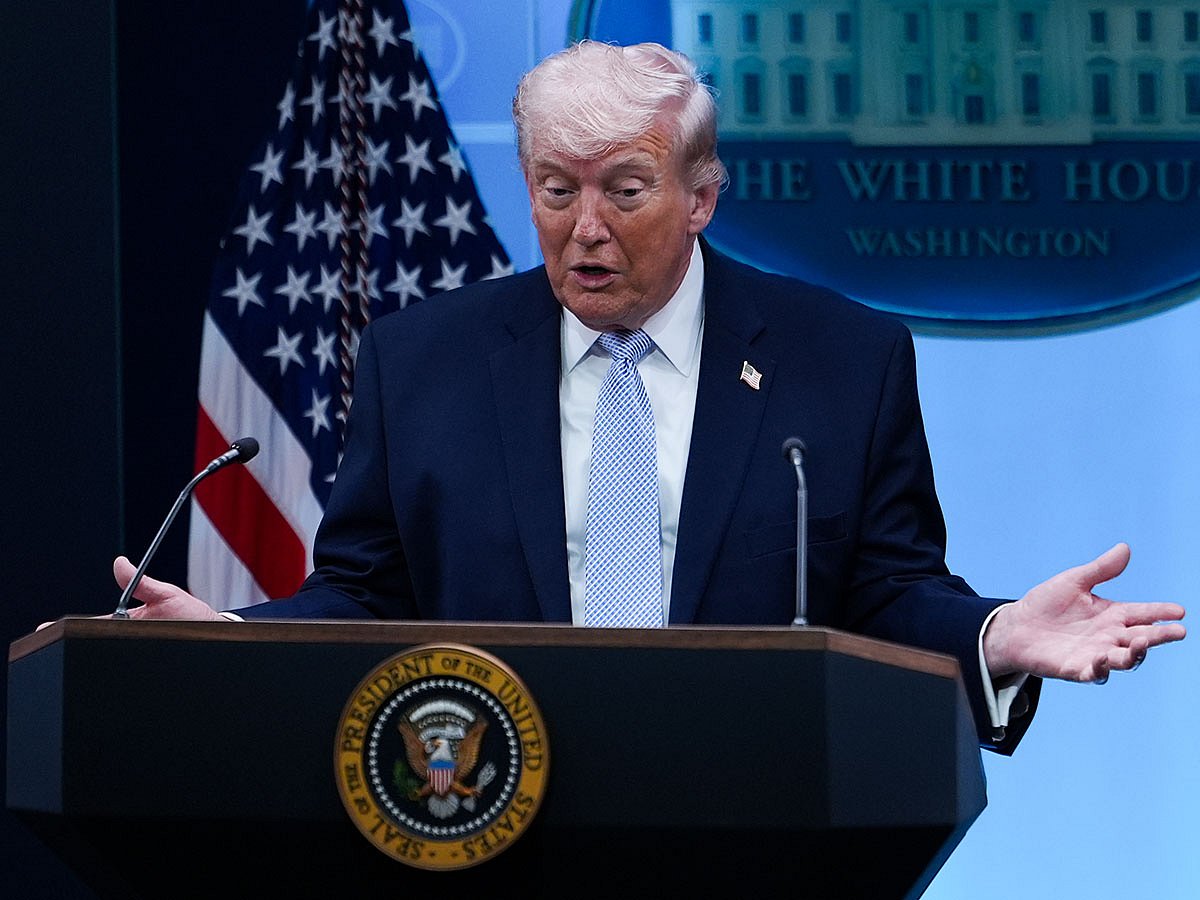
US President Donald Trump’s rhetoric on the Iran war has undergone a striking shift — from threats of overwhelming destruction to projecting a “Golden Age of the Middle East” following a fragile ceasefire agreement.
As Washington and Tehran enter a two-week truce aimed at paving the way for negotiations, Trump’s public statements chart a clear evolution in tone — from escalation and pressure to cautious optimism about a potential diplomatic breakthrough.
From escalation to ‘Stone Age’ rhetoric
In the early and peak phases of the conflict, Trump adopted an aggressive posture, warning of severe consequences if Iran failed to meet US demands, particularly on reopening the Strait of Hormuz.
In a televised address during the conflict, Trump said the United States would “hit them extremely hard” and “bring them back to the stone ages,” signalling a willingness to target infrastructure on a large scale.
The language formed part of a broader pattern of warnings tied to potential strikes on Iran’s critical infrastructure.
“It will take them 100 years to rebuild,” Trump said at a White House news conference, referring to possible attacks on bridges, power plants and other key facilities.
In another warning issued via Truth Social, he told Iran to reopen the key shipping route or face dire consequences.
“Open the Strait… or you’ll be living in Hell.”
The rhetoric — combining direct threats and historical phrasing — was widely interpreted as signalling overwhelming force, aimed both at deterrence and at increasing pressure on Tehran during the most volatile phase of the conflict.
Trump’s Iran war rhetoric: Key moments
Escalation phase
“Open the Strait… or you’ll be living in Hell.”Peak threat phase
“It will take them 100 years to rebuild.”
“Bring them back to the stone ages”Ceasefire announcement
“This will be a double-sided CEASEFIRE!”On military progress
“We have already met and exceeded all Military objectives…”Post-ceasefire shift
“A big day for World Peace!”Future outlook
“This could be the Golden Age of the Middle East!!!”
Ceasefire triggers tone shift
The tone shifted sharply following mediation efforts led by Pakistan and the emergence of Iran’s 10-point proposal, which the US said could form the basis for negotiations.
Trump agreed to suspend military operations for two weeks, describing the ceasefire as both a strategic success and a pathway to a broader settlement.
“Based on conversations… I agree to suspend the bombing and attack of Iran for a period of two weeks. This will be a double-sided CEASEFIRE!”
He also said the US had already achieved its objectives.
“We have already met and exceeded all Military objectives…”
From threats to ‘Golden Age’ optimism
In his latest messaging, Trump struck a markedly different tone, framing the moment as an opportunity for peace and economic recovery.
“A big day for World Peace!”
“The United States of America will be helping with the traffic buildup in the Strait of Hormuz.”
“We’ll be loading up with supplies of all kinds, and just ‘hangin’ around’ in order to make sure that everything goes well.”
“This could be the Golden Age of the Middle East!!!”
The contrast is stark. From threatening to send Iran “back to the stone ages,” Trump is now projecting a “Golden Age of the Middle East” — a shift that mirrors the broader transition from military brinkmanship to fragile diplomacy.
What drove the shift?
Several factors appear to have influenced the change in tone:
The announcement of a two-week ceasefire, reducing immediate military pressure
Iran’s 10-point proposal, offering a framework for negotiations
Mediation by Pakistan, creating diplomatic momentum
Concerns over global energy markets, particularly disruptions in the Strait of Hormuz
The risk of a wider regional conflict
Together, these developments allowed Trump to pivot from a strategy of pressure to one of conditional engagement.
What happens next?
The ceasefire is expected to lead to talks, potentially in Islamabad, aimed at reaching a more durable agreement.
Iran has indicated it will halt military operations if attacks stop, while allowing temporary safe passage through the Strait of Hormuz.
However, major differences remain over sanctions, Iran’s nuclear programme and regional security issues, raising questions about whether the current pause can translate into a lasting peace.
The war, which began on February 28 with US-Israeli strikes on Iran, rapidly escalated into a broader regional conflict, disrupting global energy supplies and heightening geopolitical tensions.
The Strait of Hormuz — a vital artery for global oil shipments — became a central flashpoint, amplifying the economic stakes of the conflict.
- with inputs from agencies
Sign up for the Daily Briefing
Get the latest news and updates straight to your inbox
Network Links
GN StoreDownload our app
© Al Nisr Publishing LLC 2026. All rights reserved.