From drone plots to cyberattacks: Is Iran taking its war to Europe?
Missile threats, drone plots and cyber sabotage fuel fears of a widening conflict
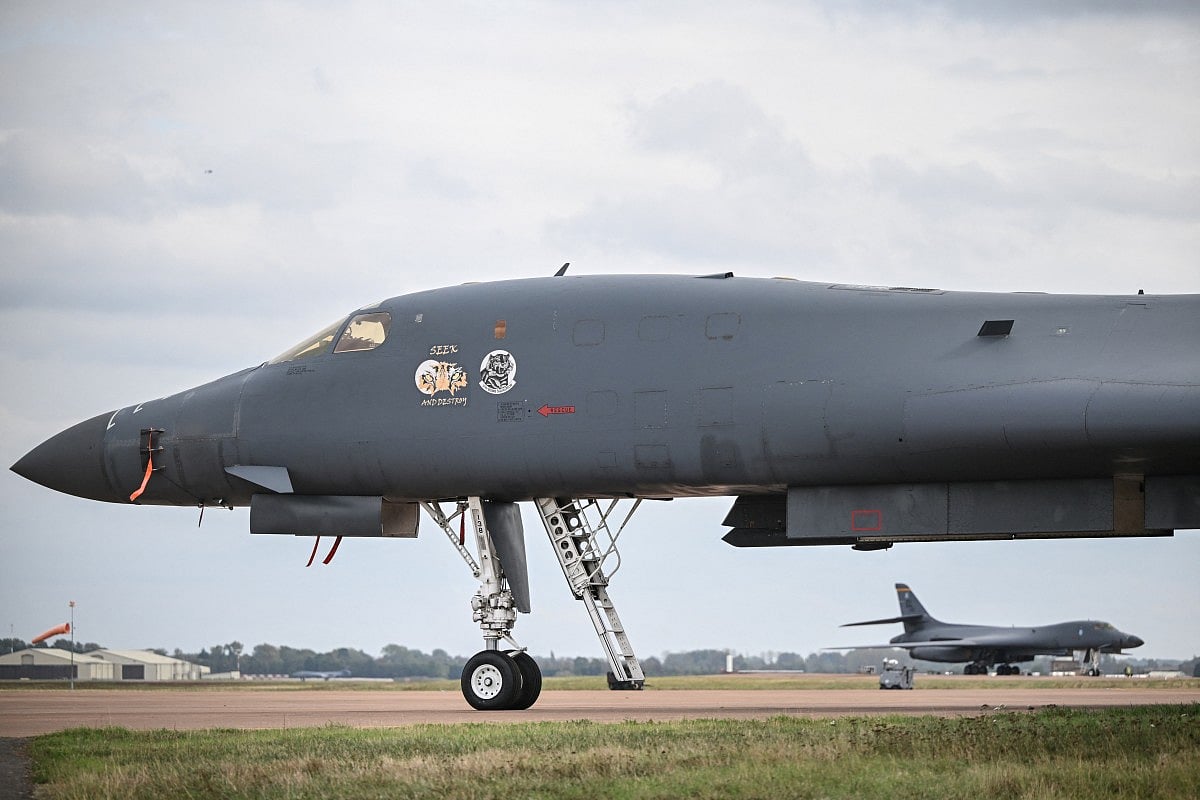
Dubai: Iran has raised the stakes in its confrontation with the United States, with state television warning that modified ballistic missiles could reach American military bases in Europe, including RAF Fairford in Britain, as suspected Iranian-backed drone plots, arson attacks and cyber sabotage fuel fears of a widening conflict.
The warning comes as European security agencies confront an expanding range of threats linked by Western investigators to Tehran and its proxies, raising questions about whether a war that began in the Middle East is increasingly spilling into Europe.
In a broadcast on Saturday, Iranian state television explicitly identified RAF Fairford, a British air base used by American bombers during operations against Iran, as a potential target.
“The range of Iran’s missiles is not limited to what they have seen,” the report declared, claiming that modifications to the Khorramshahr ballistic missile could dramatically extend its reach.
The Khorramshahr-4, unveiled in 2023, has a claimed range of 2,000 kilometres while carrying a 1,500kg warhead. Iranian state television suggested that reducing the warhead’s weight could increase the missile’s range severalfold.
However, there has been no independent confirmation that Iran possesses a modified version capable of reaching Britain.
Iran lifts missile range restrictions
The broadcast followed an October 31 directive from Supreme Leader Mojtaba Khamenei ordering Iran’s armed forces to prepare for retaliation against US or Israeli attacks without geographical restrictions.
Iran’s Revolutionary Guards subsequently announced that the country’s longstanding self-imposed 2,000km limit on ballistic missile ranges had been lifted.
The announcement did not establish whether longer-range missiles had actually been developed or deployed.
Mohsen Rezaei, secretary of Iran’s Supreme National Security Council, also warned this week that American military installations in Europe could become targets if Washington resumed attacks.
The increasingly explicit threats mark a potentially dangerous shift in Tehran’s messaging, extending the geographical scope of its warnings far beyond the Arabian Gulf and the wider Middle East.
US aircraft evacuated from British base
The missile warnings coincide with fresh concerns about alleged Iranian-backed operations against American military facilities in Britain.
According to US officials cited by The New York Times, as many as a dozen American military aircraft were evacuated from RAF Mildenhall in eastern England after intelligence agencies detected a suspected Iran-backed drone plot.
The base is a major hub for US air refuelling and special operations in Europe.
The latest alert followed an earlier suspected plot against RAF Fairford, where British police intercepted five men travelling in three vans in September.
American prosecutors allege that the men were preparing an attack involving incendiary materials against the installation, which had hosted US bombers conducting operations against Iran.
The suspects were stopped before reaching the base.
Iran has denied involvement in the Fairford plot.
How Iran’s alleged network operated
A federal indictment unsealed in New York has revealed details of an alleged network involving an Iranian Revolutionary Guard operative, an Iraqi criminal intermediary and a senior commander of Kataib Hezbollah, an Iran-backed Iraqi militia.
According to US prosecutors, Mohammad Baqer Saad Dawood Al Saadi, a Kataib Hezbollah commander detained in Brooklyn, helped coordinate attacks through associates operating abroad.
Investigators allege that the network recruited local operatives to attack Jewish institutions and other targets in Europe.
In one incident, a teenager received instructions over a video call while attempting to set fire to a London synagogue.
The alleged network was also linked to attacks on Jewish community facilities, including the burning of four ambulances belonging to a volunteer emergency service in London.
The allegations illustrate how relatively inexpensive attacks involving local recruits could threaten Western interests without requiring direct military confrontation.
Cyberattacks widen Europe’s security concerns
European authorities are simultaneously investigating disruptive cyberattacks affecting civilian infrastructure.
In October, attacks on supermarket refrigeration systems in France reportedly caused millions of dollars in food losses. Similar incidents subsequently affected retailers in several European countries.
French blood banks were also targeted.
France has accused Iran of orchestrating the refrigeration attacks in its territory, describing them as a large-scale sabotage operation.
Not every security incident across Europe has been attributed to Tehran, however, and responsibility for several disruptions remains uncertain.
Is Europe becoming another front?
The developments present a striking contrast to President Donald Trump’s declaration last week that his decision to wage war against Iran had made the world safer.
“When this conflict is over, and it will be soon,” Trump said during a Veterans Day address, “the entire world will be a much safer and better place, more peaceful place.”
European governments, however, face mounting concerns about becoming targets despite efforts by several countries to avoid direct participation in the US-Israeli offensive.
Security analysts believe Tehran may be seeking to raise the political and economic costs of European cooperation with Washington.
“Iran is signaling very clearly to the Europeans that if the US resumes the war, Europe is going to also become part of the target list for counter escalation,” Ellie Geranmayeh, a Middle East expert at the European Council on Foreign Relations, told The New York Times.
Wider climate of insecurity
The escalating warnings come as diplomatic efforts remain stalled, with Tehran demanding an end to the US naval blockade of Iranian ports and sanctions relief before negotiations can resume.
The wider climate of insecurity has been compounded by an unprecedented wave of anonymous bomb threats across Europe. More than 50 flights and thousands of schools have been affected on Thursday, with hundreds of Italian schools evacuated.
However, investigators have not established who is responsible, and French President Emmanuel Macron has cautioned against blaming foreign powers without evidence.
Trump, meanwhile, has suggested Washington no longer needs a negotiated agreement with Iran.
The combination of explicit missile threats, alleged covert attacks and cyber sabotage raises a troubling possibility: Europe could face increasing pressure even without a renewed large-scale military offensive.
The question now is whether Iran’s expanding threats are intended primarily to deter another American attack — or signal its readiness to turn Europe into another front in the confrontation.

Sign up for the Daily Briefing
Get the latest news and updates straight to your inbox
Network Links
GN StoreDownload our app
© Al Nisr Publishing LLC 2026. All rights reserved.