How £80 led the police to the Suffolk Strangler
Steve Wright confessed to the murder of a sixth victim in court today
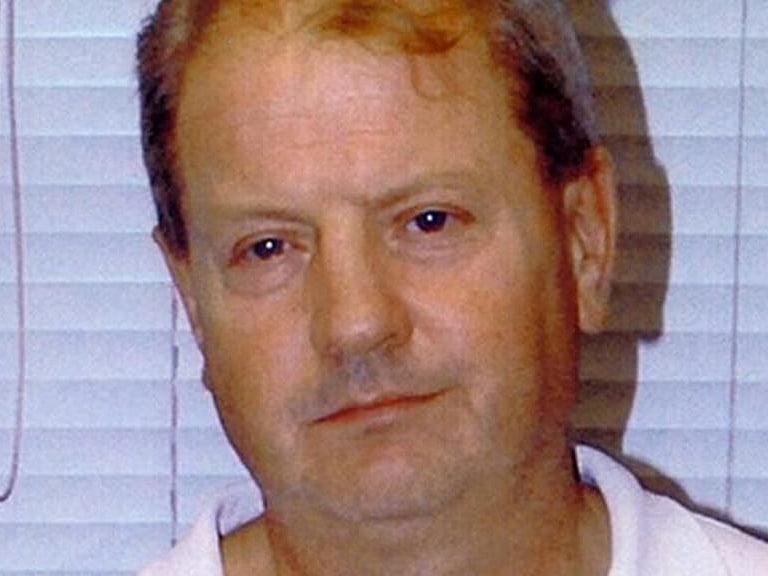
In a surprising turn of events, Steve Wright, who is convicted of the murder of five women in 2006 and is serving a life sentence, has pled guilty to the kidnap and killing of another woman in 1999.
The now 67 year old, dubbed the Suffolk Strangler by media, pled guilty to the murder of 17-year-old Victoria Hall, on Sep 19, 1999.
She hailed from Trimley St Mary in Suffolk, and on September 18 had decided on a night out with a friend at the Bandbox nightclub in Felixstowe.
She never got home. Five days later, her corpse was found in a ditch around 25 miles from where she was last seen.
On Monday, Steve also admitted to the attempted kidnap of then 22-year-old Emily Doherty in Felixstowe a day before he abducted Victoria.
While he is serving a whole life term – or life in prison without a chance of parole - for the deaths of five women, Wright has over the years steadfastly refused to admit to the killings despite pleas from their family members.
Justice Bennathan, reports The Mirror, said the sentencing would happen this Friday to give the Hall family a chance to submit victim impact sentences.
"Victoria’s family have waited over 26 years for this day and I am so very pleased that we have been able to deliver justice for Victoria and they now know who is responsible for Victoria’s murder," Assistant Chief Constable Alice Scott, of Suffolk Constabulary, was reported as saying by Reuters.
Here’s what you need to know about the Suffolk Strangler.
Early days
In the small village of Erpingham, Norfolk, in April 1958, Steve was born to a RAF policeman father, Conrad, and Patricia, a veterinary nurse. He was the second of four children and in his formative years moved often with his family to wherever his father was stationed. This included the international bases of Malta and Singapore. But also Friston, near Saxmundham, with his grandparents.
By all accounts his younger years were spent in a volatile household and when he turned eight, Patricia walked out on the family. Later, she would tell media outlets she left because the marriage had become violent and while she wanted to take her children, she wasn’t allowed to. His late father reportedly told BBC that he felt his son was "left damaged" by his mother leaving.
The Guardian reports that Steve and his siblings didn’t get along with their step-mom, causing more tensions at home.
At 16, Steve dropped out of school and after a stint as a waiter at a hotel, joined the merchant navy, working on ferries as a chef. This is where he met his first wife in 1978, had a son with her, and then got divorced.
Shy with a volatile personality
He reportedly grew up to be a shy man who had trouble maintaining relationships and jobs, and an unfortunate habit of getting into debt. He also seemed unable to set down roots in one place, eventually settling on working as a steward on the QE2.
While he was here, his short-leave trips to the shore led him into the habit of visiting prostitutes. This ship is also where he met his second wife, Diane Cassel, who he divorced within 365 days. Years after the fact, she was quoted as saying by the Hartlepool Gazette: “Our marriage wasn't great. It wasn't good and I was glad when it ended.”
In the 1980s and 1990s, Steve worked around red light areas where he met more prostitutes. Then, in 1989, he began to date a barmaid called Sarah Whiteley with whom he would move to Plumstead to run the Rose in Crown pub in 1990 and have a daughter in 1992. They would split up a year later. Whiteley reportedly told media that his propensity to gamble and drink is what cost Steve his bar gig.
Suicide attempts
By the mid 1990s, his drinking and gambling had put quite a lot of pressure on him and unable to see a way out of the whirlpool of debt, he decided to take his own life. The first attempt came when he tried to poison himself with carbon monoxide in his car. He was found in an alley in Suffolk and taken to hospital.
The second attempt came after he declared himself bankrupt after running up £30,000 in unsecured loans, reports The Guardian. This was in 2000, when he swallowed a large number of pills after a 10-week trip to Thailand, where he said, he had been fleeced by a woman.
He survived, but without a penny to his name wound up living with his dad and step mum in Felixstowe for a while. Here, he seemed to get better… at least for a while. He met his partner Pamela Wright (no connection), with whom he moved in in 2001. He became a member at the nearby golf club and would be remembered later for his sharp sense of dressing.
Six months into dating Pamela, Steve decided to go back to using prostitutes for sex.
It was also around this time that he was arrested for stealing 80 pounds from the pub he worked at. The DNA taken from him for the national data base was what would connect him to the murders.
The couple moved to Ipswich in 2004. And in 2006, they moved into the house – in the red light district - that would be his lair for the duration of his killing spree.
That fatal year: What happened in 2006?
Over a 10-day period in 2006, the bodies of five sex workers were found strangled to death near Ipswich. All of them were naked, and two were found in a stream and at least two were posed in a cruciform manner.
The victims were identified as Tania Nichol, 19; Gemma Adams, 25; Annette Nicholls, 29; Anneli Alderton, 24; and Paula Clennell, 24.
Investigations led the police to two men, one of whom was Steve, who by this point was well known to the working women on the area. While most of them called him gentle, there were some reports of recent violent behaviour.
As police investigated, they spoke to women working in and around Ipswich, raised awareness of the crimes, and urged them to be vigilent.
On December 17, 2006, weeks into the murder spree, the police caught a break when they matched the DNA on the women to the DNA on Steve’s record. He was put under police surveillance and on December 20, he was arrested and charged with the five kills.
His trial took place in 2008, when he admitted to having sex with these women, but denied having anything to do with their deaths or the disposal of their corpses. His DNA, reports Reuters, was found on three of the victims and bloodstains from two of them were found on his jacket at his home.
The jury found him guilty and Justice Gross handed down a rare whole life order – he will have no possibility of parole. During sentencing, he said: "Drugs and prostitution put the five women at risk, but neither drugs nor prostitution killed them. You did. Why you did it may never be known."
Today, the motive for the gruesome killings still remains unclear.
Network Links
GN StoreDownload our app
© Al Nisr Publishing LLC 2026. All rights reserved.