Tehran talks falter as Houthis escalate attacks on Saudi Arabia, Turkey advances defence pact
Turkey advances defence pact as Houthis target Saudi oil refinery and Qatar presses Iran
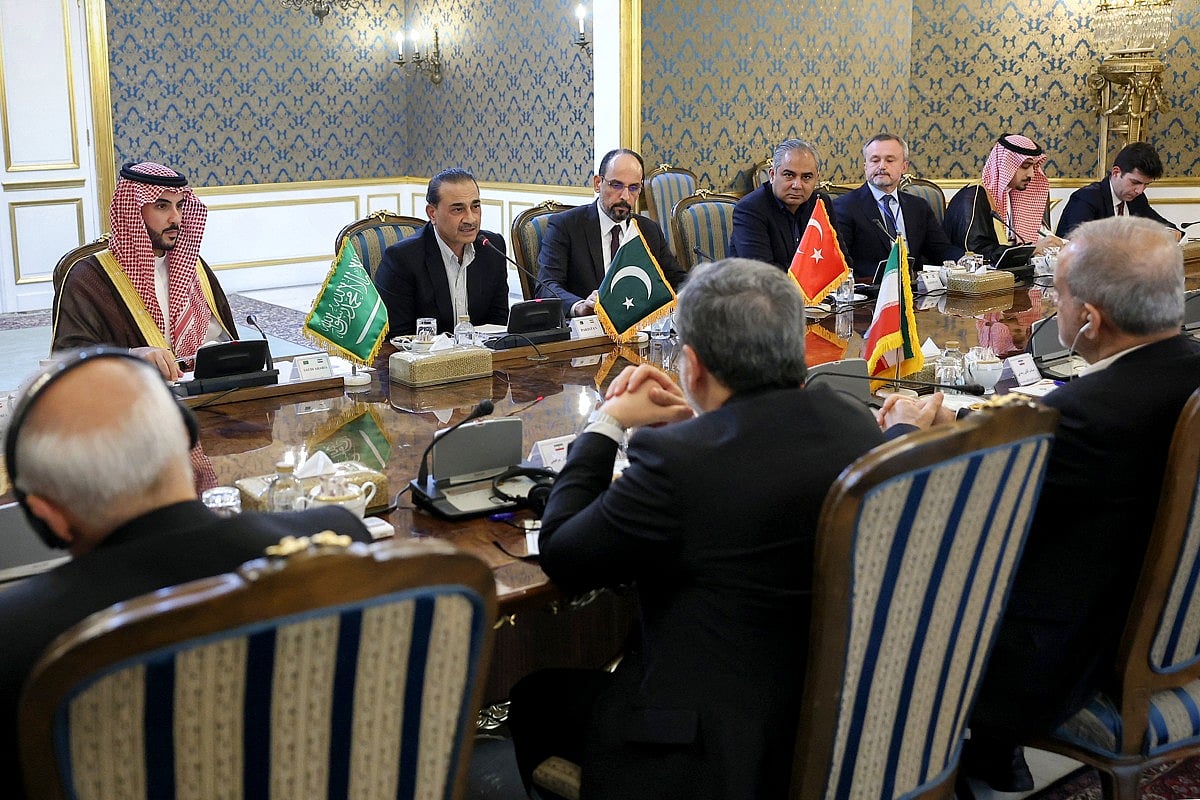
Dubai: Tehran’s diplomatic push failed to halt Houthi attacks on Saudi Arabia, with the Yemeni militia claiming a fresh strike on a major oil refinery on Tuesday as Turkey moved closer to ratifying a three-nation defence pact.
The escalation came just hours after senior officials from the three countries met Iranian leaders in Tehran to ease regional tensions and prevent renewed fighting between the United States and Iran.
While Tehran described Monday’s talks as positive and the countries agreed to continue discussions, no agreement to stop the Houthi attacks was announced.
The continuing violence has sharpened questions about the effectiveness of diplomacy and whether Saudi Arabia’s defence partners will become more directly involved.
Saudi refinery targeted, blasts shake Riyadh
The Houthis claimed to have targeted the Ras Tanura refinery in Saudi Arabia’s Eastern Province with a ballistic missile on Tuesday.
“The Yemeni Armed Forces were able to target the Ras Tanura refinery in the Eastern Province with a ballistic missile,” Houthi military spokesman Yahya Saree said on X, claiming the attack caused “massive fires”.
The Saudi-led coalition said it intercepted three missiles fired towards the Eastern Province.
Maritime security agency Vanguard reported a fire in the Ras Tanura area following an attack but said it had been contained. The extent of any damage or disruption to oil operations remained unclear.
Meanwhile, explosions shook Riyadh, prompting mobile alerts warning residents to seek shelter. The Saudi-led coalition said it intercepted two ballistic missiles targeting the capital, AFP reported.
Turkey advances Makkah defence pact
In Ankara, a Turkish parliamentary committee approved the Mecca Joint Defense Agreement with Saudi Arabia and Pakistan on Tuesday, according to AP.
The agreement commits the three countries to regard an armed attack against one member as an attack against all three.
The 16-article pact also provides for military cooperation, joint weapons production, technology transfers and intelligence sharing.
It now requires approval by Turkey’s full parliament, with no date announced for the vote.
What happened in Tehran?
Monday’s talks brought together Saudi Defence Minister Prince Khalid bin Salman, Pakistan’s army chief Field Marshal Asim Munir and Turkish intelligence chief Ibrahim Kalin with senior Iranian officials, including President Masoud Pezeshkian and security chief Mohsen Rezaei.
Iranian state television reported that the countries agreed to continue discussions on regional peace and security.
However, no agreement to halt Houthi attacks was announced.
Regional analyst Mohamed Fahmy described the visit as an exercise in ‘coercive diplomacy’, combining negotiations with the possibility of military action, Iran International reported.
“This may be the last chance before a collective imminent military action,” Fahmy said.
Qatar tells Iran to demonstrate good faith
Meanwhile, Qatar’s Emir Sheikh Tamim bin Hamad Al Thani met Iranian President Masoud Pezeshkian in Moscow on Tuesday, discussing the Middle East war and the Strait of Hormuz.
Qatari foreign ministry official Ibrahim Al Hashmi called for a new regional security framework.
“The ball is now in Iran’s court to commit to these principles and demonstrate good faith,” he said.
He urged Tehran to stop threatening neighbouring countries and reopen the Strait of Hormuz, saying positive statements alone were insufficient.
Houthis accuse Egypt of declaring war
The confrontation also widened diplomatically after senior Houthi official Mohammed Ali Al Houthi accused Egypt of effectively declaring war by authorising military support for Saudi Arabia.
Egypt’s parliament approved defensive assistance on Monday, although the precise nature of the support remains unclear.
Al Houthi criticised the timing of the decision, which coincided with the Tehran peace initiative, and insisted the militia was “not afraid of any alliance that may be formed”.
Iran’s supreme leader insists on conditions
Iran’s supreme leader Ayatollah Mojtaba Khamenei discussed regional security and the Strait of Hormuz with security chief Mohsen Rezaei, his office announced on Tuesday.
The meeting was disclosed a day after Rezaei held talks with the Saudi, Pakistani and Turkish delegation.
According to the statement, Khamenei emphasised protecting Iran’s national interests and those of its allies while adhering to Tehran’s conditions for ending the war.
With Houthi missiles still targeting Saudi Arabia and Tehran insisting on its conditions for ending the wider conflict, the latest diplomatic efforts have yet to deliver a breakthrough

Sign up for the Daily Briefing
Get the latest news and updates straight to your inbox
Network Links
GN StoreDownload our app
© Al Nisr Publishing LLC 2026. All rights reserved.