Saudi Arabia plans to double oil pipeline capacity to 10 million barrels a day within three years
Prince Abdulaziz bin Salman says decades of investment have strengthened energy security
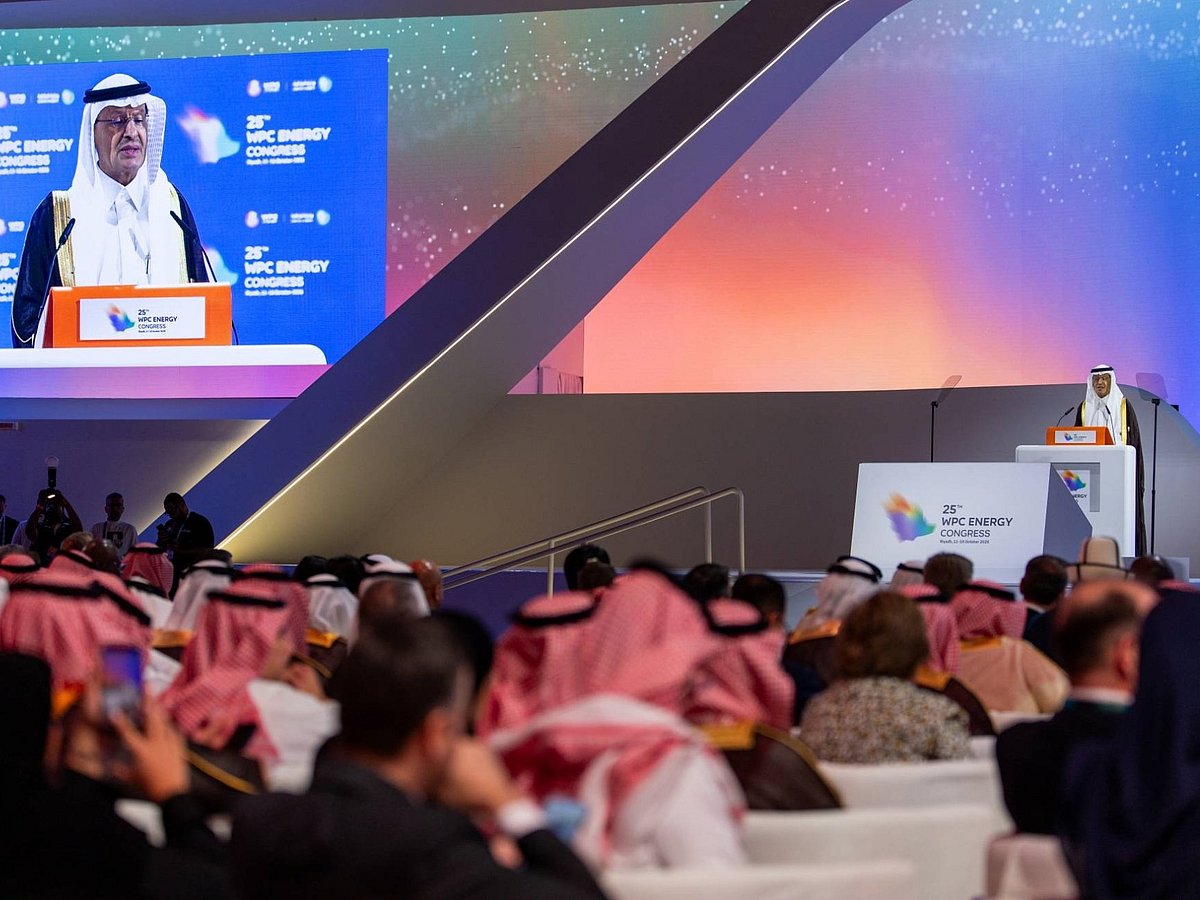
Dubai: Saudi Arabia is planning to double the capacity of its strategic East-West oil pipeline to 10 million barrels a day within two to three years, Energy Minister Prince Abdulaziz bin Salman said on Monday.
Speaking at the 25th WPC Energy Congress in Riyadh, Prince Abdulaziz said years of investment in pipelines, storage facilities and alternative export routes had helped Saudi Arabia navigate successive crises and maintain supplies to international markets.
Get updated faster and for FREE: Download the Gulf News app now - simply click here.
"Fear has no place in the Saudi vocabulary," he told delegates, expressing confidence in the kingdom's ability to overcome the challenges facing the energy sector.
The East-West Pipeline, which carries crude oil from Saudi Arabia's Eastern Province to export terminals in Yanbu on the Red Sea, provides an alternative to shipping oil through the Strait of Hormuz, a vital route for global energy trade.
The pipeline's capacity was previously expanded to five million barrels a day, and Prince Abdulaziz said further development would allow it to handle up to 10 million barrels daily over the next two to three years.
His remarks came during a conference dominated by concerns over energy security, following months of regional tensions and disruptions to oil and gas supplies.
Prince Abdulaziz said recent events had shown that energy security could no longer be taken for granted, particularly when export routes and critical infrastructure were exposed to threats.
He argued that resilience meant more than maintaining spare production capacity or building additional pipelines. Energy systems must also be capable of repairing damage, restoring operations, redirecting supplies and continuing to serve customers during a crisis.
The minister said decades of government investment in infrastructure, emergency capacity, storage, technology and domestic supply chains had strengthened Saudi Arabia's ability to respond to disruptions.
He also stressed the importance of developing local expertise and manufacturing capabilities, saying these had become essential to keeping operations running when international supply chains were under pressure.
Saudi Aramco President and Chief Executive Amin Nasser said the company was studying additional crude export options and opportunities to expand storage capacity outside the kingdom, in coordination with the Energy Ministry.
The WPC Energy Congress, which Saudi Arabia is hosting for the first time in its more than 90-year history, has brought together government officials and industry leaders to discuss energy security, investment and the future of global oil and gas markets.
World Petroleum Council President Pedro Miras called for a balance between energy security, sustainability and affordability, while US Energy Secretary Chris Wright said oil flows through the Strait of Hormuz had recovered to between 80 and 90 per cent of pre-conflict levels. Flows of refined petroleum products, however, remained at just 25 to 35 per cent.
OPEC Secretary General Haitham Al Ghais said global oil demand growth could reach 1.7 million barrels a day in 2027, partly driven by demand that had been delayed.
Al Ghais also warned that insufficient investment in oil and gas could threaten future supplies, with OPEC estimating that the industry would require about $18 trillion in investment through 2050.
Prince Abdulaziz said Saudi Arabia would continue investing in energy infrastructure and emerging technologies, including renewable energy and battery storage, while preparing for rising electricity demand driven by artificial intelligence.
He added that the kingdom is committed to its long-term development plans and would continue meeting its energy obligations despite the challenges facing the region.
The congress runs until October 15.
Network Links
GN StoreDownload our app
© Al Nisr Publishing LLC 2026. All rights reserved.