Saudi Arabia: Medical care, food and security provided for the faithful performing Itikaf at Prophet’s Mosque in Medina
4,700 worshippers permitted to undertake Ramadan rite at Islam’s second holiest site
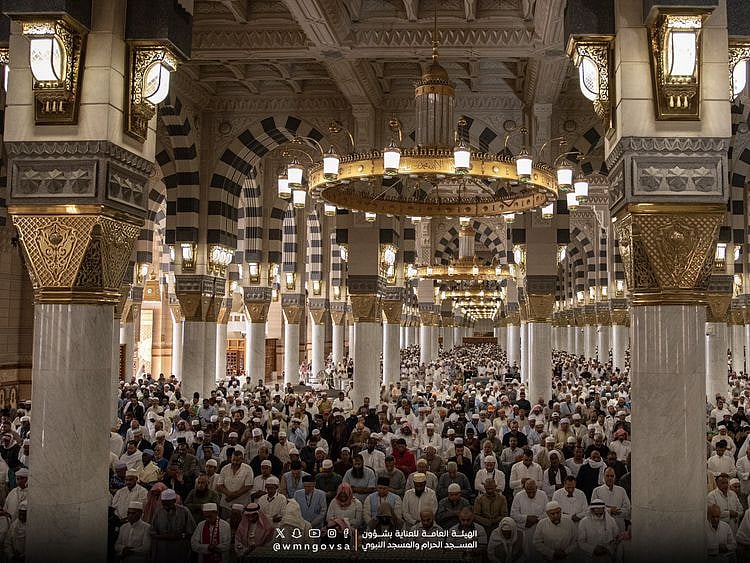
Cairo: A set of services, including medical care, food and security are provided for Muslims performing the rite of Itikaf or seclusion at the Prophet’s Mosque, Islam’s second holiest place, in the Saudi city of Medina.
The General Authority for the Prophet’s Mosque Affairs offers to the Itikaf observants the fast-ending iftar and pre-dawn suhur meals and other services including bracelets to get access to the site, and mobile phone chargers.
Separate places are also allocated for male and female worshippers.
Itikaf means a Muslim stays at a mosque for the sole purpose of worshipping and coming closer to Allah, following the example of the Prophet Mohammed (PBUH). The ritual is usually performed in the final 10 days of the lunar month of Ramadan, expected this year to end on April 9.
Also Read
Saudi Arabia: Devotees gather in vast numbers for Ramadan prayers at Prophet's Mosque in MedinaSaudi Arabia: Over a million converge on Mecca and Medina for final nights of RamadanSaudi Arabia: Medina exhibition showcases rare Islamic manuscriptsSaudi Arabia: Haramain rail service sets record transportSome 4,700 worshippers, including 700 women, are permitted this year to perform Itikaf at the Prophet’s Mosque, said the state agency that oversees and serves them.
An affiliate security department is tasked with securing the Itikaf area and checking permits with designated gates set for the holders to get entry.
Online registration
Registration for Itikaf at the revered site opened online on March 23 and the applicants were furnished with guidelines about the process.
The number of Muslim worshippers allowed to perform Itikaf this Ramadan at the Grand Mosque, Islam’s holiest site in Mecca, has doubled to reach 6,000, a Saudi official said last week.
This year, authorities in charge of the Grand Mosque have allocated three floors for the Itikaf performers, said Abdulmohsen Al Ghamdi, the head of the Guidance and Consulting Department at the mosque.
Compared to last year, the permitted number is two times higher at 6,000 including 1,000 women, he told Saudi TV Al Ekhbariya.
Applicants had to meet certain requirements. They have to consent to abide by the pledges and regulations at the Grand Mosque, start Itikaf at a fixed time on Ramadan 20 and be at least 18 years old.
Millions of Muslims from inside and outside Saudi Arabia usually flock to both mosques in Ramadan noted for intense worshipping.
Sign up for the Daily Briefing
Get the latest news and updates straight to your inbox
Network Links
GN StoreDownload our app
© Al Nisr Publishing LLC 2026. All rights reserved.