Ukraine to agree with US on terms for minerals deal
Framework agreement to create joint US-Ukraine fund to manage future revenues
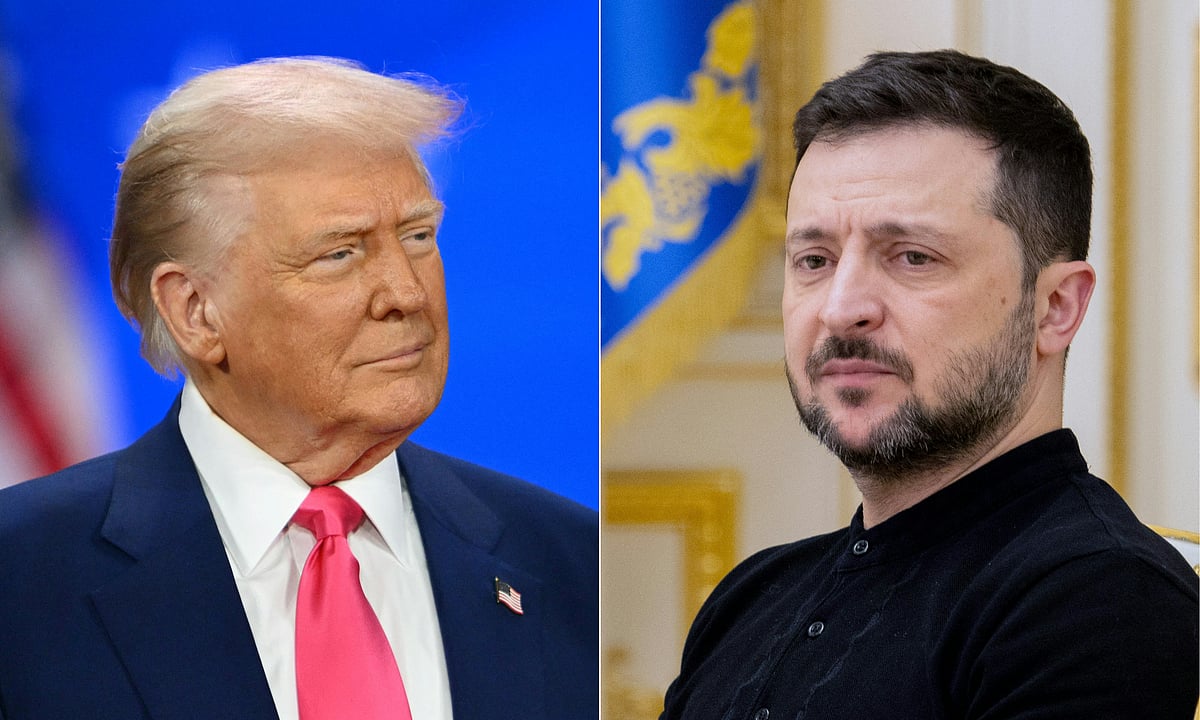
Ukraine has agreed with the US on a deal to jointly develop its natural resources, people familiar with the matter said, in what the White House considers a first step toward reaching a ceasefire with Russia.
Ukraine’s Cabinet is expected to recommend on Wednesday that the deal be signed, according to the people, who asked not to be identified discussing private deliberations. The White House didn’t immediately respond to a request for comment.
President Donald Trump has pressured Ukraine’s President Volodymyr Zelenskiy to accept the deal, first presented by Treasury Secretary Scott Bessent in Kyiv earlier in February, but which the Ukrainian president rejected as not in his country’s interests. The latest version of the agreement still doesn’t spell out specific security guarantees, the people said. Those have been a key priority for Kyiv as the US pushes toward a ceasefire deal with Russia. US officials have said that binding Ukraine to the US through economic ties would provided a de facto security shield. A detailed agreement is expected to be worked out later. The Financial Times reported the accord earlier Tuesday.
The deal came together after US dropped the demand for Kyiv to commit to paying $500 billion from resource extraction to a fund as a form of repayment for US aid, the person said. The framework agreement would create a joint US-Ukraine fund to manage future revenues from the country’s natural resources, according to the person.
Ukraine sees it as a starting point to obtain US security guarantees in the future, the person said.
The deal may also offer Trump a way to encourage buy-in from his supporters for continued backing for Ukraine, particularly if Washington needs Congress to approve additional aid for Ukraine if negotiations with Russia continue to drag on. Ukraine still relies on US and European allies for weapons and ammunition.
Justin Logan, director of defence and foreign policy studies at the Cato institute, said the deal was about Trump being able to “domestically market a political win,” and for Zelenskiy about deescalating tensions with the US, especially because the difficult situation on the battlefield may intensify this year before a ceasefire.
“The substance here seems to be less than meets the eye, and it appears to be by contrast, intensely political,” Logan said.
Both sides have been locked for days in intense negotiations over the agreement that the US administration sees as integral to its plan to broker a ceasefire in Russia’s three-year war on Ukraine. Trump’s decision to send top aides to negotiate first with Russia produced tensions in the relationship, which boiled over after the US president blamed Russia’s attack on Ukraine and called Zelenskiy a “dictator.”
Ukraine wants to invest in the new fund together with the US on a 50-50 basis, Prime Minister Denys Shmyhal said on Monday. The fund would include future income from state enterprises, as well as from the extraction of raw materials, he added.
Trump has said he wanted the equivalent of $500 billion from rare earths, which are mainly used in high-strength magnets. But despite reports of $10 trillion in mineral deposits, Ukraine has no major rare-earth reserves that are internationally recognised as economically viable.
Ukraine does have some commercial mines of critical minerals such as titanium and gallium, which while important aren’t likely to be worth the sums Trump envisages.
Even if Ukraine does have any economically viable deposits, the West still has a bigger challenge to overcome. Most countries are forced to send the rare earths they mine to be refined in China as it dominates the processing of these materials.
Sign up for the Daily Briefing
Get the latest news and updates straight to your inbox
Network Links
GN StoreDownload our app
© Al Nisr Publishing LLC 2026. All rights reserved.