Philippines: Your private property taken by the government? 'Just compensation' in right-of-way cases explained
Eminent domain: Involuntary sale of your property to the state with "fair payment"
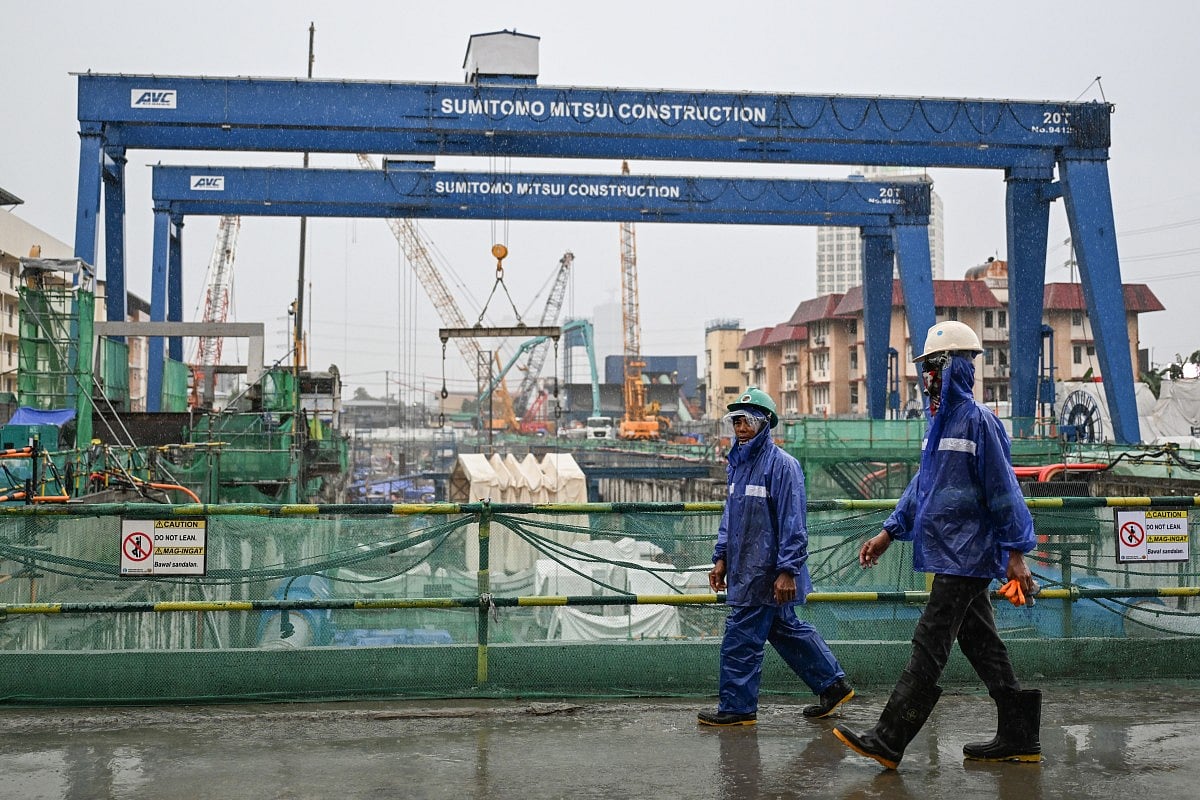
Manila: Can your property be taken by the government, even if you don't want to sell it?
Under Philippine law, "eminent domain" is the State's inherent power to take private property for public use.
It's protected by the Constitution.
This requires payment of "just compensation" and adherence to due process, as guaranteed by the 1987 Constitution (Article III, Section 9).
This power, though inherent, is not absolute. It's not arbitrary or random.
It's conditional on the following:
must serve public welfare (like roads, parks, housing)
ensure fair market value for the owner
This prevents arbitrary government seizure.
What's the power of the national vs local governments in 'eminent domain' cases?
The authority to seize private property for public projects starts with the National government.
As states do not handle every project personally or directly, instead, they delegate (pass) this power to:
LGUs: Provinces, cities, and municipalities for local needs like public markets, parks, water systems.
Public entities: Government agencies like the DPWH for highways.
Utility companies: Private companies (like water or power providers) that perform essential public services.
This ensures that infrastructure can be built at all levels of government, provided they follow strict constitutional rules.
Eminent Domain: While it is an inherent power necessary for the State's existence, its exercise is limited by the Bill of Rights under the 1987 Constitution.
Key principles of eminent domain?
Inherent power: A fundamental right of the state for its existence and operation.
Public use/purpose: The property must be for genuine public benefit, such as infrastructure (roads, bridges, water systems), public buildings, or socialised housing.
Just compensation: The fair market value of the property, representing the owner's full loss, not the taker's gain, paid promptly.
Due process: Strict adherence to legal procedures, including notice, hearings, and the right to challenge the taking and compensation.
Important: The power of expropriation is inherent to sovereignty. It allows states to acquire land for projects like infrastructure or public health, with specific legal procedures and constitutional safeguards ensuring fairness, even if the owner resists.
What is the process?
In general, the process involves the following:
Determination of authority: Proving the right to exercise eminent domain.
Offer: A valid and definite offer to buy must be made to the owner.
Expropriation proceedings: If the offer is rejected, court action ("condemnation") follows, involving determination of necessity and just compensation.
Immediate possession: The government can take possession upon depositing the court-determined provisional value.
Case studies:
#1: PEZA (2001)
In Estate of Salud Jimenez v. Philippine Export Processing Zone (PEZA) (G.R. No. 137285, Jan. 26, 2001) is a Philippine Supreme Court (SC) case affirming the validity of PEZA's expropriation of Lot 1406-B for a public purpose (economic zone development) and ruling that a prior compromise agreement, which substituted another lot (Lot 434) for cash payment, was effectively breached and annulled by PEZA's failure to deliver Lot 434, thus reinstating the obligation to determine and pay the actual just compensation for the expropriated land. The Court found the expropriation valid but allowed the landowner's estate to proceed with determining the proper monetary value of the land, emphasising that "just compensation" requires prompt payment.
#2. Flood Mitigation Expropriation (2020)
In Republic v. Landowners (G.R. No. 204530, 2020 ruling) Nov. 1991: Heavy rains caused the Malbasag River to overflow, leading to a flashflood in Ormoc City. In 1991, DPWH undertook a flood mitigation project requiring a right of way. Sept. 15, 1999: The Republic filed a Complaint with the RTC for expropriation of portions of land owned by the respondents. On Dec. 16, 1999: The RTC directed the release of cash deposited by the petitioner to the respondents. Feb. 18, 2000: The RTC appointed Commissioners to evaluate and recommend the amount of just compensation. The RTC fixed the just compensation at ₱10,000.00/sqm for landowner A's lot and ₱4,000.00/sqm for Landowner B&C's lots. The Court of Appeals (CA) affirmed the RTC Decision. The State, represented by the DPWH, filed a petition for certiorari before the Supreme Court after CA affirmed the RTC's decision. SC noted that the RTC Decision failed to explain how the amounts of ₱10,000/sqm for respondent's property and ₱4,000/sqm for respondents A and V's properties were arrived at. The SC ruled that the RTC's determination of just compensation was "arbitrary".
[Sources: Batas.org]
Takeaways
Eminent domain in the Philippines balances public need with individual property rights.
It ensures fairness through constitutional safeguards.
Sign up for the Daily Briefing
Get the latest news and updates straight to your inbox
Network Links
GN StoreDownload our app
© Al Nisr Publishing LLC 2026. All rights reserved.