Philippines to import 100,000 tonnes of Russian oil, crude tanker arriving 'imminently'
Shipping data shows tanker with 750K of crude now en route to Petron's Batangas terminal
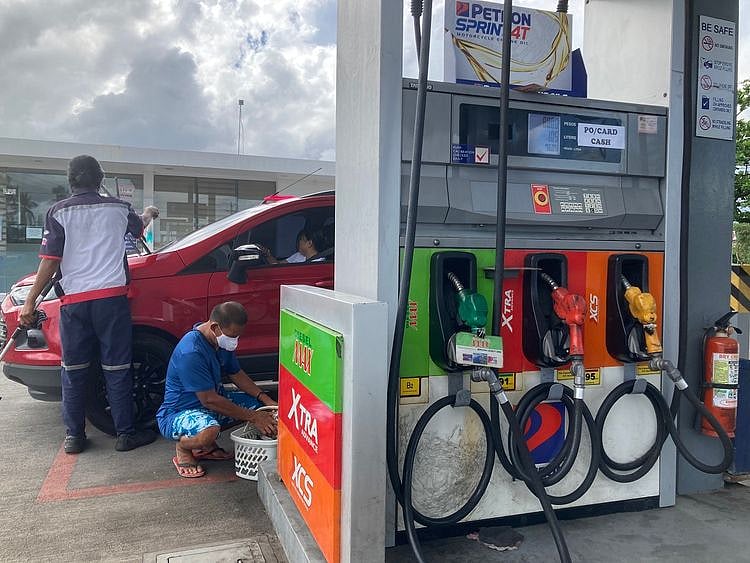
Manila: The Philippines is set to import Russian oil next week for the first time in five years, the Marcos government has announced.
The Russian vessel laden with 100,000 tonnes (about 750,000 barrels) of "ESPO Blend" oil is on its way to the Bataan terminal, Philippines, as per local media.
Shipping data from LSEG, Kpler, and OilX confirm a Russian tanker (Sara Sky) carrying ~100,000 tonnes (~750,000 barrels) of crude from Kozmino is en route to Petron's Bataan terminal, arriving "imminently".
This marks the Philippines' first Russian oil import in five years, following government-to-government talks amid global supply pressures and a US sanctions waiver, accordingto the Philippine Star and Bloomberg.
Petron’s two principal shareholders, each of which hold 40%of the company, are the Philippine government’s Philippine National Oil Company and Saudi Aramco. The remaining 20% of the company’s shares are listed on the Philippine Stock Exchange and are held by more than 200,000 shareholders.
Emergency powers to suspend fuel excise taxes
Meanwhile, President Ferdinand Marcos Jr. is expected the emergency powers bill that allowing the suspension (or reduction) of fuel excise taxes.
On Monday, Malacañang assured the public the president will sign it as soon as it reaches his desk. Presidential Communications Office Undersecretary Claire Castro clarified that the delay is purely procedural. “As far as I know, it is still being awaited to be given to the President for signing,” she said, adding that once received, “the President will sign it immediately.”
Castro dismissed claims of "resistance" from some Cabinet members or revenue-sensitive sectors, stressing that Marcos himself certified the bill as urgent to cushion the impact of rising fuel prices.
“The President wants it enforced immediately. The only reason he cannot act is because the bill has not yet reached him,” she said.
Under the proposal, the President may only suspend or reduce excise taxes if global oil prices average at least $80 per barrel over 30 days.
Threshold
This threshold has not yet been met, Castro said, explaining that computing the 30-day average threshhold is dependent on “complicated” oil trends.
The measure forms part of the government’s broader response to volatile fuel prices driven by Middle East tensions.
Castro said the President intends to use the powers once conditions are met to unburden consumers.
She added that any tax adjustment applies to imported petroleum products, meaning it cannot be exercised without actual oil importation.
On pricing, Castro explained that fuel costs follow international benchmarks, particularly the Mean of Platts Singapore (MOPS), under the Oil Deregulation Law.
Pump prices reflect current global market conditions — even if existing inventory was purchased at lower costs — under a “first in, first out” system, she said.
Sign up for the Daily Briefing
Get the latest news and updates straight to your inbox
Network Links
GN StoreDownload our app
© Al Nisr Publishing LLC 2026. All rights reserved.