Budget offers relief for overseas Pakistanis as Islamabad bets on stability over stimulus
Tax cuts on foreign transactions, lower property taxes, signal support for the diaspora
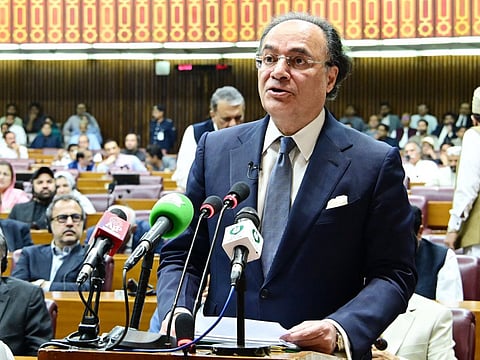
Dubai: Pakistan’s federal budget for 2026-27 delivers one of the most significant packages of incentives for overseas Pakistanis in recent years, while reinforcing the government’s commitment to fiscal stability, IMF-backed reforms and economic discipline.
Presented by Pakistan Finance Minister Muhammad Aurangzeb on June 12, the Rs18.77 trillion budget seeks to balance competing priorities: sustaining economic recovery, maintaining macroeconomic stability, boosting exports and attracting investment, while managing a heavy debt burden and rising security expenditures.
Incentives in Gulf
For millions of overseas Pakistanis, particularly those in the UAE, Saudi Arabia and other Gulf countries, the budget contains several measures aimed at reducing transaction costs and encouraging investment back home.
Among the most notable incentives is a substantial reduction in taxes on international travel and foreign transactions. The government has cut taxes on air travel to destinations across the GCC, Middle East, Africa, Europe, the Americas and Asia-Pacific regions, providing direct relief to frequent travellers and expatriates.
Withholding tax
The budget also lowers withholding tax on international transactions conducted through bank credit and debit cards from 5 per cent to just 0.5 per cent, significantly reducing the cost of spending abroad and facilitating cross-border financial activity.
Another major concession comes in the real estate sector, a preferred investment avenue for overseas Pakistanis. Advance tax rates on property purchases and sales have been sharply reduced. Withholding tax on property purchases has been cut from 2.5 per cent to 1.25 per cent, while the tax on property sales has been reduced from 5.5 per cent to 2.75 per cent. The move is expected to lower transaction costs, encourage documentation and revive activity in the property market.
Capital value tax
The government has also abolished capital value tax on foreign assets, further improving the investment environment for overseas Pakistanis who maintain assets outside the country.
Beyond diaspora-focused measures, the budget reflects Islamabad’s determination to preserve economic stability after narrowly avoiding default in 2023 and securing a $7 billion IMF programme.
Growth target
The government has set an ambitious economic growth target of 4 per cent for the next fiscal year while projecting inflation at 8.2 per cent. It aims to contain the fiscal deficit at 3.6 per cent of GDP and achieve a primary surplus of 2 per cent, a key IMF requirement.
The budget’s underlying message is clear: stability comes first.
Independent analysis by Thames Management Consultants describes the budget as a necessary step toward restoring fiscal credibility. The report argues that Pakistan currently lacks the fiscal space for a large-scale growth-oriented or populist budget and instead needs to focus on debt sustainability and macroeconomic stability.
Debt servicing
Debt servicing remains the largest expenditure item, consuming more than Rs8 trillion, nearly half the total budget. Defence spending has been increased to Rs3 trillion amid heightened regional security concerns, while development spending remains constrained at Rs1 trillion.
The government has, nevertheless, attempted to provide targeted relief. Income tax rates have been reduced for several salaried income brackets, the controversial surcharge on salaried individuals has been abolished, and super tax rates have been reduced for businesses.
Exports
Export-oriented sectors emerge as another major beneficiary. Advance income tax and minimum tax on exports have been lowered from 2 per cent to 1.25 per cent, while the Final Tax Regime for IT and freelance exporters has been extended until 2030. These measures are designed to strengthen foreign exchange earnings and improve competitiveness.
Business leaders have largely welcomed the incentives, arguing that lower transaction taxes and export-focused measures could help revive industrial activity and support the government’s growth targets, provided energy costs remain manageable.
Challenges
However, challenges remain. Analysts warn that Pakistan’s ambitious revenue target of Rs15.26 trillion could place additional pressure on existing taxpayers if efforts to broaden the tax base fail. The budget also lacks a comprehensive strategy for SMEs, youth employment and workforce development, areas widely viewed as critical for long-term growth.
Energy reforms remain another missing piece. High electricity and gas costs continue to undermine industrial competitiveness, while no major structural reforms have been announced to address the issue.
Ultimately, Budget 2026-27 appears less concerned with delivering immediate economic expansion and more focused on consolidating gains made over the past two years. For overseas Pakistanis, it offers meaningful incentives to travel, invest and transact more easily with Pakistan. For the broader economy, it represents a cautious attempt to convert hard-won stability into a platform for future growth.
“The budget reflects the government’s continued focus on macroeconomic stabilisation and IMF compliance rather than economic expansion,” said Muhammad Nafees, a Dubai-based Chartered Accountant. “The relief provided to salaried taxpayers and exporters is welcome, but it remains targeted and limited. While property transaction taxes have been reduced, higher government valuations and existing capital gains taxes may dilute the intended impact on real estate investment.”
Nafees noted that inflation risks remain elevated despite the government’s projections. “The official inflation target appears optimistic given rising global oil prices, higher logistics costs and regional geopolitical uncertainty. If these pressures persist, inflation could exceed government estimates during the fiscal year.”
He added that the budget contains some positive administrative reforms, particularly the move towards a digital tax administration model aimed at improving transparency and reducing direct interaction between taxpayers and tax officials. “However, the budget falls short of introducing transformative measures that could significantly boost productivity, attract large-scale investment or address long-standing concerns of overseas Pakistanis whose remittances remain critical to Pakistan’s external account stability,” he said.
10 key takeaways from Budget 2026-27
Major relief for overseas Pakistanis through lower taxes on foreign transactions and international travel.
Property taxes reduced significantly, making real estate investment more attractive for expatriates.
Withholding tax on international card transactions cut from 5% to 0.5%.
Capital value tax on foreign assets abolished, benefiting overseas investors.
Economic growth target set at 4% for FY2026-27.
Inflation projected at 8.2%, reflecting expectations of moderate price stability.
Income tax relief provided to salaried taxpayers, with lower rates across multiple slabs.
Exporters and IT freelancers receive continued incentives, including lower export taxes and extension of tax concessions until 2030.
Defence spending rises to Rs3 trillion, reflecting regional security priorities.
Fiscal discipline remains the central theme, with IMF commitments, debt reduction and revenue mobilisation taking precedence over large-scale spending programmes.