Philippine rescuers dig for survivors of deadly earthquake
Rescuers dig through rubble with shovels and hands after deadly quake hits the Philippines
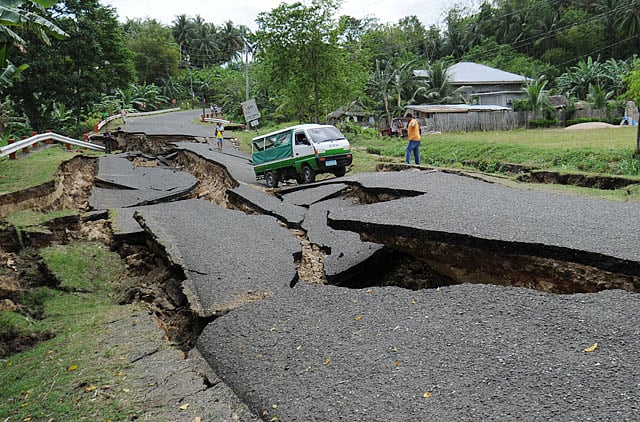
Dumaguete, Philippines: Rescuers in the Philippines dug through rubble with shovels and their bare hands on Tuesday after a powerful earthquake triggered landslides, collapsed homes and killed dozens of people.
The 6.8-magnitude quake hit a narrow strait between the heavily populated islands of Negros and Cebu around lunchtime Monday with more than 200 aftershocks, some nearly as strong, causing further panic throughout the day.
43 confirmed killed
Local military chiefs said 43 people were confirmed killed, but officials warned the death toll may rise. Dozens of others are feared injured or missing with landslides having blocked roads for rescuers in mountainous areas.
"Heavy equipment we've requested from the provincial government has not arrived yet, because the roads and bridges are impassable," said Senior Inspector Alvin Futalan, police chief of Guihulngan town on Negros that was among the most heavily damaged. "We are using our hands and shovels to search in the rubble," he told AFP.
Thirty-nine people were reported killed in Guihulngan, a coastal city of 100,000 people flanked by mountains that was close to the quake's epicentre. The city's public market, court house and private homes in the area had collapsed or were damaged, while landslides buried some houses completely, according to Fatulan.
Army troops, volunteers
He said the city's overwhelmed 42-man police rescue squad had been joined by hundreds of army troops and volunteers in clearing debris as they raced against time to find people still believed missing.
"The army (troops) had to walk about 50 kilometres from the last stop reachable by vehicle to reach us," Fatulan said. Guihulngan is about 90 kilometres to the north of Dumaguete, the capital of Negros Oriental province that covers the southeastern edge of Negros where the worst impacts of the quake were felt. With rescuers still to reach remote hinterland communities, Negros Oriental governor Roel Degamo said he feared there could be more unreported casualties.
Death toll could still rise
"Sadly, we expect the death could still rise," Degamo told AFP. Degamo said telephone communications in some parts were also cut off, leaving information from remote regions unobtainable. He said the public was still in a state of shock and fearful of returning to their homes after dozens of aftershocks.
"We've also had to stop our search efforts from time to time and run to safety because of the aftershocks," he said. Cebu, the Philippines' second biggest city with 2.3 million residents and a popular tourist destination, was 50 kilometres from the epicentre and shook violently during the initial tremor but no deaths were reported there.
The Philippines sits on the Pacific "Ring of Fire" - a belt around the Pacific Ocean where friction between shifting tectonic plates causes frequent earthquakes and volcanic activity.
Sign up for the Daily Briefing
Get the latest news and updates straight to your inbox
Network Links
GN StoreDownload our app
© Al Nisr Publishing LLC 2026. All rights reserved.