Senator Christopher “Bong” Go (C): the plan to raise the price for Philippine passports "unacceptable" and "ill-advised".
Philippine passport fee may rise to ₱1,500 — but not yet
Passport fee hike on hold as DFA balances affordability with APO’s funding needs
Last updated:
6 MIN READ
Starting July 1, 2026, all passport applications and renewals will be exclusively processed by the Philippine Embassy in Abu Dhabi or the Philippine Consulate General in Dubai
File
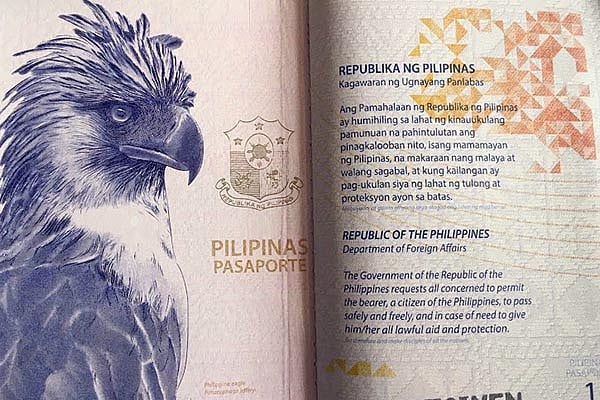
Manila: The cost of getting a Philippine passport could rise from ₱950 to ₱1,500 (about $24), but the Department of Foreign Affairs wants to postpone the increase until the middle of 2028, when the government plans to introduce a new-generation passport.
The proposed increase emerged during a Senate hearing on the DFA's proposed ₱35.17-billion 2027 budget, after APO Production Unit, the government-owned company responsible for producing Philippine passports, sought a higher price to sustain operations.
₱1,500
Reported cost of getting a next-generation Philippine passport, from the current ₱950.
Serious consequences
Senate Finance Committee chairperson JV Ejercito said APO had warned that without a "price adjustment", it could eventually be forced to stop passport production.
“Baka mamaya wala tayong passport by next year (We may not have a passport by next year),” Ejercito said, warning that a disruption would have serious consequences for Filipinos who need passports for travel, employment and other purposes.
Get it: Fast, verified news for FREE ... download the Gulf News app — simply click here
But Foreign Affairs Secretary Maria Theresa Lazaro told senators that the DFA had asked APO to defer the increase.
The reason: the Philippines is preparing to roll out its Next Generation Philippine Passport in 2028, meaning the government could end up changing the fee twice within a relatively short period.
How much is a Philippine passport now?
The current regular passport processing fee is ₱950.
Applicants who choose expedited processing pay ₱1,200. The DFA's official passport website lists these as the current fees for both new applications and renewals.
The proposed regular fee discussed at the Senate hearing is ₱1,500.
That would mean:
Current regular fee: ₱950
Proposed regular fee: ₱1,500 (about $24)
Increase: ₱550
Percentage increase: about 58%
Current expedited fee: ₱1,200
Possible discounted proposed rate: ₱1,200 for some groups, including OFWs, according to Ejercito
The ₱1,500 figure is not yet a new passport fee. It is a proposed adjustment sought in connection with passport-production costs.
Why does APO want a higher fee?
APO Production Unit is a government-owned and controlled corporation that produces high-security government documents.
The DFA and APO signed an agreement for the country's integrated electronic passport system in 2015. APO's high-security facility in Lima Technology Center in Batangas handles passport booklet production and personalization, including embedding the electronic chip containing the holder's biometric information.
APO says it has produced 24.9 million Philippine ePassports since 2016.
Unlike an ordinary printed document, an ePassport involves security paper, specialised printing, personalisation, biometric data, electronic chips, quality control and secure handling.
APO describes itself as a self-sustaining government corporation, meaning it does not receive a regular appropriation from the national government and instead finances its operations through its business activities.
Subsidy
That makes the passport fee particularly important to the economics of the production system.
Ejercito said APO's warning raises a larger question for the government: whether it should instead provide a subsidy if keeping the passport fee at ₱950 is considered necessary.
The senator asked the DFA to inform Congress if financial support is needed to keep passport production running, although he also acknowledged the government's limited fiscal space.
Why does the DFA want to wait until 2028?
The proposed delay is closely tied to the next-generation Philippine Passport.
The DFA has been preparing a new passport design and technology for rollout in 2028.
The planned document is expected to feature a redesigned booklet, additional pages, enhanced security features and newer contactless-chip technology.
The DFA has allocated about ₱2.8 billion in its proposed 2027 budget for preparations for the new passport.
Lazaro told senators that increasing the price in January, as APO had requested, would create a problem because the passport itself would change in 2028.
There is also a legal constraint.
Under Republic Act 11983, the New Philippine Passport Act, passport fees may not be increased more than once every three years.
The law repealed the previous 1996 Passport Act but retained the three-year restriction on fee increases.
That means the DFA is wary of raising the price now and then being unable to adjust it again when the next-generation passport is introduced.
In practical terms, the department would rather align the price adjustment with the new passport system.
Why has the fee remained ₱950 for so long?
The DFA says the proposed adjustment comes after more than a decade without an increase.
At the same time, Philippine passports became valid for longer periods during that period. Under the 2017 amendment, regular passports became valid for 10 years for adults, while passports issued to people below 18 remain valid for five years.
That means the current ₱950 fee buys a document that, for most adult Filipinos, can be used for twice as long as the old five-year passport.
The government therefore faces two competing considerations: keeping passport services affordable while ensuring that the specialized production system remains financially sustainable.
What about OFWs?
The proposed ₱1,500 price has particular significance for overseas Filipino workers, who frequently need valid passports to maintain employment and legal status abroad.
Ejercito said APO had mentioned a possible discounted rate of ₱1,200 for OFWs, senior citizens and other qualified groups.
That would put the proposed discounted rate at the same level as today's expedited-processing fee.
However, the discount is not yet a final government-approved fee schedule.
What happens if APO cannot sustain production?
This is the most immediate issue behind the debate.
APO's warning, as relayed by Ejercito, is that continuing to produce passports at the current price could eventually become financially unsustainable.
A disruption would not simply mean higher prices.
The Philippines issues millions of passports, and the document is essential for international travel, overseas employment, migration, education and other cross-border activities.
The government therefore has several options: negotiate with APO, adjust the price, provide some form of government support, reduce costs, or combine these approaches.
For now, the DFA is pursuing negotiation rather than an immediate increase.
A second passport problem: airport e-gates
The Senate hearing also raised another issue affecting Filipino travellers: reports that some Philippine passports cannot be properly read by automated immigration e-gates.
DFA Assistant Secretary for Consular Affairs Anne Jalando-on Louis described the reported cases as isolated but said the agency had formed a technical working group to investigate them.
The DFA said it had already submitted the technical specifications of the Philippine passport to the International Civil Aviation Organization (ICAO) to ensure that the document complies with international requirements.
The problem, officials said, may instead involve the airport's passport readers.
Jalando-on Louis acknowledged that there had been "insufficient coordination" between the DFA and the Bureau of Immigration, which operates the e-gates.
An ePassport consists of two sides of the system: the passport itself and the machine that reads its electronic chip.
If the passport meets the required technical standards but the reader is not properly configured, travellers can still encounter problems.
The DFA said the technical working group is addressing the issue.
What's next?
On Sunday, Senator Christopher “Bong” Go said he finds the plan to raise the price for Philippine passports "unacceptable".
"The timing is ill-advised. We are in the midst of a crisis caused by the turmoil in the Middle East, which has triggered successive hikes in the prices of oil, basic commodities, and services,” Go stated in Filipino in a Facebook post.
“Furthermore, the number of unemployed individuals continues to rise, based on the latest data from July 2026,” he said.
For now, the ₱950 regular passport fee remains in effect.
The DFA will continue discussions with APO over the proposed adjustment and has asked the government printer to defer any increase.
The department's preferred timetable is to introduce the higher fee alongside the Next Generation Philippine Passport in mid-2028, rather than impose an increase shortly before a new passport system is introduced.
Congress could also be asked to consider support for passport production if the government determines that keeping fees low is necessary.
Meanwhile, preparations for the new passport are already included in the DFA's 2027 budget proposal.
So the immediate question is not whether Filipinos will suddenly pay ₱1,500 for a passport.
They won't — not yet.
The government is now weighing three things at once: the financial sustainability of passport production, the cost to millions of Filipino travellers and the planned transition to a new-generation passport in 2028.
Sign up for the Daily Briefing
Get the latest news and updates straight to your inbox
Network Links
GN StoreAbout Gulf NewsTerms & ConditionsReach by GNSitemapContact usPrivacy PolicyGN FocusHave your sayWork with usAdvertise with usGulf News epaperPrinting Services
Download our app
© Al Nisr Publishing LLC 2026. All rights reserved.