DPWH Secretary Vince Dizon presented some of the "air assets” linked to Ako Bicol Representative Elizaldy “Zaldy” Co (inset).
Passport problem: Fugitive Philippine ex-Rep Zaldy Co in Portugal? Manila faces legal, diplomatic dilemma
Zaldy Co reportedly travelled to Sweden using a Portuguese passport
Last updated:
4 MIN READ
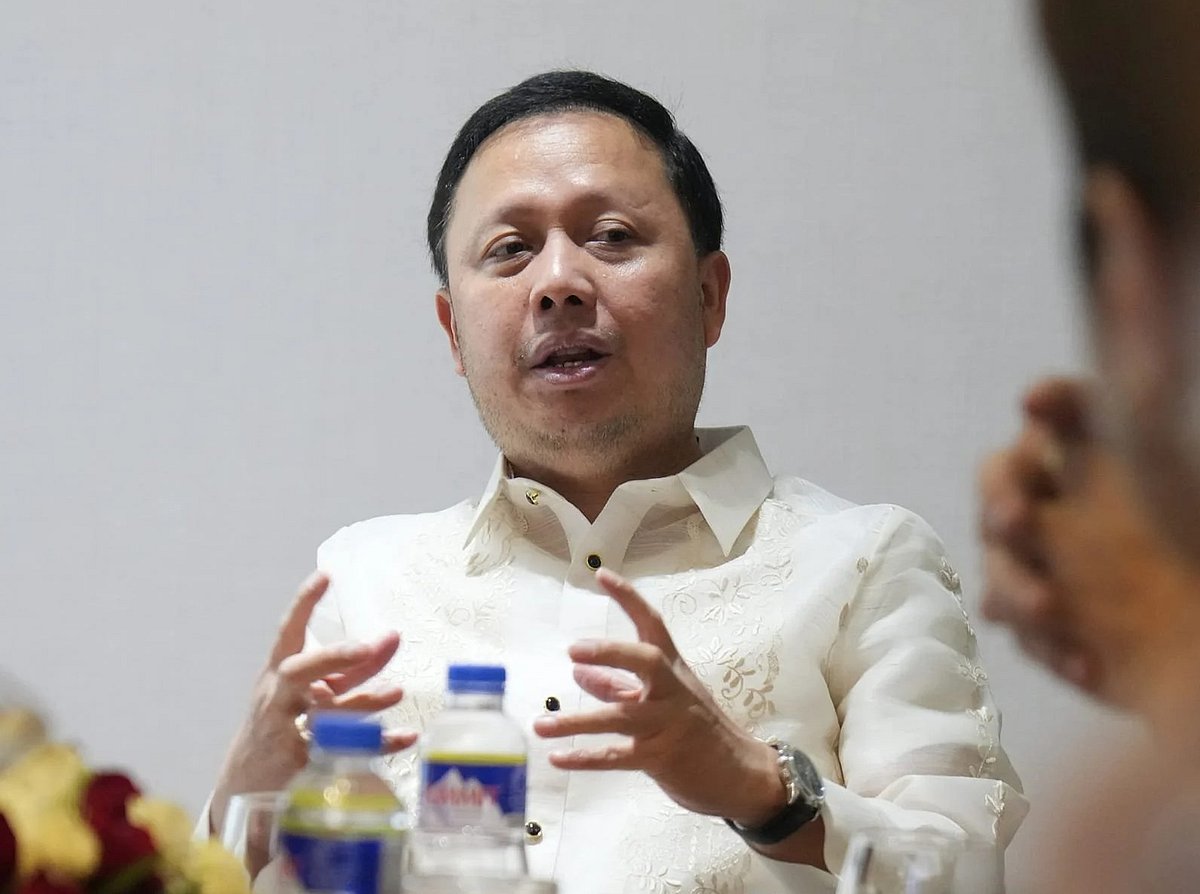
Elizaldy "Zaldy" Co, the former Ako Bicol party-list congressman, vanished after he left the Philippines in August 2025 for the US, citing medical treatment. US records show he departed New York on September 13, with unconfirmed sightings in several countries, including Spain and Portugal.
X | @barurot_news
Manila: The Philippine government is confronting a legal and diplomatic dilemma in its attempt to secure the return of fugitive ex-congressman Zaldy Co, who has reportedly travelled in Europe using a Portuguese passport.
Manila has already cancelled the Philippine passport of Co, who once chaired the powerful House Appropriations Committee overseeing the country’s multi-trillion-peso national budget.
Co, 55, a mega-contractor who represented AKO Bicol Party List in the House of Representatives, is facing allegations over his direct hand in the so-called “ghost” flood control projects that has been exposed in a livestreamed probe.
These projects were earlier flagged by Ferdinand Marcos Jr. as part of a broader review of infrastructure spending anomalies.
Ordinary Filipinos are riled by the expose.
The passport complication
Interior Secretary Jonvic Remulla confirmed that while Co’s Philippine passport has been cancelled, authorities believe he is now using a valid Portuguese passport.
According to Remulla, there are no formal negotiations underway between the Philippine government and Co, although “feelers” may exist.
He added that Co is believed to be residing in a "gated community" in Portugal, based on intelligence reports.
The Department of the Interior and Local Government (DILG) is now coordinating with Interpol to “red-flag” Co’s Portuguese travel documents and trace his international movements.
Co travelled to Sweden using Portuguese passport
Reports indicate that he presented a Portuguese passport during documentation in Sweden on January 15, 2026 — and intriguingly, that passport allegedly carries the same expiration date as his cancelled Philippine passport.
What the Philippine government can do
Under Philippine law, authorities may:
Cancel a Philippine passport once criminal charges are filed or upon court order.
Request an Interpol Red Notice to alert member states that a person is wanted.
Formally seek extradition if a treaty exists.
Initiate diplomatic representations through the Department of Foreign Affairs.
What it cannot easily do
However, the government faces key constraints:
The Philippines has no extradition treaty with Portugal, limiting automatic surrender mechanisms.
Portugal is not obligated to deport or extradite one of its own passport holders absent strong legal grounds.
Dual citizenship complicates nationality claims and consular leverage.
Interpol notices do not compel arrest; they only alert authorities.
The broader dilemma
The case underscores the vulnerability of domestic enforcement in an era of global mobility.
If Co is indeed traveling under Portuguese citizenship, Manila’s path forward will likely depend on either convincing Portuguese authorities to prosecute locally under their laws, negotiating a special surrender arrangement, or building a case strong enough to withstand judicial scrutiny in Europe.
For now, the pursuit of Zaldy Co highlights the intersection of corruption investigations, dual nationality, and the limits of sovereign reach in international law.
Can Zaldy Co’s property, businesses be confiscated?
If Zaldy Co has effectively lost or renounced his Filipino citizenship and now stands solely as a Portuguese national, the Philippine government’s authority over his properties and business interests does not automatically expand.
Instead, it remains tightly bound by constitutional safeguards, property rights doctrine, and criminal law procedures.
Under the 1987 Philippine Constitution, private land ownership is generally reserved for Filipino citizens and for corporations that are at least 60 percent Filipino-owned.
If Co is no longer a Filipino citizen, he cannot legally acquire new land in the Philippines.
But what happens to land he may have acquired while he was still Filipino is far more complicated.
Philippine jurisprudence has consistently held that the loss of citizenship does not automatically invalidate land lawfully acquired at a time when the owner was qualified to hold it.
Ownership does not simply evaporate with a change in nationality.
However, continued ownership could be challenged if it runs afoul of constitutional restrictions.
Escheat, reversion procedings
In such cases, the government may initiate escheat or reversion proceedings through the Office of the Solicitor General, asking the courts to determine whether the property must be transferred or disposed of in favor of qualified Filipino citizens.
Expropriation is a separate matter altogether. The State may expropriate private property only for public use and upon payment of just compensation. It cannot seize land as a form of punishment.
Property confiscation
Confiscation, meanwhile, hinges not on citizenship but on criminal liability.
If Co faces charges for corruption, plunder, or graft, and prosecutors can prove that specific assets constitute ill-gotten wealth or proceeds of unlawful activity, courts may order asset freezes or forfeiture proceedings.
These remedies arise from proof of illegality, not nationality.
The same principle applies to corporations in which he may hold shares. In industries restricted by foreign ownership limits, his equity would count as foreign participation.
Regulators could require restructuring or divestment if ownership thresholds are breached. But his shares cannot be automatically confiscated absent a criminal conviction or judicial forfeiture order.
Ultimately, the loss of Filipino citizenship does not, by itself, strip a person of property rights.
The government’s strongest legal path: not in nationality-based dispossession, but in pursuing criminal forfeiture — if it can prove the assets were unlawfully acquired, as per legal experts.
Sign up for the Daily Briefing
Get the latest news and updates straight to your inbox
Network Links
GN StoreAbout Gulf NewsTerms & ConditionsReach by GNSitemapContact usPrivacy PolicyGN FocusHave your sayWork with usAdvertise with usGulf News epaperPrinting Services
Download our app
© Al Nisr Publishing LLC 2026. All rights reserved.