Bill abolishing travel tax for Filipinos gets committee nod
Lawmakers push to seek alternative funding for tourism, education, and cultural programmes
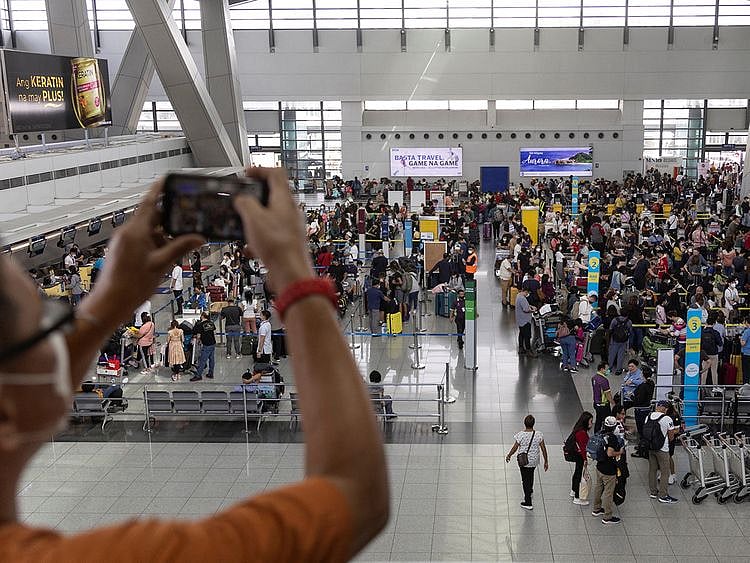
Dubai: A key panel at the house of representatives of the Philippines has approved a measure seeking to abolish the Philippines’ travel tax, a move that could lower the cost of flying out of the country for millions of passengers.
The house committee on tourism, chaired by Romblon representative Eleandro Jesus Madrona, has approved a consolidated bill covering 18 separate proposals calling for the scrapping of the tax.
If passed as a law, the proposed measure will eliminate the ₱1,620 to ₱2,700 travel tax imposed on passengers departing the Philippines.
What is travel tax?
In the Philippines, travel tax is a mandatory levy imposed by the government on individuals leaving the country, regardless of where the ticket was purchased.
In a recent development, the abolition of the travel tax has been added to the priority list of the Legislative-Executive Development Advisory Council (LEDAC), with lawmakers targeting approval by June this year.
LEDAC serves as a consultative and advisory body to the president on programs and policies that require legislative actions.
Concerns over funding gaps
Despite broad support for the measure, lawmakers have stressed the need to ensure continued funding for programmes that currently rely on travel tax revenues.
Under Republic Act No. 9593, also known as the “Tourism Act of 2009”, collections from the travel tax are allocated to key agencies including the Tourism Infrastructure and Enterprise Zone Authority (TIEZA), the Commission on Higher Education (CHED), and the National Commission for Culture and the Arts (NCCA).
In a statement, committee on appropriations chairperson Mikaela Angela Suansing said discussions would continue among the relevant committees to ensure funding continuity.
"We will communicate, of course with authors of the measures and the three chairpersons, chair Madrona, chair Quimbo (ways and means), and myself since the bill would affect these three committees," said Suansing in a mix of English and Filipino.
She added, "Rest assured po, given the criticality of the funds, we will work together to ensure that those funds will remain available for the departments of the different government institutions involved."
₱8.7 billion collected in 2025
Meanwhile, TIEZA chief operating officer Mark Lapid has told the panel that travel tax collections have reached ₱8.7 billion last year.
The funds have been used for tourism development, upgrading public tourist sites, supporting cultural heritage and ecotourism destinations, and encouraging private sector investment in designated tourism enterprise zones.
A portion of the collections has also been channelled to CHED and NCCA in line with their respective mandates.
Impact on scholarships and arts
For her part, CHED commissioner Dr. Shirley Agrupis has warned that repealing the travel tax without identifying a replacement funding source could significantly affect the Higher Education Development Fund (HEDF), or the trust used to support developments and upgrades in tertiary education.
Moreover, she has noted that 40 percent of travel tax collections account for 85.6 percent of HEDF resources.
"HEDF supports scholarships, research, institutional development, and tourism education programs, benefiting 5.4 million students in 1,906 higher education institutions, including 1.6 million scholars," stated Agrupis.
Additionally, NCCA deputy executive director Marichu Tellano has stressed that any repeal should guarantee a replacement appropriation for the national endowment fund for culture and the arts, at an amount not lower than the agency’s average share from travel tax collections.
This, to ensure that cultural and arts programmes across the country remain supported even if the tax is scrapped.
For many Filipinos, the proposed abolition could mean cheaper overall travel expenses. However, lawmakers face the challenge of balancing travel affordability with sustained funding for tourism, education, and cultural development.
Network Links
GN StoreDownload our app
© Al Nisr Publishing LLC 2026. All rights reserved.