Islamabad: For a Pakistani producer, winning advertisements and applause for a family-centred drama serial were impossible till about two years ago.
Drama programmes on India's Star Plus have been Pakistani female folks' irresistible addiction.
"Our private channel virtually switched to copycat mode; from informal script to colourful costumes and from unrealistic visual effects to high-sounding background music," said Beenish Wayne, a TV drama critic and social activist.
On the flip side, news channels attracted more viewers for their witty and subjective primetime talk shows. Live coverage of post-terror attacks became another depressing pastime of an otherwise laid back nation.
In such a challenging setting came Khawar Azhar with his serial play Khuda Zameen Se Gaya Nahin.
Executive producer Azhar teamed up with renowned playwright Asghar Nadeem Syed and young director Kashif Nisar.
Together they won two awards in the "Best Drama" and "Best Writer' categories in the 9th Lux Style Awards.
The seasoned communication expert set the tone for a new kind of drama in Pakistan. The drama serial was staged with a backdrop of blood spilt in the name of Islam in Pakistan.
Adding value
Paying homage to the resilience of the Pakistani people and their armed forces, the play set the tone for reenacting real life accounts of people who resisted the forces of chaos and hatred. The drama serial not only won awards and rare recognition for its production and story line but also for adding value to the subject matter of TV plays.
A few weeks after its launch, Faseel-e-Jaan Se Aagay highlights stories based on Pakistanis who stood their ground against extremists.
Eleven stories of unsung heroes of Swat and Malakand were chosen in an effort "to present the human face of the war to the people and the world," Azhar told Gulf News.
For a nation that invariably loses its citizens in acts of terrorism daily, there should be no dearth of human stories of courage and defiance.
Since 9/11, conservative estimates suggest that 33,000 Pakistanis have lost their lives at the hands of terrorists. Azhar believes that as much as the plays educate the people about the tactics of extremists, it is the best way to help civil society and the government de-radicalise the society against the creeping ideology of extremist thoughts.
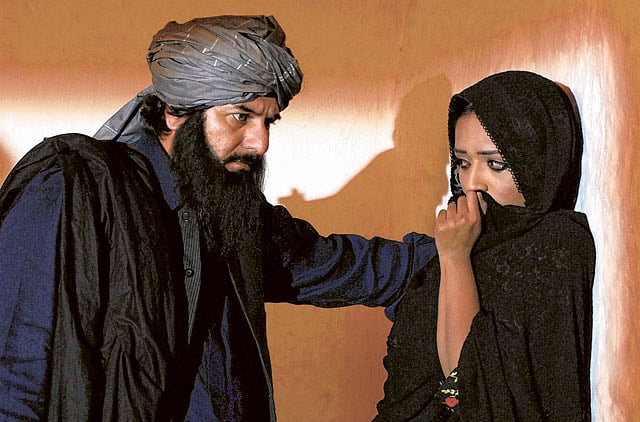
Eik Beti Eik Kahani is an unbelievably true story of a 16-year-old girl who was kidnapped and brutally maltreated and raped for about two months in Mingora. She was later given to a 72-year-old Afghan commander. She survived the ordeal to expose yet another hidden face of extremism.
Mitti ka Qarz highlights the story of police officer Javed Iqbal while Inkaar is a touching true story of a suicide bomber who changed his mind in carrying out his mission at the last minute.
Trying to do something larger than life, legendary Rahat Fateh Ali and Shafqat Amant Ali Khan lent their voices for the play's theme song "Imtihan Hai Imtihan". It was composed by Sahir Ali Bagga.
"Its stories revolve around how faith comes to dominate our lives."
Both the perpetrator and the victim in the story share the same faith, yet they are poles apart in interpreting and teaching its many beliefs and values.
The sterling fightback against the imposition of a rigid order and territorial usurpation in the name of religion is at the core of this series.
Today, Azhar is not alone in humanising the war against terror. His work has stimulated a dozen other playwrights to look at the societal problem instead of glamorous never-ending serials portraying women as witches.
Sign up for the Daily Briefing
Get the latest news and updates straight to your inbox
Network Links
GN StoreDownload our app
© Al Nisr Publishing LLC 2026. All rights reserved.