Dunes International School rethinks teaching and learning for a changing world
In conversation with Paramjit Ahluwalia, Director-Principal, Dunes International School
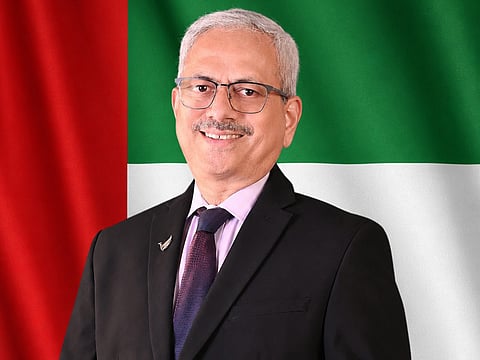
How is your school rethinking teaching and learning so that students develop not only academic strength, but also adaptability, problem-solving abilities and the confidence to navigate uncertainty?
At Dunes, we've always believed that preparing children for exams is only half the job. The other half the more important half is preparing them for life. For the unexpected. For the moments when there's no textbook answer.
So we've shifted the way we teach. Less memorisation, more questioning. Less "here's the answer" and more "what do you think, and why?" Through projects, hands-on challenges, and a culture where making mistakes is genuinely seen as part of learning, our students grow into young people who can think on their feet, work with others, and face uncertainty without freezing.
Whether it's robotics, Model UN, or an entrepreneurship club, every experience is designed to build confidence alongside knowledge. We want every child leaving our school to feel ready not just for university, but for whatever the world throws at them.
Many schools speak about future-ready learning, but translating that into the curriculum requires concrete change. How are you redesigning classroom experiences, subject integration and assessment methods to ensure students are developing skills that remain relevant in a fast-changing global economy?
We knew that talking about future-ready education wasn't enough we had to actually build it into everyday school life. That meant breaking down the walls between subjects. Science connects to sustainability. Maths connects to real design problems. English connects to how you communicate an idea that matters to you. Students aren't just sitting and listening they're investigating, debating, building, and presenting. And how we assess students has changed too. Yes, exams still have a place. But so do portfolios, exhibitions, and presentations because the world doesn't just test what you know, it tests what you can do with what you know.
We redesigned classrooms for inquiry, linked subjects through real-world projects, and balanced tests with portfolios. The result: students who can apply skills, not just recall content.
Assessment extends beyond traditional examinations to include projects, presentations, portfolios, and reflective activities, enabling students to demonstrate both academic understanding and essential future skills. Through these approaches, we are preparing learners to adapt, innovate, and succeed in a rapidly changing world.
What specific initiatives has your school introduced to help students better understand emerging industries, evolving career opportunities and the expectations of higher education institutions worldwide?
We start career conversations early from Grade 6 because we've found that the earlier a young person starts understanding who they are and what excites them, the more confident they become in their choices.
Students attend university fairs, hear from industry experts, take part in hackathons and internships, and explore fields like AI, sustainability, and entrepreneurship not as abstract ideas, but as real pathways. We support families through the university application process for the UK, US, Canada, Australia, UAE, and beyond.
The goal isn't just getting into a good university. It's making sure students know why they're going, and what they want to do when they get there.
Career guidance is increasingly moving beyond university counselling into long-term life planning. How does your school support students in making decisions about higher education, career pathways and skill development?
University counselling is important but we think of what we do as something bigger: life planning.
Through one-to-one mentoring, psychometric assessments, and honest conversations about strengths and values, we help students figure out not just what they're good at, but what genuinely matters to them. That clarity is what helps them make decisions they feel confident about whether that's choosing a course, a university, or a career direction.
We also make sure they're building the skills that future employers and institutions actually care about: critical thinking, communication, digital literacy, adaptability, and the ability to keep learning throughout their lives.
Our goal is to ensure that every student graduates with the awareness, confidence, and skills needed to thrive in higher education, future careers, and an ever-evolving global landscape.
Extracurricular programmes are now considered an integral part of student development. How are sports, arts, innovation programmes, entrepreneurship initiatives or leadership opportunities being designed to strengthen competencies that are valuable for future careers and real-world success?
Our sports, arts, and innovation programs are designed to build the human skills employers want. At Dunes, students graduate with experiences that prove they can lead, create, and adapt.
Every sport, every performance, every school club at Dunes has a purpose beyond the activity itself.When a student plays on a team, they're learning how to handle pressure and support others. When they perform in a play, they're building the confidence to stand in front of a room and own a moment. When they code a robot or pitch a business idea, they're learning to solve problems creatively and persist when it doesn't work first time.
These aren't "extras" they're central to who our students become. And they're the experiences that universities and employers notice, because they show character, not just grades.
We want every student who walks out of Dunes to feel genuinely ready and genuinely themselves.
By connecting extracurricular experiences with real-world applications, Dunes ensures that students not only discover their interests and talents but also develop transferable skills that are highly valued by universities, employers, and future industries. These programmes help nurture confident, adaptable, and future-ready learners who are prepared to thrive in an evolving global landscape.


