Pakistan rules out joining Abraham Accords, reiterates firm stance on Palestine
Foreign Office clarifies Board of Peace role, says move aims to support Gaza ceasefire
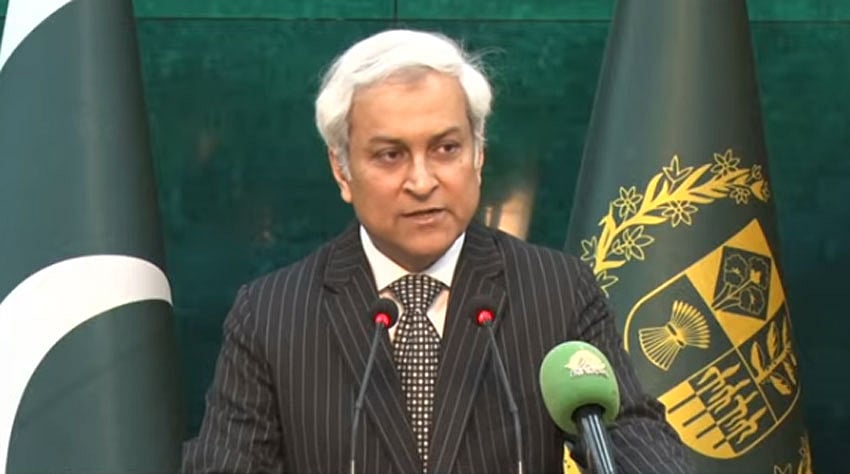
Dubai: Pakistan has categorically ruled out becoming a party to the Abraham Accords, reaffirming that its long-standing position on Palestine remains unchanged, the Foreign Office said on Thursday, dismissing speculation linking Islamabad’s recent diplomatic engagement to the normalisation framework.
Addressing a weekly news briefing, Pakistan Foreign Office Spokesperson Tahir Andrabi described claims connecting Pakistan’s participation in the Board of Peace with the Abraham Accords as a “misconception,” stressing that the two are entirely unrelated.
“Joining the Board of Peace has no connection with the Abraham Accords and does not represent any deviation from Pakistan’s principled position on Palestine,” Andrabi said.
Gaza ceasefire
He explained that Pakistan’s decision to join the Board of Peace was taken collectively by the Ministry of Foreign Affairs in consultation with all relevant stakeholders, following the completion of required procedural formalities, Radio Pakistan reported.
According to the spokesperson, Pakistan’s primary objective is to help consolidate and sustain the ceasefire in Gaza, support post-conflict reconstruction, and advance a just and lasting peace based on the Palestinian people’s right to self-determination.
Andrabi noted that Pakistan is part of a broader initiative involving seven other Muslim-majority countries including: Saudi Arabia, Turkiye, Egypt, Jordan, the United Arab Emirates, Indonesia and Qatar, aimed at promoting peace in Gaza and working towards a durable solution to the Palestini-an question.
Glimmer of hope
Referring to the humanitarian crisis in Gaza, he said the Board of Peace offers a “viable glimmer of hope” amid widespread suffering, destruction and loss of life.
The spokesperson also clarified that the Board of Peace does not replace the United Nations, but operates under a specific mandate authorised by a UN Security Council resolution. “It is intended to complement, not undermine, the UN system,” he said.
He further stated that Pakistan has not taken any decision to join the International Stabilization Force, adding that membership of the Board of Peace does not imply the deployment of Pakistani troops.
Regional issues
On regional issues, Andrabi reiterated Pakistan’s opposition to the use of force and coercive measures, including sanctions against Iran, and rejected interference in Tehran’s internal affairs. He said Pakistan would continue to advocate peace and diplomacy, warning that the region “cannot afford war and turmoil.”
Responding to a question on a revised US travel advisory, the spokesperson said it was “not a downgrade, but an update,” noting that some previous security-related points had been removed. He added that Pakistan remains a safe and open destination for international travellers, and that Islamabad and Washington are engaged through diplomatic channels to facilitate travel between the two countries.
Network Links
GN StoreDownload our app
© Al Nisr Publishing LLC 2026. All rights reserved.