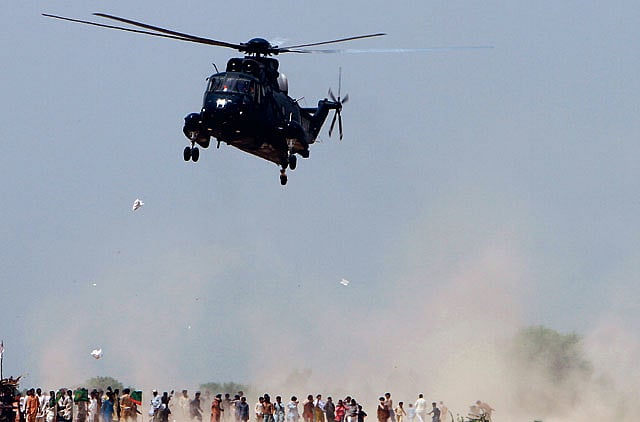
Sukkur: Pakistan President Asif Ali Zardari flew in to a flood-hit area yesterday for a first look at the two-week-old crisis after criticism over his trips abroad and his government's perceived slack response.
The floods, triggered by torrential monsoon downpours, have swamped Pakistan's Indus river basin, killing more than 1,600 people, forcing three million from their homes and disrupting the lives of about 14 million people, or 8 per cent of the population.
The deluge, which began two weeks ago, has caused extensive damage to the country's main crops, agriculture officials said, after the United Nations appealed for $459 million (Dh 1.6 billion) in emergency aid and warned of a wave of deaths if help didn't arrive.
Rehabilitation
Agriculture is a mainstay of the economy and the United Nations has estimated rehabilitation costs will run into the billions of dollars.
The International Monetary Fund has warned of major economic harm and the Finance Ministry said the country would miss this year's 4.5 per cent gross domestic product growth target though it was not clear by how much.
Zardari, widower of assassinated former prime minister Benazir Bhutto, set off on much-criticised visits to meet the leaders of Britain and France as the floods were beginning.
Two days after returning home, he flew to city of Sukkur on the banks of the swollen Indus river in the southern province of Sindh to inspect the destruction and aid efforts.
"President Zardari is visiting the one-mile (2km) long Sukkur barrage. From here he will visit a flood victims' camp," said presidential spokesman Farhatullah Babar.
Security was tight with only state media allowed access.
Several barrages have been built across the river to divert water into irrigation canals and the flood waters have been building up alarmingly behind them.
Ahmad Kamal, spokesman for the National Disaster Management Authority, said water levels may rise dangerously tomorrow and again early next week along stretches of the Indus in the central province of Punjab and in Sindh.
"There can be further devastation," he told reporters. The meteorological office forecast scattered rain with a chance of thunderstorms across much of the country.
Security worries
The government is still assessing the extent of the damage but a spokesman for UN humanitarian efforts said a third of the country had been affected.
Hundreds of roads and bridges have been destroyed from northern mountains to the plains of the south. Countless villages have been inundated, crops destroyed and livestock lost.
People have been jostling for food at distribution points throughout the disaster area, with the Muslim fasting month of Ramadan, when hungry people end their fast at dusk with a special meal, adding to people's anxiety.
"The government ... should provide clean water and clean food to the people," said Mohammad Ali, a bread maker scrambling for supplies in the northwest. "Ramadan has arrived, but we see no sign of the government giving us any of these things."
The wheat, cotton and sugar crops have all suffered significant damage and the United Nations has warned of a second wave of death from disease and food shortages unless help for the displaced arrived quickly.
Economic woes
Pakistan's main stock market has lost more than 5 per cent since the floods began and ended flat in thin trade yesterday as investors fretted about the economic costs, in particular the impact on inflation, dealers said.
The military, which has ruled for more than half of Pakistan's 63-year history, has taken the lead in aid efforts, reinforcing the faith many people have in the armed forces and highlighting the ineffectiveness of civilian governments.
Analysts say the armed forces will not try to take power as they have vowed to shun politics and are busy fighting militants.
The United States announced on Wednesday it was tripling the number of helicopters helping in Pakistan from six to 19 and was also sending in a landing platform to be used off the coast.
The United States needs a stable Pakistan to help it end a nine-year war by the Taliban in Afghanistan.
Some US officials have said they are are worried that the Pakistani military might have to draw soldiers off the Afghan border to help rescue flood victims, giving militants breathing room.
Sign up for the Daily Briefing
Get the latest news and updates straight to your inbox
Network Links
GN StoreDownload our app
© Al Nisr Publishing LLC 2026. All rights reserved.