Ant garnish on dessert? Michelin-star restaurant owner faces jail
Two-Michelin-star restaurant allegedly served nearly 49,000 imported ants over four years
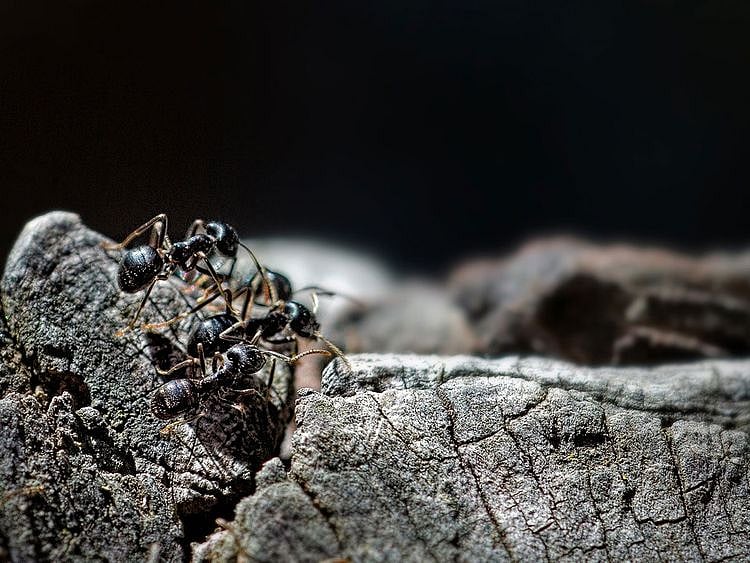
Dubai: A Michelin-starred restaurant owner in South Korea is facing a possible one-year prison sentence after admitting to serving ants as a garnish on desserts, an ingredient that is not approved for human consumption under the country's food safety laws, according to a BBC report.
Prosecutors have also asked the court to fine the restaurant 20 million Korean won (about Dh49,660).
Get updated faster and for FREE: Download the Gulf News app now - simply click here.
Online reviews
The case did not begin with a customer complaint. Instead, officials from South Korea's Ministry of Food and Drug Safety have launched an investigation after finding online restaurant reviews that included photographs of dishes sprinkled with ants.
In another report from The Korean Herald, prosecutors have revealed that the restaurant served ant-topped sorbet over 12,200 times, with an estimated 120 million Korean won in revenue.
Investigators have estimated that around 49,000 ants imported from the US and Thailand were used in several dishes over a four-year period.
Only a small part
The restaurant owner did not deny using ants. In court, he has argued they featured only in a "small part" of the restaurant's 15-course tasting menu, where they were used as a topping for sorbets.
Additionally, he has mentioned that diners were informed that they could choose a different garnish instead. In its defence, about 60 percent of customers have opted to try the ants, while others selected alternatives such as fermented vinegar or edible flowers.
The owner has further argued that ants are used as ingredients in restaurants in countries including Australia, Denmark, and the UK.
Legal issue
While edible insects are consumed in many parts of the world, South Korean law permits only 10 insect species for human consumption. The approved list has included grasshoppers, locusts, and two-spotted crickets, but not ants.
Authorities assess insects before approving them as food based on factors including food safety risks, toxicity, nutritional value, and whether they can be bred and processed hygienically.
Restaurant's identity remains unknown
Meanwhile, court documents do not identify either the restaurant or its owner. The Michelin Guide has noted that 10 restaurants in South Korea, all located in Seoul, currently hold two Michelin stars.
The Michelin Guide awards up to three stars based on criteria including ingredient quality, mastery of flavour, cooking techniques, the chef's personality expressed through the cuisine, and consistency. Two stars signify restaurants offering "excellent cooking" that is "worth a detour."
Verdict due on September 2
The court has been expected to deliver its verdict on September 2. Whatever the outcome, the case has put an unusual spotlight on the fine line between culinary innovation and food regulation.
Although ants have been banned as a food ingredient under South Korean law, they have long been part of traditional cuisines elsewhere.
Weaver ants and their eggs have been used in Thai and Cambodian cooking, while queen ants are considered a delicacy in Colombia, a reminder that what belongs on the plate often depends as much on local law and culture as on taste.
Network Links
GN StoreDownload our app
© Al Nisr Publishing LLC 2026. All rights reserved.