Does your protein contain insects? Dubai Municipality launches new lab to find out
Test introduced due to global shift towards insect protein from mealworm larvae, cricket
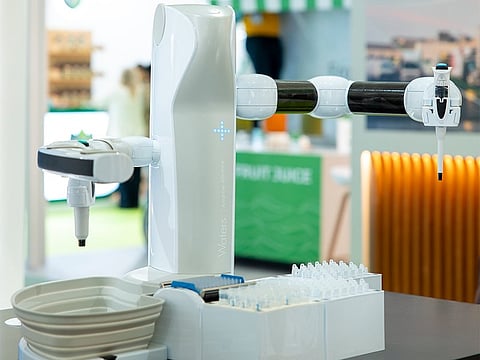
Dubai: Does the protein that you eat come from insects like mealworm larvae or house cricket? Dubai authorities can now find that out.
Dubai Municipality has launched a specialised laboratory dedicated to detecting insect residues in food products, marking a significant step in the emirate's food safety infrastructure.
The announcement was made on the inaugural day of Gulfood 2026, the world's largest annual food and beverage exhibition, taking place at Dubai World Trade Centre from January 26 to 30.
The new facility at Dubai Central Laboratory (DCL) has been equipped with the latest instruments and technologies designed to enable accurate and rapid detection of insect residues in food products.
The laboratory is currently in a pilot operational phase which is expected to conclude during the first quarter of this year. Once completed, the facility will officially begin receiving samples and conducting analyses, officials revealed.
Why are insects eaten?
The initiative responds to accelerating climate change affecting natural resource availability and a global shift towards alternative and sustainable protein sources. This includes the use of specific types of insects as a protein source in food products, supported by international legislation and standards approved during the past year.
Dr Naseem Mohammed Rafee, acting CEO of the Environment, Health and Safety Agency at Dubai Municipality, said it is a first-of-its kind project for insect testing in food products.
Officials pointed out that the use of insects as an alternate source of protein is not new and insects are regularly eaten in many countries.
Why testing now?
However, the situation changed from 2018. The Novel Food Regulation EU defined whole insects as a type of novel food that requires authorisation.
The first authorisations for certain insect forms were granted in 2021 and 2022. These included dried yellow mealworm larvae and frozen, dried and powder forms of the house cricket.
In January 2025, the European Commission also authorised UV-treated powder of whole yellow mealworm larvae as a novel food.
AI assistant for food safety
Visitors to the exhibition are introduced to Rashid Robot, which offers an interactive experience and guides audiences through the latest laboratory innovations and digital services.
Visitors are further introduced to Ghalia, an AI-powered virtual assistant developed to provide instant support on food safety and school nutrition guidelines in Dubai. The assistant serves students, parents, and food suppliers with fast, reliable access to essential regulatory and health information.
Dr Naseem said: "Dubai Municipality is shaping the future of food safety in Dubai through innovation and digital transformation across the food ecosystem, making it more advanced, resilient, and sustainable.
"Advanced technologies and smart solutions play a pivotal role in enhancing inspection accuracy, transparency, and response speed, while supporting a sustainable food system. Through our innovative digital services and qualitative initiatives, we seek to facilitate food trade in the region and ensure the highest food safety standards in the Emirate of Dubai, delivering safe, healthy outcomes across the entire food journey and reinforcing quality of life and public health."
Smart solutions on display
At Gulfood, Dubai Municipality is showcasing a range of innovative digital services designed to enhance food safety and facilitate trade in the emirate.
These include smart glasses for inspections at ports and food establishments, enabling fully digital and remote inspection processes. The technology increases operational efficiency while ensuring high levels of accuracy, transparency, and regulatory compliance.
The Municipality is also highlighting Montaji+, an integrated platform regulating imported and exported products under a unified framework. The system features a comprehensive database of more than 1.5 million registered products, supporting effective monitoring and tracking of food import and export operations.
Rigorous oversight
In 2025, Dubai Municipality inspected 579,913 food consignments containing approximately 1,947,200 food products as part of its ongoing regulatory efforts to oversee the food trade sector.


