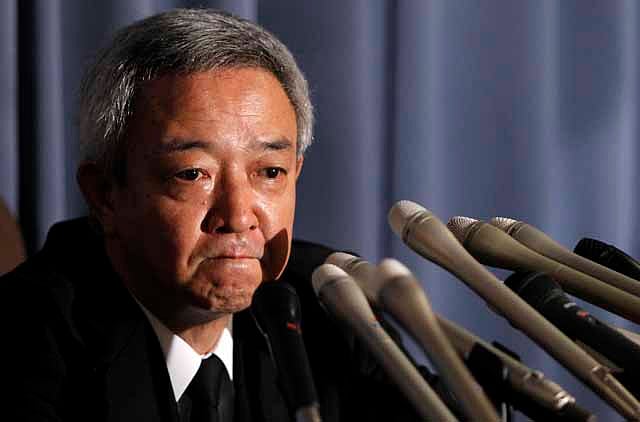
Tokyo: A week into his new job, Japan's disaster reconstruction minister resigned Tuesday after making remarks widely criticised as offensive during a visit to the tsunami-devastated northeast coast, where he refused to shake a governor's hand, scolded the official and threatened to withhold aid.
In meetings with local governors over the weekend, Ryu Matsumoto's words were regarded as arrogant and uncaring, angering local residents and political opponents.
He told the governor of Iwate, one of the hardest-hit prefectures, that the government would not help municipalities that did not have good ideas about rebuilding.
Refused to shake hands
In talks with Miyagi Governor Yoshihiro Murai, Matsumoto expressed frustration that he was made to wait for the governor. Matsumoto refused to shake Murai's hand when he entered the room and scolded the visibly surprised governor.
"When a guest comes to visit, do not call up the guest until you have arrived in the room," he told Murai. "Do you understand?"
He then warned journalists in the room not to report his words. They were widely reported in the media, and footage of the exchange was posted on the Internet.
The resignation is a new blow to Prime Minister Naoto Kan, who is likely to face increased pressure to step down himself. The March 11 earthquake, tsunami and nuclear crisis brought out deep rifts within Kan's party and strengthened the largest opposition bloc, which has denounced his response as dithering and poorly coordinated.
Kan's appointment of 60-year-old Matsumoto to the newly created post of disaster reconstruction minister was an effort to bolster his administration against criticism of its handling of the crises.
Replacement
Chief Cabinet Secretary Yukio Edano told reporters that Kan accepted Matsumoto's resignation and hopes to appoint a replacement as soon as possible, according to Kyodo News agency.
At a news conference Tuesday, Matsumoto did not explain why he resigned and pledged to keep supporting recovery efforts. He also stepped down from his second post of disaster management minister.
"I have many things I would like to say," a teary-eyed Matsumoto said. "But I will be gone from now."
The disaster devastated Japan's northeast coast, destroying towns, homes and businesses. More than 22,600 people are dead or missing.
Kan took office just over a year ago. He is Japan's fifth leader in four years.
Sign up for the Daily Briefing
Get the latest news and updates straight to your inbox
Network Links
GN StoreDownload our app
© Al Nisr Publishing LLC 2026. All rights reserved.