Dubai: In a move to address the growing concerns over global energy security, Japan has announced a major regional initiative aimed at protecting Asian economies from supply disruptions, particularly those linked to key shipping routes such as the Strait of Hormuz.
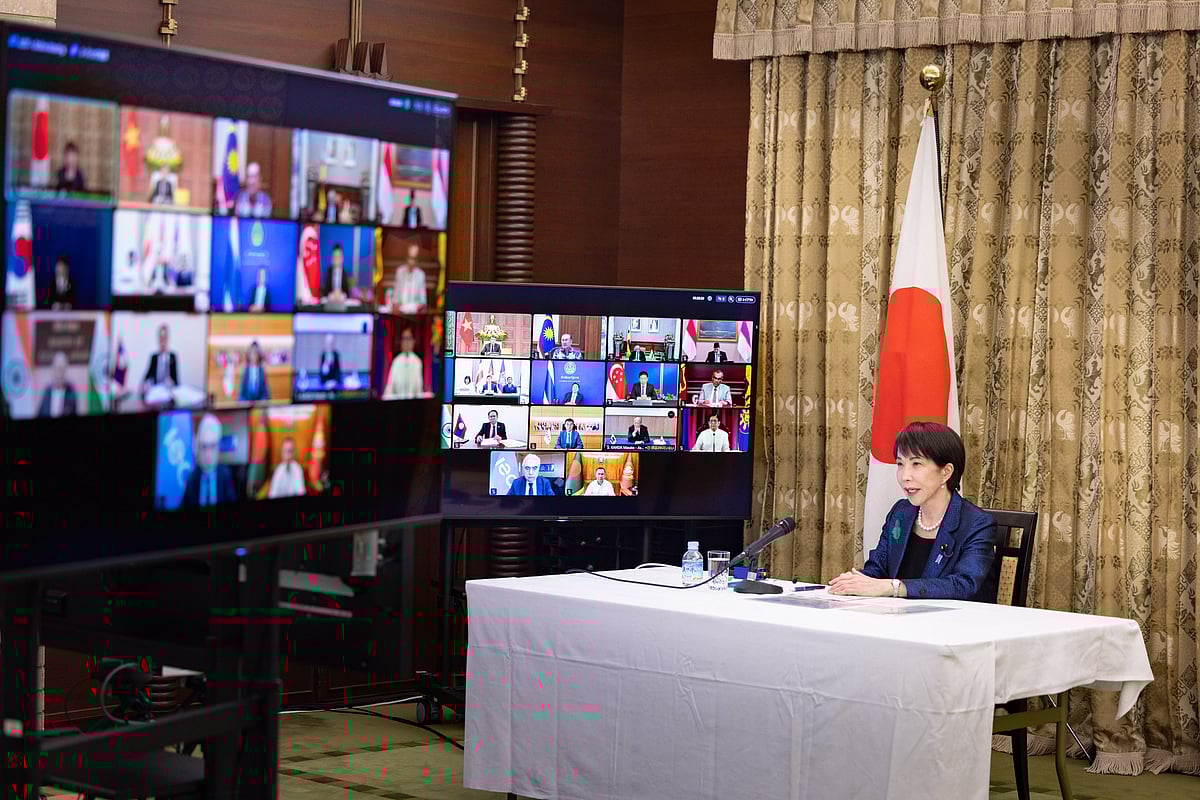
During an online meeting held on April 15, Japan’s prime minister Sanae Takaichi has convened leaders from across Asia, including members of the Asia Zero-Emission Community (AZEC), to discuss coordinated responses to mounting risks in energy and resource supply chains.
Get updated faster and for FREE: Download the Gulf News app now - simply click here.
Strait of Hormuz risks in focus
Takaichi has noted that Asian economies are among the most exposed to disruptions affecting energy shipments through the Strait of Hormuz, a critical route for oil flows from the Gulf to major Asian importers.
“It is necessary for Asian countries to work together in responding to this shared challenge because these impacts extend to all countries closely connected through supply chains,” said Takaichi.
At the centre of the discussions was the launch of the “Partnership On Wide Energy and Resources Resilience,” a framework that has been comprised of both emergency responses and structural ones.
$10b financial cooperation
Given the new framework, Japan has committed around $10 billion in financial support, an amount roughly equivalent to one year of crude oil imports for ASEAN countries if allocated toward fuel procurement.
Moreover, the initiative has sought to ensure that countries can respond quickly to emergencies by facilitating access to crude oil and petroleum products, while also sustaining supply chains during periods of disruption.
At the same time, it has been eyed to build deeper resilience through expanded stockpiling systems, improved storage infrastructure, and better coordination across the region.
“This framework aims to cooperate in emergency responses through securing critical minerals and diversifying energy resources such as biofuels; and promoting industrial advancement through and energy-saving initiatives.”
Energy security with growth
Japan has highlighted that the move would not only help stabilise energy supplies but also ensure smoother trade flows across Asia such as the procurement of medical supplies. The effort has also aligned with Japan’s vision of a free and open Indo-Pacific region.
Meanwhile, leaders across Asia including from the Philippines, Malaysia, Singapore, Thailand, Vietnam, Timor-Leste, Bangladesh and South Korea have welcomed the plan and expressed support for closer cooperation under the new framework.
Participants have acknowledged the urgency of the challenges and agreed to work collectively to enhance energy and resource security across the region.
Cleaner energy transition
Additionally, the new framework has been expected to complement the ongoing efforts under AZEC by integrating energy security with decarbonisation goals.
“This initiative will serve as an opportunity to further develop AZEC, which aims to simultaneously achieve energy security, economic growth, and decarbonisation, by incorporating perspectives on economic and energy resilience.”
For energy markets closely tied to the Gulf, the move has reflected a deeper push by Asian nations to secure supplies while accelerating their transition to more sustainable energy systems.
Network Links
GN StoreDownload our app
© Al Nisr Publishing LLC 2026. All rights reserved.