Who is V Mohana? Lawyer behind landmark army case joins India's Supreme Court
Only second woman elevated directly from the Bar, she becomes court’s 12th female judge
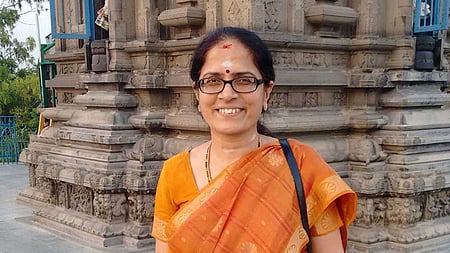
New Delhi: Senior Advocate V Mohana, the lawyer who argued one of India’s most significant gender-equality cases in the armed forces, is set to join the Supreme Court after the Centre notified her appointment on Monday.
Mohana, who represented women officers in the landmark permanent commission case in the Indian Army, is among five judges appointed to the country’s highest court. She joins an exclusive group of lawyers elevated directly from the Bar to the Supreme Court without first serving as a High Court judge, according to Indian media reports.
Her appointment is significant for two reasons.
She becomes only the second woman in the Supreme Court’s history to be elevated directly from the Bar, after Justice Indu Malhotra. She is also the 12th woman judge to serve on the apex court’s bench in its 76-year history.
A first-generation lawyer from Chennai, Mohana has practised before the Supreme Court for nearly four decades and has built a reputation as one of the country’s leading constitutional and civil law practitioners.
V Mohana: At a glance
Born in Chennai; First-generation lawyer
Graduated from Coimbatore Law College in 1988
Part of the college’s first five-year law programme
Moved to Delhi and trained under leading legal luminaries
Cleared Supreme Court Advocate-on-Record exam in 1996
Designated Senior Advocate in 2015
Argued landmark permanent commission case for women Army officers
Appeared in NJAC, Karnataka hijab and senior citizens’ rights cases
Only the 11th person elevated directly from the Bar to the Supreme Court
Only the second woman to receive direct elevation after Justice Indu Malhotra
Will become the 12th woman judge in Supreme Court history
Due to retire in June 2031
Direct elevation: A rare route to the Supreme Court
Of the nearly 300 judges who have served on the Supreme Court since 1950, only 11 — including V Mohana — have been elevated directly from the Bar without first serving as High Court judges.
Among them are former Chief Justice of India U U Lalit, Rohinton Nariman, Indu Malhotra and P S Narasimha.
That makes direct elevation one of the rarest pathways to the country’s highest court.
Her most widely known appearance came in the litigation over permanent commission for women officers in the Indian Army. The Supreme Court eventually ruled in favour of women Short Service Commission officers, paving the way for greater gender parity in the armed forces.
She also represented the Union government in the 2015 National Judicial Appointments Commission (NJAC) case, in which the Supreme Court struck down the constitutional amendment that sought to replace the collegium system of judicial appointments.
Several major cases
Over the years, she has appeared in several major cases involving constitutional law, senior citizens’ property rights, service matters and the Karnataka hijab ban litigation.
Born in Chennai, Mohana graduated from Coimbatore Law College in 1988 as part of the institution’s first batch of the five-year law programme. She later moved to Delhi, where she trained under some of India’s most prominent legal figures, including Senior Advocate C.S. Vaidyanathan and former Attorney General K.K. Venugopal.
She cleared the Advocate-on-Record examination in 1996 and was designated a Senior Advocate by the Supreme Court in 2015.
Her elevation also highlights the continuing debate over gender representation in India’s higher judiciary. Despite gradual progress, women remain significantly underrepresented on constitutional courts.
The Supreme Court currently has only one woman judge, Justice B.V. Nagarathna, who is in line to become India’s first woman Chief Justice.
With Mohana’s appointment, the court takes a modest but significant step toward improving female representation on the country’s highest bench.
If she serves a full term, Mohana will remain on the Supreme Court until June 2031, giving her one of the longer tenures among women judges of the apex court.
Tamil Nadu Chief Minister C. Joseph Vijay congratulated Mohana on what he described as a landmark achievement, saying her elevation would inspire aspiring lawyers, particularly women, across the country.
Legal experts have welcomed the appointment as recognition of both professional merit and the growing contribution of women to India’s legal profession.

Sign up for the Daily Briefing
Get the latest news and updates straight to your inbox
Network Links
GN StoreDownload our app
© Al Nisr Publishing LLC 2026. All rights reserved.