Trump’s $103,265 H-1B fee: What it means for Indians
The proposed fee targets employers, but foreign workers could ultimately feel the impact
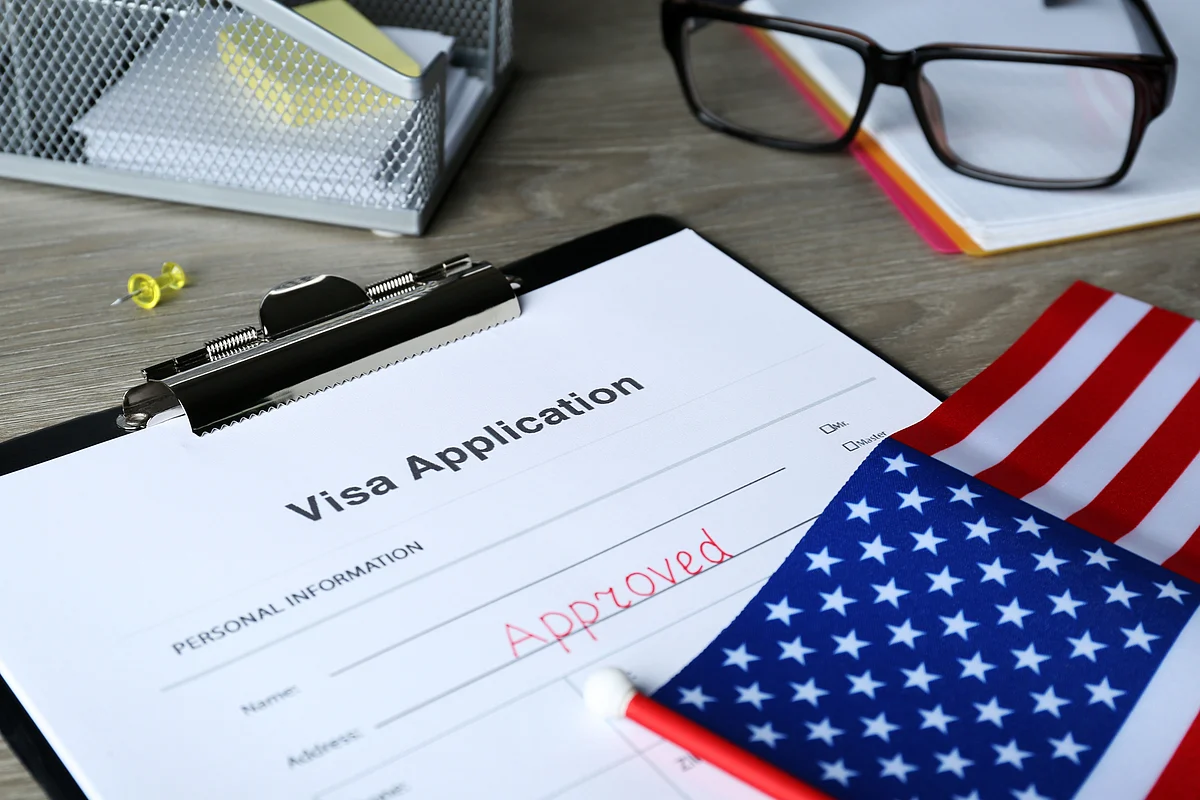
For an Indian engineer graduating from an American university, or a technology company hoping to hire one, the pathway to an H-1B visa could soon come with a startling new price tag: $103,265.
The Trump administration has proposed charging US employers that amount for every new H-1B petition subject to the annual visa cap, potentially transforming the economics of one of America’s most important routes for hiring highly skilled foreign workers.
The proposal matters particularly to India. Indians accounted for about 70 per cent of H-1B workers in fiscal 2025, according to the Hindustan Times, and India is also a major source of international students in the United States.
But the fee has not yet taken effect. The Department of Homeland Security (DHS) published the proposed regulation on August 24 and opened it to public comments for 30 days. Even if the administration ultimately adopts it, legal challenges are widely expected.
So what exactly is changing, who would have to pay, and why could Indians feel the effects disproportionately?
What is Trump proposing?
The DHS wants to introduce a $103,265 fee for every H-1B petition that falls under the annual visa cap.
The H-1B programme allows American employers to hire foreign professionals for specialised jobs that generally require at least a bachelor’s degree or equivalent qualification.
The US makes 85,000 cap-subject H-1B visas available annually, including 20,000 reserved for applicants with a master’s degree or higher from a US institution.
Crucially, the proposed charge would apply whether the worker is being recruited from overseas or is already in the United States. That means foreign graduates moving from student status into an H-1B job could also be affected.
Vice-President JD Vance has publicly backed the proposal, saying: “If an American corporation needs workers, it should hire and train Americans.”
Does the worker have to pay $103,265?
The proposal places the fee on the employer filing the H-1B petition, not directly on the foreign worker.
But that distinction does not mean prospective employees would escape its impact.
A company considering two candidates could face an additional six-figure government charge for choosing the person who needs H-1B sponsorship. That could make employers more reluctant to sponsor foreign recruits, particularly for junior and mid-level positions.
The scale becomes clearer for large recruiters. An employer filing H-1B petitions for 100 workers could face approximately $10.3 million in these fees alone, according to an immigration lawyer cited by Bloomberg.
Why does this matter so much to Indians?
India’s dominance of the H-1B programme makes Indian professionals especially exposed to any major change in its cost or availability.
For decades, the visa has provided a route into the US labour market for Indian engineers, software specialists, consultants, financial professionals and other highly skilled workers.
The impact could also be felt by Indian IT services companies, although a separate change is of more immediate concern to some of these firms.
From September 9, qualifying large employers will face a $4,000 surcharge on H-1B extensions and $4,500 on L-1 extensions. Previously, those charges generally applied to initial applications or job changes rather than renewals.
For companies that move thousands of employees through multi-year assignments in the US, recurring charges could significantly increase costs.
What about Indian students in America?
This is potentially one of the biggest consequences.
Many Indian students enter the US on F-1 visas, graduate and work temporarily under Optional Practical Training, or OPT. They then hope an employer will sponsor them for an H-1B visa.
Under the new H-1B proposal, an employer wishing to make that transition for a cap-subject worker could face the $103,265 charge.
That could make companies much more selective about whom they sponsor and could particularly disadvantage fresh graduates whose experience and salaries may not justify such a large additional expense.
There is another uncertainty. The Trump administration is separately considering changes affecting OPT, although no $100,000 OPT charge has been formally adopted. DHS has stressed that policies should not be regarded as final until officially announced.
The uncertainty comes as applications from India to US undergraduate institutions have already declined. Common App data cited by the Hindustan Times showed applications from India falling 15 per cent for the 2026-27 admissions cycle.
Would every H-1B employer pay the new fee?
No.
The proposal targets cap-subject H-1B petitions.
Universities, certain non-profit organisations and hospitals that qualify as cap-exempt employers would not be subject to the new charge. Such organisations can already sponsor eligible H-1B workers outside the annual 85,000-visa lottery.
That distinction could become increasingly important for foreign professionals weighing career options in the US.
Why $103,265?
The administration describes the proposed charge as a cost-recovery measure.
DHS says the money would help cover the costs of administering the legal immigration system across several federal departments, including Homeland Security, Labor, State and Justice.
The department estimates that the fee could raise about $8.8 billion annually.
Critics, however, question whether a fee of more than $100,000 can reasonably be characterised simply as recovering administrative costs.
Didn’t Trump try something similar before?
Yes.
The Trump administration previously attempted to impose a $100,000 H-1B charge through a presidential proclamation in September 2025.
A federal judge in Boston struck it down in June, ruling that the charge effectively amounted to a tax and that such a measure required congressional authority.
The administration is now trying a different legal route. Instead of a presidential proclamation, DHS is proposing a regulation and describing the $103,265 charge as cost recovery.
Could this proposal also end up in court?
Almost certainly, if it becomes final.
One likely argument is that DHS does not have the legal authority to impose a charge of this magnitude without approval from Congress.
Critics are also likely to point to DHS’s acknowledgement that the fee could have the indirect effect of discouraging companies from hiring H-1B workers instead of qualified Americans. Opponents could argue that this suggests the measure is intended not merely to recover administrative costs but to influence employers’ hiring decisions.
What happens next?
Nothing changes immediately for applicants because the $103,265 fee remains a proposal.
The public has 30 days from the August 24 publication to submit comments. DHS can then review those submissions before deciding whether to issue a final regulation, modify the proposal or abandon it.
If a final rule is issued, court challenges could determine whether it ultimately survives.
For now, the $103,265 figure is a proposal. But if it survives the regulatory and legal battles ahead, the cost of hiring foreign talent in America could look very different.

Sign up for the Daily Briefing
Get the latest news and updates straight to your inbox
Network Links
GN StoreDownload our app
© Al Nisr Publishing LLC 2026. All rights reserved.