Taj Mahal was Shiva Temple? Allahabad HC seeks centre, ASI reply
Petitioners cite 109 features, seek inspection to support temple origin claim
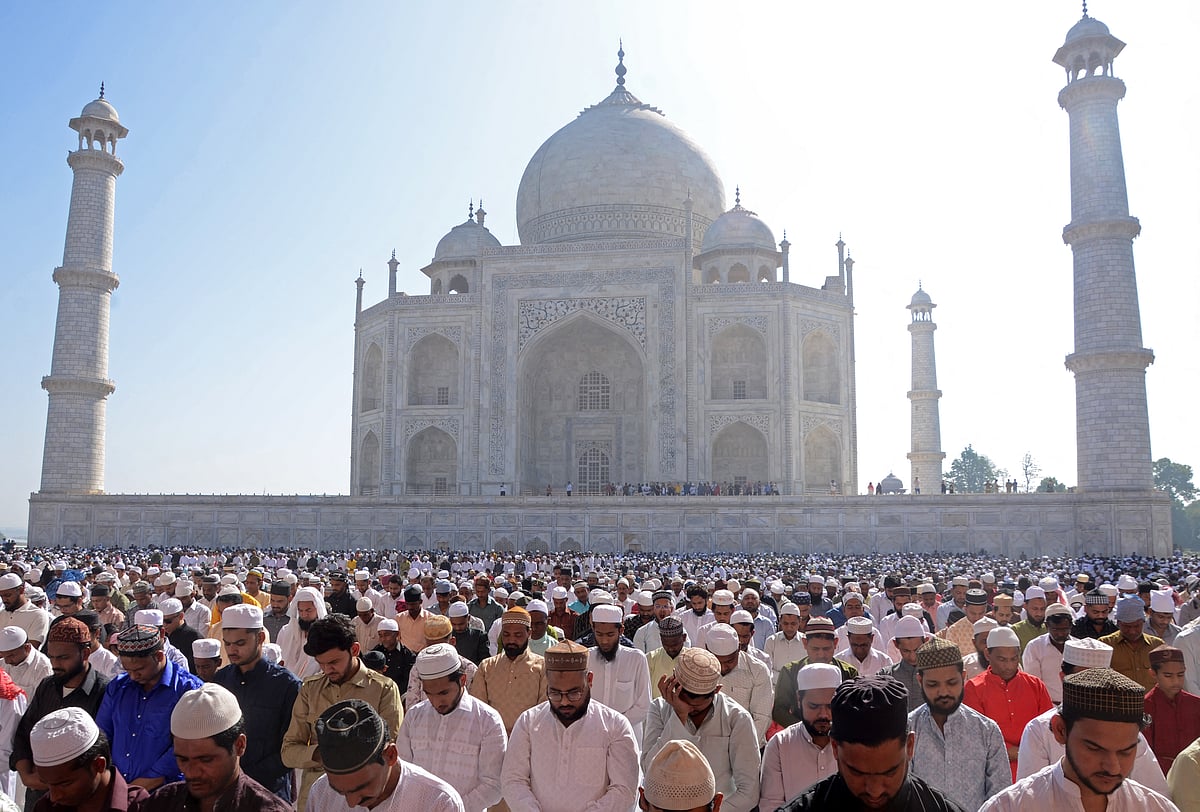
Dubai: The Allahabad High Court has sought responses from the Centre and the Archaeological Survey of India (ASI) on a petition claiming that the Taj Mahal was originally a Hindu temple known as “Tejo Mahalaya” and seeking a court-supervised inspection of the monument.
Justice Rohit Ranjan Agarwal on Monday issued notices to the Union government and the ASI, directing them to file counter-affidavits. The matter will be heard after their responses are received, Indian media reports said.
The petition, filed by advocate Hari Shankar Jain on behalf of the deity Lord Sri Agreshwar Mahadev Nagnatheswar Virajman through its “next friend”, along with several devotees, challenges earlier court orders refusing permission for an inspection of the Taj Mahal.
The petitioners are seeking the appointment of an Advocate Commissioner to inspect, photograph and videograph the monument. They argue that such an exercise would help determine whether the structure was originally a Shiva temple rather than relying solely on its architectural features.
Petition cites 109 features
According to the plea, the Taj Mahal was originally an ancient Shiva temple called Tejo Mahalaya, allegedly built by Raja Paramardi Dev in 1155-56 AD before later coming under the control of Raja Man Singh and Raja Jai Singh of Jaipur.
The petition claims Mughal emperor Shah Jahan subsequently took over the structure and converted it into a mausoleum for his wife Mumtaz Mahal by incorporating Islamic architectural elements.
To support their case, the petitioners have cited 109 archaeological and historical features that they claim point to the monument’s Hindu origins, The Times of India said.
Among the features cited are the lotus-petal design and finial atop the main dome, which they argue resemble Hindu temple architecture. The petition also refers to a structure within the complex that ASI records allegedly describe as a “gaushala” (cowshed), claiming such a feature is associated with Hindu temples rather than Mughal mausoleums.
The petition further alleges that the ASI permits Muslims to offer Friday prayers at the monument while restricting access to several locked sections of the complex.
The petitioners have also sought a declaration that the Taj Mahal is a Hindu temple and permission for Hindus to perform darshan and prayers at the site, arguing that such worship is protected under Article 25 of the Constitution.
Long-running legal battle
The dispute dates back several years. In 2019, the petitioners approached a civil court in Agra seeking the appointment of an Advocate Commissioner to survey the Taj Mahal.
The trial court rejected the request, saying the plaintiffs had failed to produce land revenue records supporting their claim and that the property details cited did not match official records.
In April this year, an additional district judge in Agra dismissed the petitioners’ revision plea as not maintainable.
Challenging both decisions, the petitioners have now approached the Allahabad High Court, arguing that the lower courts rejected their request on technical grounds unrelated to whether an Advocate Commissioner should be appointed.
An interim application has also been filed asking the High Court to direct the ASI to photograph the interior and exterior of the Taj Mahal in the presence of the petitioners and submit the images before the court.
The High Court has not expressed any view on the merits of the claims and has only sought responses from the Centre and the ASI before proceeding further.

Sign up for the Daily Briefing
Get the latest news and updates straight to your inbox
Network Links
GN StoreDownload our app
© Al Nisr Publishing LLC 2026. All rights reserved.