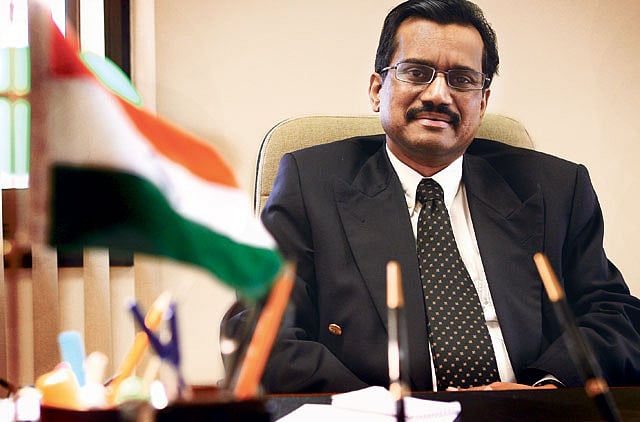
India and the UAE share a cordial and friendly relationship based on strong historical foundations, says M.K. Lokesh, Ambassador of India to the UAE. The relations have been further reinforced by mutual respect for each other’s interests, common perception on major international issues and robust economic and trade links.
The vital contribution of the large Indian community to the economy as well as other sectors of UAE society forms yet another dimension to this diverse and fruitful partnership.
According to the ambassador, the Indian expatriate community plays an important role in strengthening the bilateral ties. The estimated size of the community in the UAE is between 1.5 million to 1.7 million. “Whatever is the correct number, it is undoubtedly the largest expatriate community in the UAE and one of the largest Indian diasporas in the world,” says Lokesh. “It is a diverse community in terms of occupation, religion and language (though the state of Kerala contributes the largest segment) reflecting the Indian polity which celebrates unity in diversity.”
Key factors
The Ambassador adds, “A major motivating factor for Indian citizens to move to the UAE is the far-sighted and pragmatic policies adopted by the rulers of the UAE in terms of according importance to the role of [the] expatriate community in the labour, professional and economic sectors.
“The boom fuelled by the discovery of oil and the ensuing frenetic growth in various sectors in the UAE opened the gates for the Indian community. Historical links — India’s western seaboard, especially the Malabar Coast, has had extensive trade links with the Gulf region throughout history — cultural and religious affinities and India’s position as a major source of manpower have also contributed to the Indian presence in the UAE.
“The Indian community has made a valuable contribution in many sectors such as trade, education, health care, culture, journalism, construction, manufacturing, tourism etc. This is also
an important source of foreign exchange for India through remittances from non-resident Indians.”
Indian companies contribute to every key sector in the UAE. “Many of them have set up manufacturing units in free trade zones such as Jebel Ali Free Zone, Hamriyah Free Zone, Sharjah Airport Free Zone, Abu Dhabi Industrial City, and the free zones in Ajman, Ras Al Khaimah and Fujairah,” says Lokesh.
Indian presence in the UAE
“Dubai is a hub of major economic and financial activities, with the setting up of centres such as Dubai International Financial Centre, Internet City, Media City, Academic City etc. Many service providers from India, as well as leading IT companies such as Infosys and Wipro, have also opened offices in these centres.
“Many Indian universities, including Manipal University, BITS Pilani, and Mahatma Gandhi University, have off-campus centres in Dubai Academic City. Top Indian companies in [the] private sector such as Punj Lloyds, Dabur, BHEL, TCS, Dodsal, Reliance Industries, Voltas, Godrej, Eicher International, Bajaj Auto, Essar Group, Advance Valves, Mahindra ME, Mirc Electronics, Kirloskar Group, MRF etc are already operating in the UAE free zones and outside. Larson & Toubro and Engineers India Limited are doing many oil and gas related projects in the UAE.
“Top pharmaceutical companies such as Dr Reddy’s Laboratories, Himalaya Drugs and Ranbaxy have their manufacturing, packaging and trading units in the UAE. The Hinduja Group signed a MoU with the RAK Investment Authority for setting up a bus and vehicle assembly plant for its flagship Ashok Leyland brand, and the bus assembly unit has already begun operations.
“More than 17 Indian banks have their representative offices in the UAE. Within the past three months, five Indian banks opened representative offices here, which reflects our confidence
in the future of the UAE economy.
“Indian public sector companies such as Air India, Indian Airlines, Tea Board, Government of India Tourist office, New India Assurance, Indian Oil Corporation, Engineers India Ltd, Life Insurance Corporation, State Bank of India, Bank of Baroda etc. are also operating from the UAE along with the private sector.”
According to the embassy’s figures, about 70,000 tourists from the UAE visited India in 2009. “This excludes visits by the members of the Indian community who regularly visit the country
on holidays,” says Lokesh.
“India is emerging as a major destination for international tourists with its world-class attractions including the wildlife, monuments, mountains and places of worship. Eco-tourism including wildlife, desert safari and medical tourism are also emerging as major attractions. Recently the Oberoi Vanyavilas in Ranthambhore has been declared the best hotel
in the world by the US-based Travel+Leisure magazine.”
In the cultural field, the Indian embassy in the UAE intends to organise many activities in the UAE. “Performances by Indian artists in Ghazal, Qawwali and folk dance are already
in the pipeline. We want to encourage the exchange of scholars, academics and distinguished personalities between India and the UAE and to translate important literary works into Arabic and Indian languages to strengthen the cultural understanding between the two countries. Initiatives are also planned for high-level visits, economic delegations, community welfare, etc. to strengthen and consolidate our relations with the UAE.”
Talking about the field of education, the Ambassador says the number of Emiratis studying in India is small compared to students from other countries. However, many Indian students are studying in various academic establishments in the UAE.
The Ambassador says, “We will explore ways to strengthen the UAE presence in Indian universities. India provides excellent education at modest cost. Information on Indian educational facilities can be obtained from the Indian embassy and the Consulate General in Dubai.”
Sign up for the Daily Briefing
Get the latest news and updates straight to your inbox
Network Links
GN StoreDownload our app
© Al Nisr Publishing LLC 2026. All rights reserved.