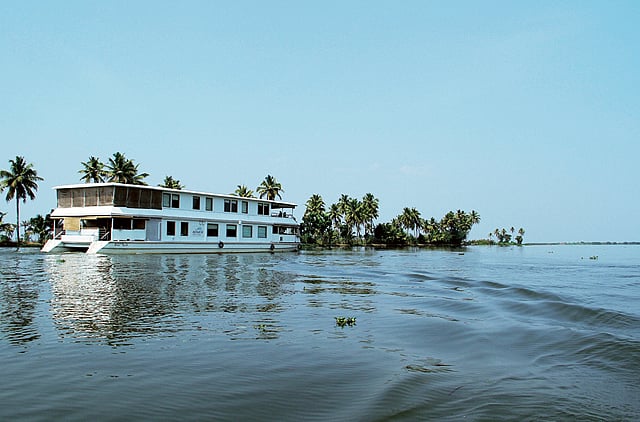
Kochi: Kerala’s success story in tourism will continue in the coming years, thanks in part to the draw of “ayurveda”, India’s ancient system of medicine, a top official of the state government says.
“Kerala is today India’s benchmark for success in tourism, not just in terms of awards and acclaims but also by setting new standards,” says Suman Billa, who as Secretary of Kerala Tourism is a key driver of the success story.
“It has been a golden era for tourism over the last decade, and it is still continuing,” Billa said.
From 7.9 million domestic and 557,258 foreign tourists in 2009, Kerala paid host to a whopping 9.3 million domestic and 732,685 foreign tourists in 2011.
Kerala’s beaches, ancient temples, temple festivals and, of course, ayurveda have combined to make it one of the world’s most sought-after holiday destinations.
Billa said Kerala expects an increase of around 10 per cent growth in foreign tourist arrivals and around eight per cent rise in the case of domestic arrivals in the coming period.
According to him, the Kerala model of tourism development will sustain nature, nurture communities and provide unique, intrinsic experiences to travellers.
Among other factors, a strong private-public partnership initiative, project synergy, marketing and promotion initiatives, participation in fairs and roadshows have helped make Kerala a pioneering tourism state.
“Tourism has also emerged as a key driver of economic growth in the state, well endowed by pristine natural attractions,” Billa said.
“Kerala serves as a model in sustainable tourism development, and is the first state in India to implement certification programmes for ensuring the quality of products and services.”
Billa said Kerala’s success in the tourism field could be attributed to the strong brand equity that Kerala Tourism has been able to develop over a period of time.
“We have been very conscious of our brand image. One of the major challenges we face is to extend our brand appeal without diluting our unique strengths.”
He said the key priority of the Kerala government’s tourism policy was to enhance the socio-economic growth of the state through the promotion of “Responsible Tourism”.
In line with this, hotels, ayurveda centres, houseboats, convention centres, tour operators and tourist transport operators would be issued approval and incentives based on a set of mandatory requirements.
“We have been maintaining that in tourism development, we [Kerala Tourism] will play the role of a facilitator and catalyst.”
Billa made it clear that ayurveda played a major role in wooing tourists to Kerala.
“Kerala has had an unbroken tradition of ayurveda. For the past 15 years or so, Kerala has increasingly come to be seen as the home of ayurveda. Kerala is today synonymous with ayurveda.”
Billa said the growing number of ayurveda clinics in Sri Lanka, where a quarter century long separatist conflict has finally ended, should not cause undue worry to Kerala.
“What I need to do is to maintain the standards and quality to continue to be revenant. We should not get into a situation of price wars.
“As long as we stick to our quality and play our game tight, we will not only attract tourists but grow and grow.”
Ayurveda, he admitted, played a major role in making tourists spend 18.2 days on an average in Kerala, which is more than double the national average.
“If you remove ayurveda, Kerala can be covered in a week or 10 days.”
Sign up for the Daily Briefing
Get the latest news and updates straight to your inbox
Network Links
GN StoreDownload our app
© Al Nisr Publishing LLC 2026. All rights reserved.