In a first, India deploys 12 nuclear warheads: Report
Watchdog links deployed warheads to India’s growing submarine deterrent force
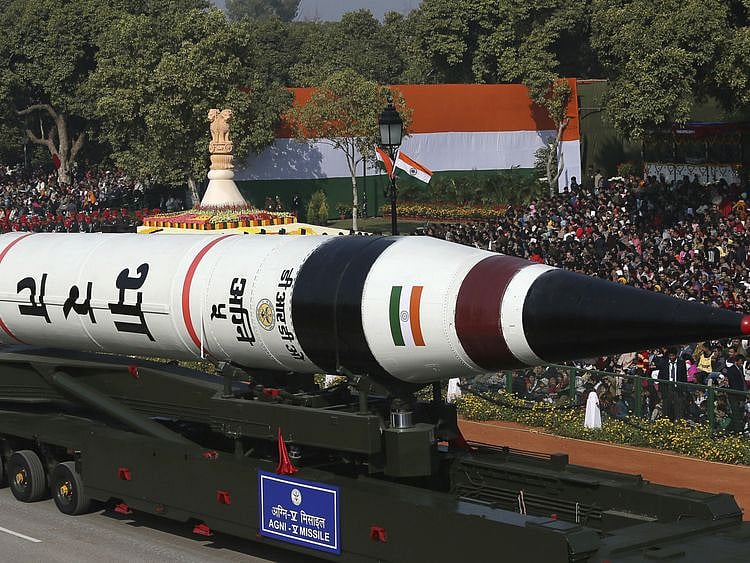
Dubai: For decades, India was believed to keep its nuclear warheads and missiles separate during peacetime, a practice seen as consistent with its policy of maintaining a credible minimum deterrent rather than a hair-trigger nuclear posture.
Now, a leading global arms watchdog says that may be changing.
In its latest annual assessment released on Monday, the Stockholm International Peace Research Institute (SIPRI) said India may have begun deploying a small number of nuclear warheads with operational forces for the first time, marking a significant shift in the country’s nuclear posture.
SIPRI estimates that India has deployed 12 nuclear warheads, primarily linked to its growing fleet of nuclear-powered ballistic missile submarines (SSBNs) and its expanding sea-based deterrent capability.
“It has long been assumed that India stores its nuclear warheads separately from its deployed launchers during peacetime,” the report said.
“However, the country’s recent moves towards placing missiles in canisters and conducting sea-based deterrence patrols suggest that India could be shifting in the direction of mating some of its warheads with their launchers in peacetime.”
Based on that assessment, Indian media reports citing the latest SIPRI assessment said that India may have started deploying a small number of nuclear warheads aboard a ballistic missile submarine conducting occasional deterrence patrols.
Stockpile grows
The report also found that India’s overall nuclear arsenal continued to expand.
According to SIPRI, India possessed an estimated 190 nuclear warheads as of January 2026, up from about 180 a year earlier.
What SIPRI says
Key takeaways
Estimated nuclear stockpile: 190 warheads (up from 180 a year ago)
Estimated deployed warheads: 12
First time SIPRI has assessed India as having operationally deployed nuclear warheads
Deployment believed to be linked to ballistic missile submarines (SSBNs)
Suggests some warheads may now be mated with launchers during peacetime
India continues to maintain a No First Use nuclear policy
Nuclear triad now includes aircraft, land-based missiles and submarines
Modernisation increasingly focused on China’s growing military capabilities
These weapons are assigned to what the report describes as a maturing nuclear triad — aircraft, land-based missiles and submarine-launched ballistic missiles — giving India the ability to launch nuclear weapons from land, sea and air.
The deployment of even a limited number of warheads represents a notable development because it suggests a higher degree of operational readiness than previously assumed.
Why it matters
SIPRI said India has traditionally been viewed as storing nuclear warheads separately from delivery systems during peacetime, reducing the risk of accidental launches and maintaining a lower state of alert.
The report suggests that the introduction of canisterised missile systems and regular submarine deterrence patrols may be gradually altering that posture.
While India continues to adhere to its long-standing “No First Use” doctrine — pledging to use nuclear weapons only in retaliation to a nuclear attack — analysts say the deployment of warheads on operational platforms reflects the growing sophistication of the country’s strategic forces.
Global nuclear picture
According to SIPRI, nine countries — the United States, Russia, the United Kingdom, France, China, India, Pakistan, North Korea and Israel — together possessed about 12,187 nuclear weapons at the start of 2026.
Of those, approximately 9,745 were held in military stockpiles and considered potentially operational.
The overwhelming majority belong to Russia and the United States, though SIPRI noted that China and India may now occasionally deploy a limited number of nuclear warheads on missiles during peacetime.
The report warned that the continued modernisation and deployment of nuclear weapons worldwide is increasing the risks of escalation.
Among the most concerning trends, SIPRI said, are the growing overlap between nuclear and conventional military systems and the spread of multiple independently targetable re-entry vehicles (MIRVs), which allow a single missile to strike several targets.

Sign up for the Daily Briefing
Get the latest news and updates straight to your inbox
Network Links
GN StoreDownload our app
© Al Nisr Publishing LLC 2026. All rights reserved.