New Delhi: More than 3.75 lakh (375,000) Indians have returned safely from conflict-hit West Asia, Prime Minister Narendra Modi said on Monday, as the government intensified efforts to support citizens abroad and manage the wider economic and energy impact of the crisis.
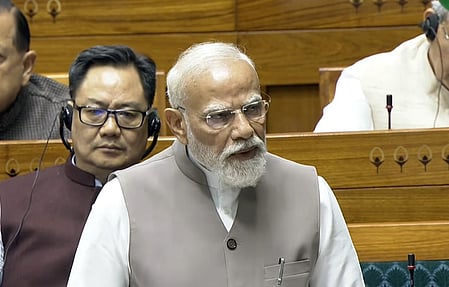
Addressing the Lok Sabha, Modi said India has remained focused on the safety and welfare of its citizens in the region, where nearly one crore Indians live and work.
“In any crisis situation, the safety and security of Indians — both in the country and abroad — has always been our top priority,” he said.
The Prime Minister said he has personally spoken to leaders of several West Asian countries in two rounds of calls, securing assurances for the safety of Indian nationals.
“Since this war began, every Indian in the affected countries has been provided necessary assistance. All our missions are continuously engaged in helping Indians — whether workers or tourists,” he said.
While highlighting the large-scale return of Indian nationals, Modi noted that nearly 1,000 Indians have come back from Iran alone, including over 700 medical students.
At the same time, he acknowledged the human cost of the conflict. “Unfortunately, some people have lost their lives, and some have been injured. In such difficult times, families are being provided necessary support, and the injured are being ensured the best possible treatment,” he said.
Indian missions across the region are operating round-the-clock, providing emergency services and assistance to those in need, the Prime Minister added.
Exam cancellations
The crisis has also affected Indian students in the Gulf region. Modi said the Central Board of Secondary Education (CBSE) has cancelled Class 10 and 12 examinations in Indian schools across affected countries, with steps being taken to ensure that students’ education continues without disruption.
Beyond the humanitarian dimension, the Prime Minister flagged the broader economic and energy challenges arising from the conflict.
“The war has created unexpected challenges, including economic, national security and humanitarian issues,” he said, noting that the region remains critical for India’s energy supplies.
A significant portion of India’s crude oil, gas and fertiliser imports comes from Gulf nations, much of it routed through the Strait of Hormuz — a key global shipping channel that has emerged as a geopolitical flashpoint. “It has been a challenge for cargo movement through the Strait of Hormuz since the start of the war,” Modi said.

Sign up for the Daily Briefing
Get the latest news and updates straight to your inbox
Network Links
GN StoreDownload our app
© Al Nisr Publishing LLC 2026. All rights reserved.