Wartime exit: Why the US Navy chief’s departure matters now
Leadership change underscores wider overhaul of military command
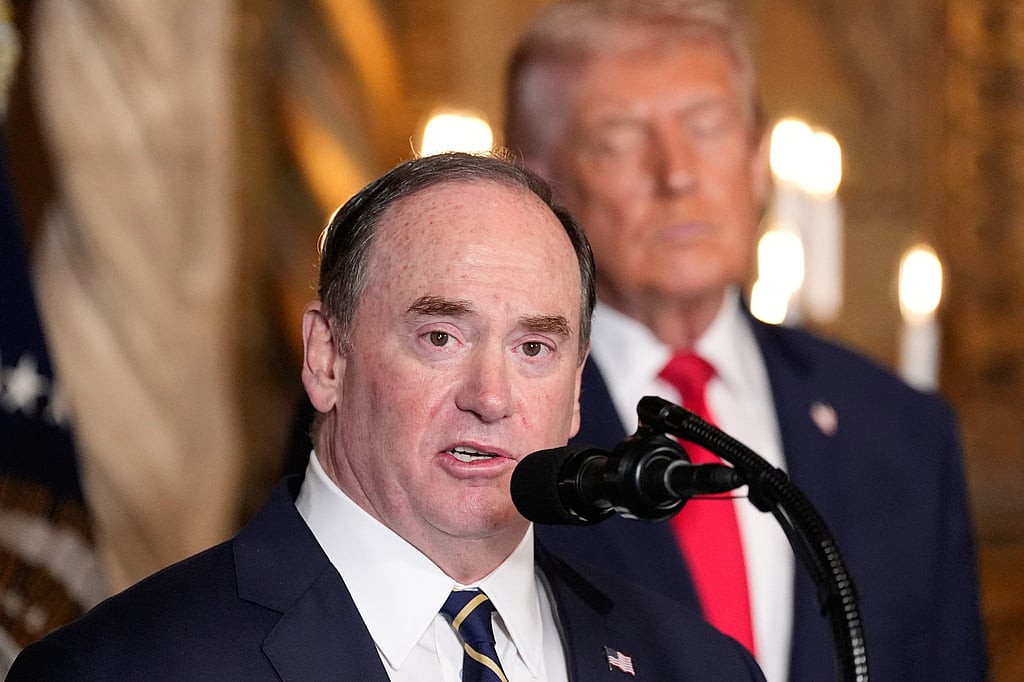
The abrupt departure of US Navy Secretary John Phelan has come at a particularly sensitive moment — with American naval forces deeply engaged in operations linked to the Iran conflict and a fragile ceasefire still holding.
The Pentagon announced that Phelan was leaving “effective immediately,” offering no explanation. But the timing alone has drawn attention: the US Navy is central to enforcing a blockade on Iranian ports and maintaining a heavy presence around key waterways linked to global energy flows.
In most circumstances, such a transition might be routine. In the middle of an active conflict, it is anything but.
Not an isolated move
Phelan’s exit is not a standalone event — it is part of a broader reshaping of military leadership under President Donald Trump.
His departure follows a series of high-profile removals, including the firing of the US Army’s top general and several other senior officers.
Since returning to office, the administration has overseen a steady churn at the top of the Pentagon, with critics warning of growing instability and supporters arguing that the president is simply installing leaders aligned with his strategic vision.
The pattern is difficult to ignore: senior military figures, including top commanders and service leaders, have been dismissed, replaced or pushed into early retirement in rapid succession.
Why now? Competing explanations emerge
The Pentagon has offered no official reason for Phelan’s sudden exit. But multiple reports point to a mix of internal tensions and performance concerns.
According to reports, Phelan had strained relationships with senior Pentagon leadership, including Defence Secretary Pete Hegseth and other top officials.
There were also concerns about the pace of key reforms — particularly efforts to accelerate shipbuilding and modernise the Navy’s fleet, a central priority of the administration.
Some reports also point to disagreements over strategy and management, as well as friction over high-profile initiatives tied to expanding naval capabilities.
Taken together, these factors suggest the decision may have been building for some time — even if the final move appeared sudden.
The outsider experiment
Phelan’s tenure itself was unusual from the start.
A businessman and major political donor, he entered the role without prior military or defence leadership experience — seen as an outsider brought in to shake up the system.
That outsider status may have initially been an asset in an administration focused on disruption. But it may also have contributed to tensions within the Pentagon’s traditional hierarchy.
His exit now raises a broader question: whether the experiment of appointing non-traditional leaders to key defence roles has limits, particularly during wartime.
The war context: Why it matters
The timing of the leadership change is especially significant given the operational role of the US Navy in the Iran conflict.
American forces have been enforcing a naval blockade targeting Iranian-linked shipping and maintaining a strong presence across strategic maritime routes.
The wider conflict has already heightened tensions around the Strait of Hormuz — a vital corridor through which a significant share of global oil and gas flows.
Any disruption, uncertainty or shift in US naval leadership has implications far beyond Washington:
It affects military strategy and coordination
It influences deterrence dynamics with Iran
It shapes confidence among Gulf allies
In short, leadership stability in the US Navy is not just a domestic issue — it is a global one.
A signal of deeper change
Phelan’s exit also reflects a broader recalibration of how the Trump administration is managing the military.
Defence Secretary Hegseth has defended the changes as necessary to build a leadership team aligned with the administration’s priorities.
Critics, however, argue the moves risk politicising the armed forces — traditionally seen as a non-partisan institution — and creating uncertainty at a time when continuity is critical.
The administration has also pushed structural changes, including reducing the number of senior officers and reshaping command hierarchies, further signalling a shift in approach.
Hung Cao steps in
Stepping in as acting Navy Secretary is Hung Cao, a former Navy officer and political ally of Trump.
Cao brings military experience that Phelan lacked, having served in combat roles before entering politics. His appointment suggests a pivot — from an outsider-led reform approach to one more rooted in operational experience and alignment with the administration’s defence agenda.
What this means going forward
The key question now is not just why Phelan left — but what comes next.
Several scenarios emerge:
Tighter political control over military leadership
Faster implementation of defence priorities, particularly naval expansion
Greater alignment between Pentagon leadership and White House strategy
At the same time, risks remain:
Leadership churn could affect continuity
Internal tensions may persist
A critical moment in the conflict
As the war with Iran continues and the ceasefire remains uncertain, the stakes are high.
The US Navy is central to enforcing strategy at sea — from blockades to freedom of navigation operations. Any shift in leadership during such a phase carries strategic weight.
- with inputs from AP and AFP
Sign up for the Daily Briefing
Get the latest news and updates straight to your inbox
Network Links
GN StoreDownload our app
© Al Nisr Publishing LLC 2026. All rights reserved.