US military sinks vessel linked to Ecuador’s powerful Los Choneros criminal ring, SouthCom says
US forces targets maritime logistics of Ecuador’s Los Choneros cartel
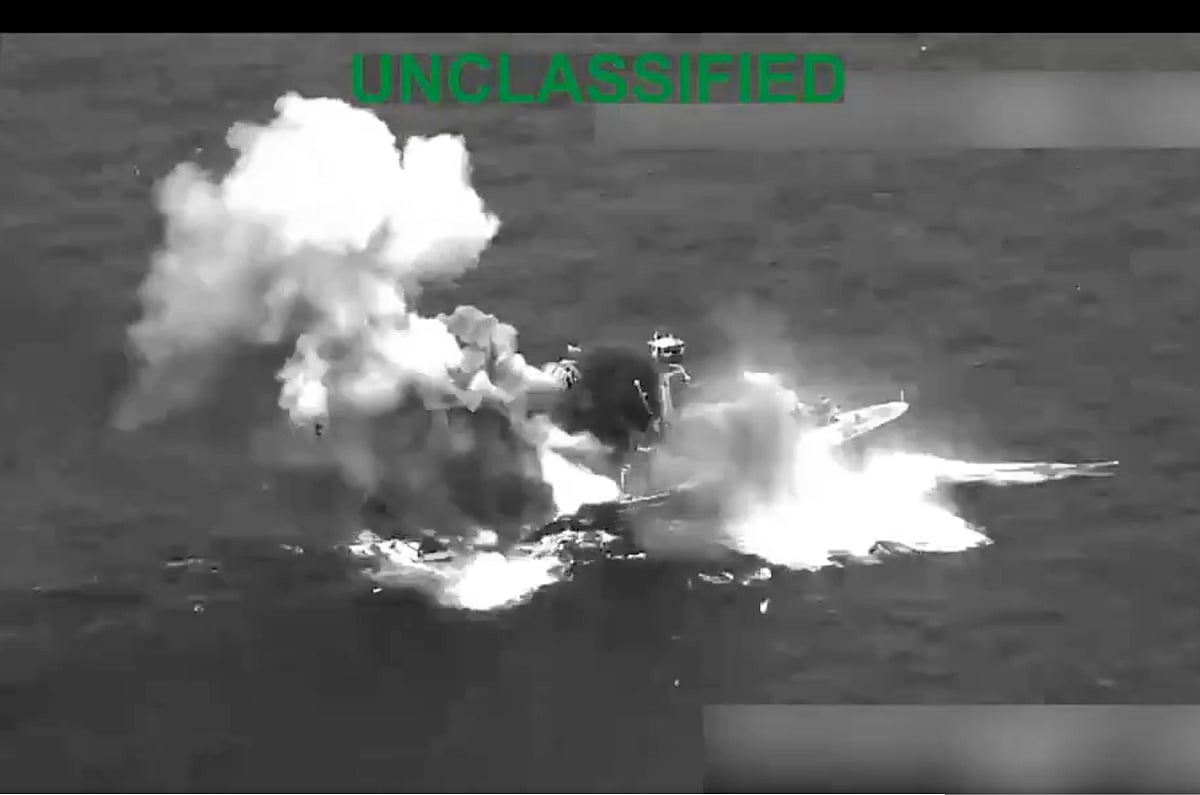
US forces intercepted and sank a vessel in the Eastern Pacific that was allegedly being used as a floating refueling station for maritime drug-trafficking operations linked to Ecuador's Los Choneros criminal organisation, US Southern Command (SouthCom) said Monday.
The operation took place on Sept. 7 under the direction of US Southern Command, or SouthCom, and was carried out by the newly-formed Joint Task Force Western Hemisphere (JTF-WHEM).
Get it: Fast, verified news for FREE ... download the Gulf News app — simply click here
According to SouthCom, US intelligence had determined that the vessel was supporting illicit at-sea drug trafficking operations and was connected to Los Choneros, which Washington has designated a violent narco-terrorist organisation.
The individuals removed from the vessel are to be transferred to Ecuadorian authorities.
After US personnel cleared the vessel and disembarked its crew, American forces sank the vessel, SouthCom said.
The command released video of the operation and described it as part of continuing efforts to dismantle the logistical networks that allow drug-trafficking organizations to move narcotics across the Eastern Pacific.
A floating fuel station for drug boats
The operation highlights a less visible but critical part of maritime drug trafficking: fuel and logistics.
Drug-running speedboats can travel long distances from South America toward Central America and Mexico, but their range depends on access to fuel and other supplies.
Floating refueling vessels can allow traffickers to replenish fuel at sea rather than return to shore, extending the operating range of smaller boats and reducing their exposure to law enforcement.
SouthCom has now reported several similar operations in the Eastern Pacific in recent days.
On Sept. 5, JTF-WHEM intercepted a multi-vessel floating refueling station that the US military said was supporting Los Choneros. After personnel were removed, US forces sank the main vessel and attached support boats.
The Sept. 2 operation also targeted a vessel described by SouthCom as a floating refueling station operating in international waters in support of Los Choneros.
The repeated operations indicate that US authorities are targeting not only suspected drug shipments but the maritime infrastructure that supports trafficking networks.
Who are Los Choneros?
Los Choneros is one of Ecuador's most powerful criminal organisations and has been associated with cocaine trafficking, extortion, kidnapping and violence.
The group emerged in Ecuador's port city of Manta in the 1990s and later became deeply involved in the country's drug-trafficking networks.
Its influence expanded as Ecuador became an increasingly important transit point for cocaine produced in neighboring Colombia and Peru and shipped toward North America and Europe.
The group's former leader, José Adolfo Macías Villamar, known as "Fito," became one of Ecuador's most notorious crime figures. His escape from prison in early 2024 helped trigger a dramatic security crisis in Ecuador.
The US government has designated Los Choneros as a foreign terrorist organiaation, placing it alongside other major Latin American criminal groups targeted under Washington's increasingly militarized approach to counter-narcotics operations.
US-Ecuador cooperation
The latest operation also underscores the growing security relationship between Washington and Quito.
Ecuadorian authorities have supported recent US maritime operations against vessels suspected of facilitating drug trafficking.
But the operations have also generated controversy, with relatives of some crew members disputing US allegations and saying the men were fishermen rather than drug traffickers.
A more aggressive US counter-drug strategy
The sinking is part of a broader shift in US counter-narcotics policy under President Donald Trump, which has increasingly treated major drug-trafficking organisations as national-security threats rather than solely as targets for conventional law enforcement.
The establishment of JTF-WHEM reflects that approach, bringing military capabilities into operations designed to disrupt trafficking networks across the Western Hemisphere.
Network Links
GN StoreDownload our app
© Al Nisr Publishing LLC 2026. All rights reserved.