Tensions between the US and Iran continue to affect travel, trade and shipping across the Gulf.
There were no confirmed new exchanges of fire as of Monday.
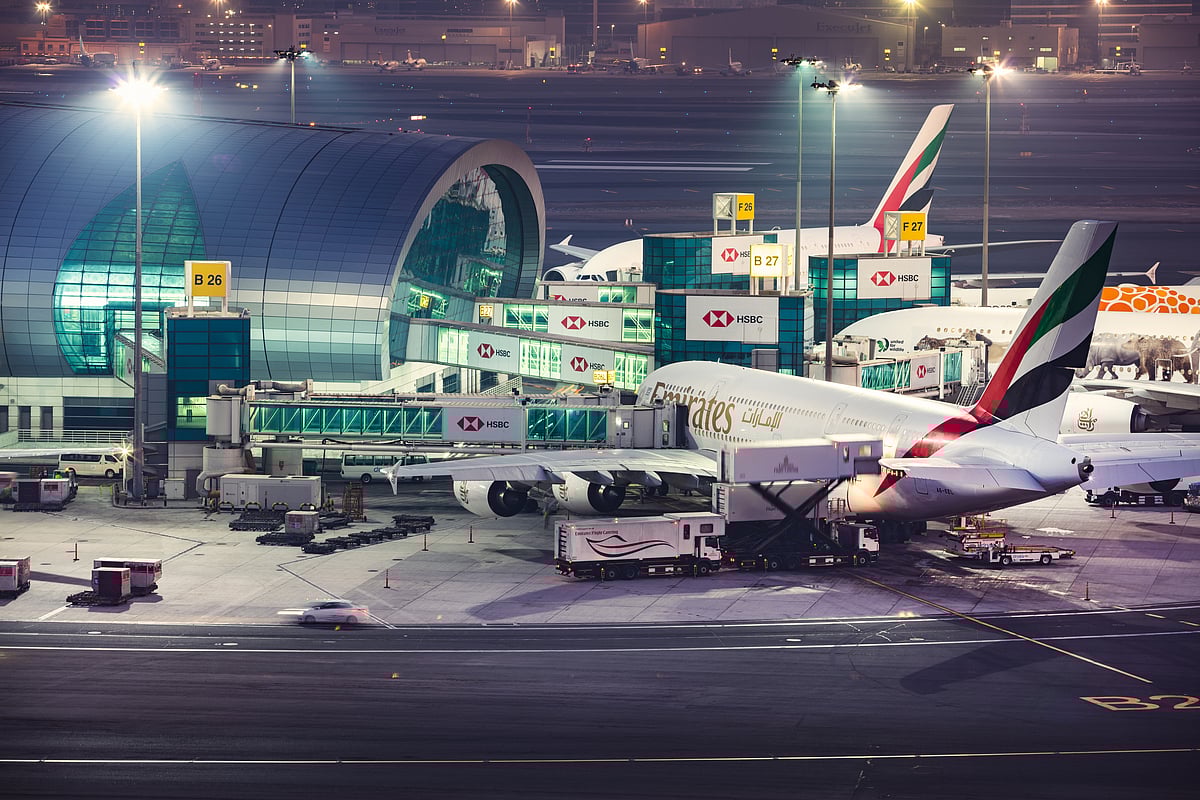
UAE travelers face a mixed aviation picture, with some Bahrain and Kuwait services cancelled or delayed while other flights continue operating.
Meanwhile, a senior Iran official has renewed threats around the Strait of Hormuz as Washington prepares further sanctions, adding uncertainty for regional shipping and energy markets.
Iran’s currency has also fallen to a record low, with the dollar crossing 2 million rials on the open market, underscoring the economic pressure on Tehran.
Following are the latest developments:
UAE flights: Emirates cancelled two Dubai-Bahrain services, EK835 and EK837, while EK839 was scheduled to operate. Emirates’ Dubai-Kuwait services were scheduled. Etihad’s Abu Dhabi-Bahrain and Abu Dhabi-Kuwait flights were largely operating, while flydubai said it was operating services to Kuwait, Bahrain and Saudi Arabia, although flight FZ8504 to Bahrain was cancelled. Air Arabia also reported cancellations and pending departures on some UAE-Kuwait-Bahrain routes. Passengers should check directly with their airline before leaving for the airport.
Hormuz disruption: Iran says it will keep the Strait of Hormuz closed until the US lifts sanctions and its naval blockade, complicating commercial navigation through one of the world’s most important oil-shipping routes. US forces have redirected 70 vessels amid the blockade, disabled three and boarded two. CENTCOM said the actions were taken to ensure compliance.
New sanctions expected: Washington is expected to announce additional sanctions Monday. US Treasury Secretary Scott Bessent has described the planned measures as the “toughest sanctions in history.”
Iran seeks workarounds: Tehran is promoting a regional security bloc and alternative trade arrangements as it seeks to blunt U.S. pressure and reduce the effects of financial and shipping restrictions.
Rial hits historic low: The dollar crossed 200,000 tomans — equivalent to 2 million rials — in Iran’s open market, increasing pressure on import costs, inflation and household purchasing power.
Fuel-smuggling scrutiny: A senior Iranian official has said political factions are connected to fuel-smuggling networks, as Tehran faces mounting economic pressure, inflation and concern over possible unrest.
Drone-defence race: The conflict is accelerating interest in low-cost counter-drone systems, including so-called $5,000 “drone killers,” as militaries look for cheaper ways to intercept inexpensive one-way attack drones.
Direct threats to Gulf states: Iran’s newly appointed national security adviser, Mohsen Rezaie, warned Gulf neighbours that continuing participation in US sanctions will be viewed as "an act of war", threatening that no oil will be exported through the Strait of Hormuz or anywhere in the Gulf if economic pressures persist.
New maritime protocol restrictions: The Iran Gulf Strait Authority issued new rules targeting shipping traffic. Vessels violating Iranian protocols or interacting with blacklisted ships face potential fines, detention, seizure, or inclusion on a "non-compliant vessels" blacklist.
Corruption & fuel smuggling: Senior Iranian energy management official Esmail Saqab Esfahani disclosed that politically connected members across major political factions are actively involved in massive fuel-smuggling networks draining 20 to 30 million liters of subsidized fuel daily.
Warnings of nationwide uprising: Leaked reports from an IRGC-Basij meeting and public warnings from former Economy Minister Ehsan Khandoozi indicate the regime is bracing for internal unrest and potential conflict during Shahrivar and Mehr (late August to late October) due to hyperinflation and rising prices.
Economic Collapse: The Iranian rial has nosedived to a historic record low of $1 to 2 million rials.
Iran’s Weakened Control: Despite Iran's disruptive capabilities, vessel traffic through a US-backed southern corridor has jumped roughly 400% over the last two weeks (reaching nearly 200 ships per week), signaling a weakening grip by Tehran over global energy flows.
US military actions: US forces have actively redirected dozens of vessels to ensure transit, while low-cost defense systems ($5,000 "drone killers") are being deployed as part of new defense measures against asymmetric threats.
Trade & financial halts: In response to maritime and missile escalations, the UAE has suspended all commercial activities, trade exchanges, and financial transactions with Iran.
High defence alert: UAE air defences remain on high alert and fully prepared to intercept any threats entering territorial airspace or waters. Residents should follow official civil defense guidance and disregard unverified security rumours.
Network Links
GN StoreDownload our app
© Al Nisr Publishing LLC 2026. All rights reserved.