US Secretary of Defence Pete Hegseth speaks during a plenary session of the 23rd Shangri-La Dialogue summit in Singapore on May 30, 2026.
Pentagon chief Hegseth outlines new US Indo-Pacific strategy at Singapore summit
Washington pushes ‘true partnership’ as Indo-Pacific allies urged to share defence load
Last updated:
3 MIN READ
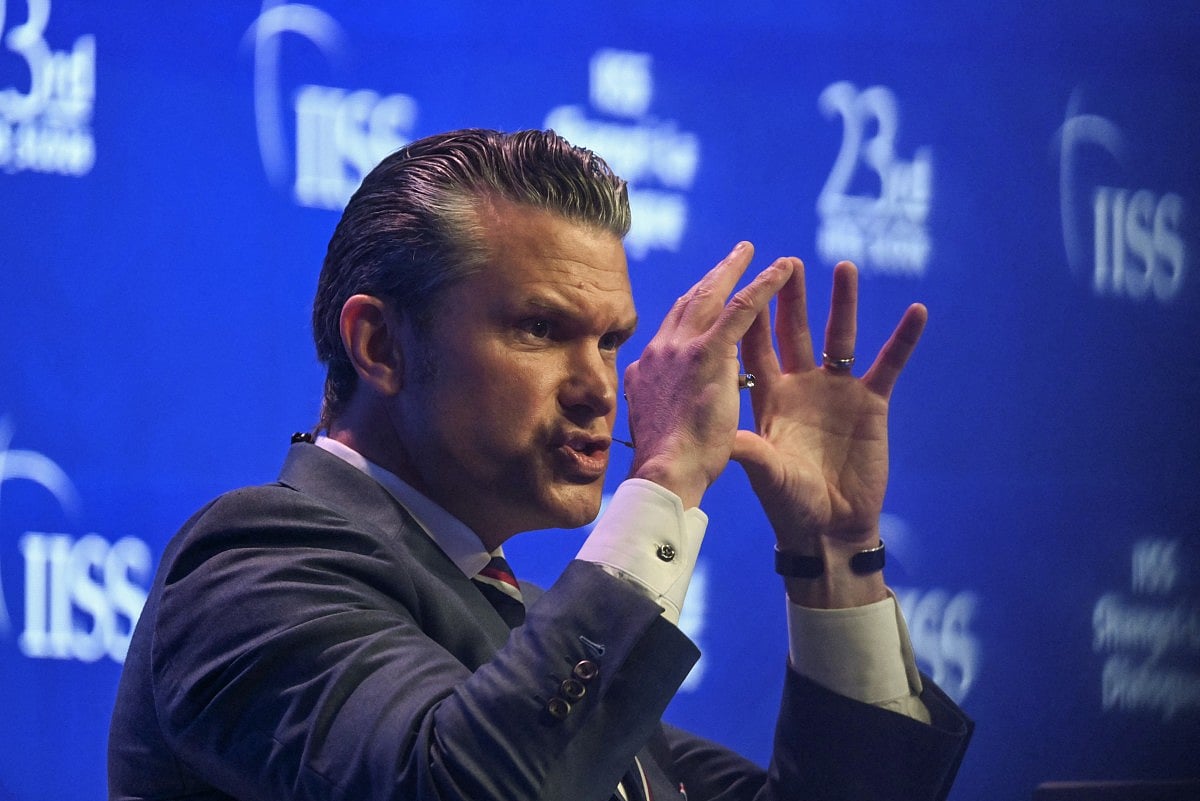
US Secretary of Defence Pete Hegseth speaks during a plenary session of the 23rd Shangri-La Dialogue summit in Singapore on May 30, 2026.
AFP-JAM STA ROSA
US Secretary of War Pete Hegseth has outlined Washington’s strategic vision for the Indo-Pacific, emphasising stronger alliances, greater burden-sharing and a shift away from dependency on the United States.
Speaking at the International Institute for Strategic Studies Shangri-La Dialogue 2026 in Singapore, Hegseth said the US is “charting a new course” for alliances and partnerships aimed at strengthening America while making allies more capable and the region more stable.
Get updated faster and for FREE: Download the Gulf News app now - simply click here.
‘True partnership’ and shift from dependency
Hegseth said the US approach would prioritise “true partnership” across the region, with allies expected to take on greater responsibility for their own defence.
“The era of the United States subsidising the defence of wealthy nations is over. We need partners, not protectorates,” he said, adding that alliances must be built on shared responsibility rather than dependence.
He described the strategy as a “maturation of alliances”, designed to place partnerships on a more sustainable footing in response to future security challenges.
The era of the United States subsidising the defence of wealthy nations is over. We need partners, not protectorates. We seek alliances built on shared responsibility, not dependencyPete Hegseth
China and regional balance of power
Addressing China’s growing military presence, Hegseth said Washington’s strategy is based on maintaining a stable balance of power in the Indo-Pacific.
He warned that a region dominated by any single power would undermine stability and regional security, stressing that the US seeks to preserve equilibrium rather than disrupt it.
“This is a clear-eyed assessment of the security environment,” he said, adding that the US aims to prevent any one state from imposing regional hegemony.
Peace through strength approach
Hegseth said the US will pursue stability through a “peace through strength” posture, combining diplomatic engagement with credible military capability.
While noting ongoing discussions with China, he said military strength remains essential to support US diplomatic objectives and maintain regional deterrence.
While a decent peace is our goal, make no mistake: America is a Pacific nation, and we insist that China respect our longstanding position in this region. And not just insist, but maintain, the manifest military strength to underwrite itPete Hegseth
He emphasised that US posture in the Pacific would be “resilient, distributed and ready”, designed to deny rapid military gains by any adversary.
Focus on capabilities over rhetoric
The defence chief criticised what he called “performative outrage” in politics, arguing that US strategy will prioritise real capability over rhetoric.
“We will prioritise lethal capabilities, strategic discipline and cooperation over empty rhetoric,” he said, adding that potential adversaries should judge the US by its readiness and strength.
US Secretary of Defence Pete Hegseth (C), Thailand's Defence Minister Adul Boonthamcharoen (centre, L), and Singapore's Minister of Defence Chan Chun Sing (centre, R) attend a ministerial roundtable during the 23rd Shangri-La Dialogue summit in Singapore on May 30, 2026.
Expanding defence burden-sharing with allies
Hegseth highlighted growing defence cooperation with allies, citing commitments from countries including South Korea, Japan, Australia, the Philippines, Singapore, Malaysia, Thailand, Vietnam and India.
He said shared industrial and defence capabilities are an “operational imperative”, not a long-term aspiration, and warned that countries unwilling to contribute more to collective defence would see a change in US engagement.
Call for stronger alliances
Concluding his remarks, Hegseth urged Indo-Pacific partners to invest more in their own defence and work closely with the US to preserve regional stability.
“Join us in building a team of strong, self-reliant nations capable of defending sovereignty and contributing to collective security,” he said, adding that the challenges ahead also present significant opportunity for cooperation and stability.
Network Links
GN StoreAbout Gulf NewsTerms & ConditionsReach by GNSitemapContact usPrivacy PolicyGN FocusHave your sayWork with usAdvertise with usGulf News epaperPrinting Services
Download our app
© Al Nisr Publishing LLC 2026. All rights reserved.