How small kindnesses led MacKenzie Scott to give away $7.1b in 2025
Her latest donations echo the generosity she once received — now scaled across nonprofits
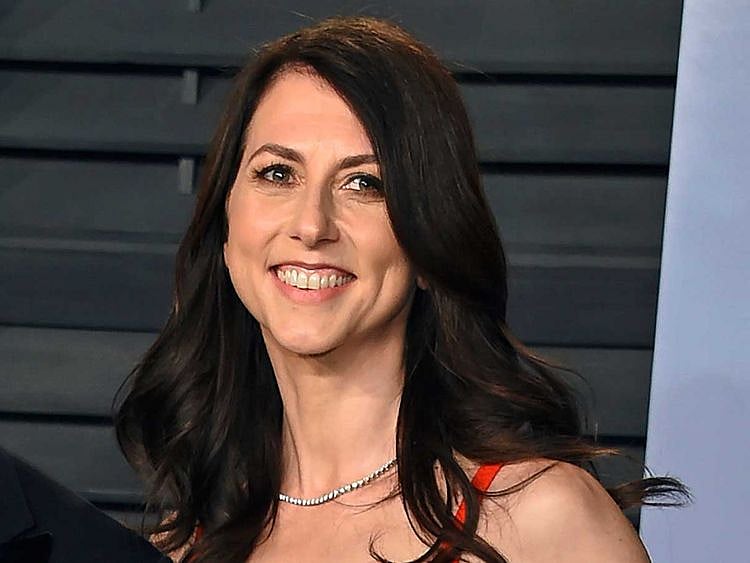
When MacKenzie Scott was a college student, a dentist fixed her chipped tooth for free and a roommate once lent her $1,000 — small gestures of care that she says stayed with her for decades.
This year, those early acts of generosity came full circle as Scott channelled $7.1 billion into nonprofits, schools and scholarship funds, expanding her mission-aligned philanthropy and reshaping how billionaire giving works in America.
In an essay published on her Yield Giving website on Tuesday, the author and philanthropist wrote that while the figure would dominate headlines, “any dollar amount is a vanishingly tiny fraction of the personal expressions of care being shared into communities this year.”
Scott donated $2.6 billion in 2024 and $2.1 billion in 2023. Her latest gifts bring her total philanthropic outlay since 2019 to $26.3 billion.
Her approach continues to reshape the nonprofit landscape: Scott’s grants are unrestricted, arrive quietly and unexpectedly, and often equal or exceed a recipient’s entire annual budget. Forbes estimates her current net worth at around $33 billion, largely rooted in Amazon shares from her 2019 divorce from Jeff Bezos — a fortune that has risen alongside Amazon’s market value this year.
Major gifts to HBCUs and minority-serving institutions
Ahead of her announcement, more than a dozen historically Black colleges and universities revealed they had collectively received $783 million from Scott in 2025, according to research by Rutgers University professor Marybeth Gasman. Combined with previous rounds of funding, Scott has given $1.35 billion to HBCUs since 2020, representing one of the most significant private investments in their history.
“She is like an equity machine,” Gasman said, noting that her latest round included both first-time grantees and renewed support for past recipients — at a moment when equity-focused programmes in education are facing political scrutiny from the Trump administration. Gasman added that several of the 2025 gifts exceed the headline-making HBCU donations Scott made in 2020.
The UNCF — the largest scholarship provider for minority students — received $70 million, which it plans to pool into its growing collective endowment for participating HBCUs. Another $50 million went to the Native Forward Scholars Fund, which offers scholarships for Native American students and also received funding from Scott in a previous round.
Nonprofits say unrestricted gifts are transformative
Unlike traditional philanthropy, Scott’s giving cannot be applied for; recipients are contacted through intermediaries and given no reporting requirements. Research by the Centre for Effective Philanthropy shows that few grantees struggle to manage the sudden influx of funds, and concerns about other donors withdrawing support have largely not materialised.
For some organisations, the impact is immediate and life-changing. California-based 10,000 Degrees — which helps low-income students attend college without debt — was stunned to receive $42 million, more than twice its annual operating budget.
“I was just filled with such joy… I was speechless,” CEO Kim Mazzuca said, recalling how she asked the caller from Fidelity Charitable to repeat the amount. The organisation plans to expand its reach, invest in new technology tools, and build an endowment.
Mazzuca described Scott’s approach as “very deep” and “heartfelt,” saying she invests in solutions that already work and helps students recognise “they are who they’ve been waiting for” — a line from a Hopi prophecy that Scott also referenced.
A shift toward 'mission-aligned' investments
Scott’s essay revisits the personal acts of generosity she experienced as a young adult — from a dentist who repaired a tooth for free to a roommate who once lent her $1,000. She has since invested in that same roommate’s student-lending company as part of a broader move toward “mission-aligned” investments announced last year, through which she seeks to place more of her wealth in ventures that advance social goals rather than maximize financial returns.
Her 2025 note urges readers toward agency and shared responsibility: “There are many ways to influence how we move through the world, and where we land.”
Her giving this year — the largest since she began her philanthropic surge six years ago — reinforces her position as one of the most influential modern philanthropists, reshaping norms on how billionaires engage with civil society.
- with inputs from AP

Sign up for the Daily Briefing
Get the latest news and updates straight to your inbox
Network Links
GN StoreDownload our app
© Al Nisr Publishing LLC 2026. All rights reserved.