A plane carrying patients evacuated from the MV Hondius cruise ship with suspected hantavirus infection, lands at the Bourget airport, north of Paris, Sunday, May 10, 2026.
Hantavirus outbreak on cruise ship sparks quarantine debate
US and French passengers test positive after evacuation from infected ship
Last updated:
4 MIN READ
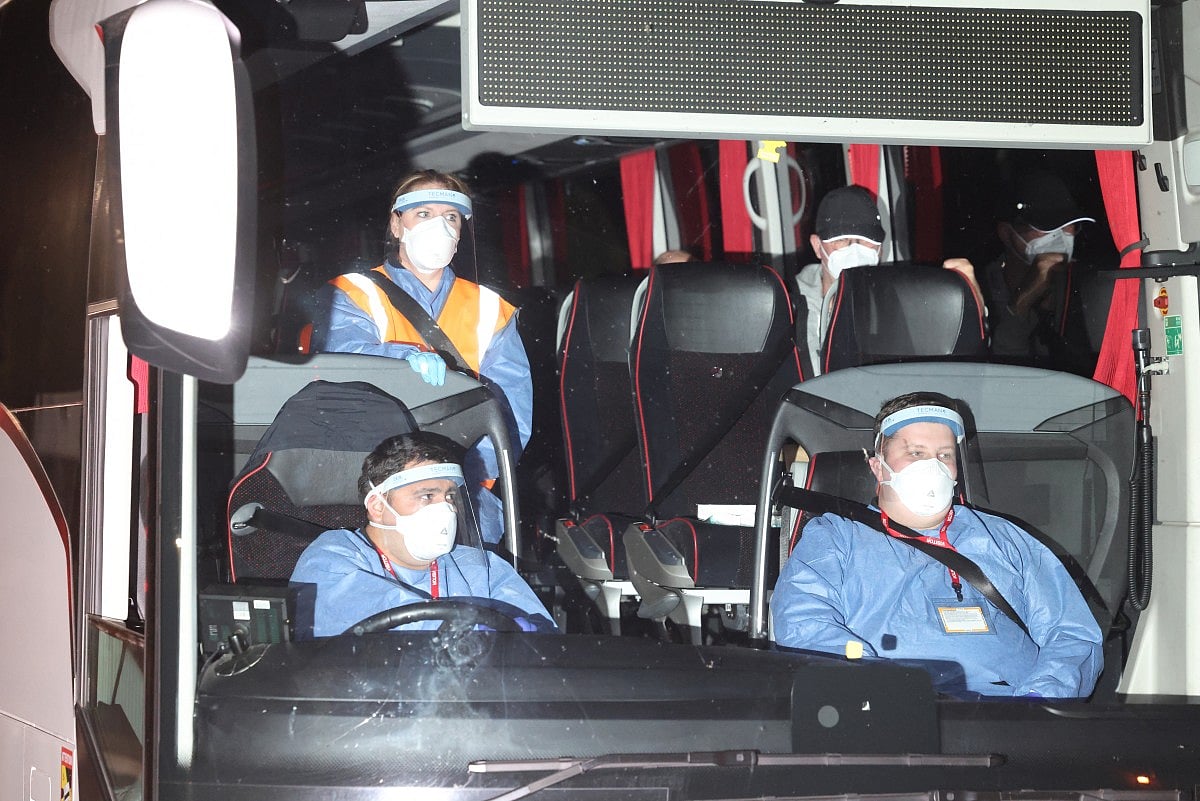
British Nationals, repatriated after a prolonged stay on a cruise ship hit by a deadly hantavirus outbreak, arrive by coach at Arrowe Park Hospital in Wirral, north west England, on May 10, 2026, where they are expected to stay for up to 72 hours.
AFP
A US passenger evacuated from a hantavirus-hit cruise ship has tested positive for the Andes strain of the virus, deepening international concern over how countries are handling those exposed to the rare but potentially deadly disease.
The case emerged as the complex evacuation of passengers from the Dutch-flagged MV Hondius continued from Spain’s Canary Islands, with the World Health Organisation warning that looser quarantine rules “may have risks”. The WHO has recommended 42 days of active monitoring for all passengers and crew who disembark, while US officials have said some Americans may be allowed to continue quarantine at home after risk assessments in Nebraska.
Adding to concerns, French authorities confirmed Monday that a passenger evacuated to France had also tested positive after developing symptoms during the repatriation process. Twenty-two more French nationals had been identified as contact cases after being exposed to someone with the virus, Health Minister Stephanie Rist said.
The outbreak has killed three passengers — a Dutch couple and a German woman — and infected others aboard the expedition vessel, which left Ushuaia in Argentina on April 1 before crossing the Atlantic. Health officials say the overall risk to the public remains low, but the involvement of the Andes virus has raised concern because it is the only hantavirus strain known to spread between humans in rare cases.
WHO raises concern over quarantine differences
Passengers wearing protective suits were ferried off the ship in Tenerife on Sunday and taken by Spanish army buses to evacuation flights. Spain said 94 people from 19 nationalities were flown out on Sunday, with remaining repatriation flights expected on Monday. Authorities in the Canary Islands had pressed to complete the operation quickly because worsening weather was expected to force the vessel to leave.
The WHO has sought to reassure residents in Tenerife that the outbreak is “not another Covid”, while stressing that those aboard the ship should be treated as high-risk contacts. WHO officials have recommended daily health checks for six weeks, either at home or in specialised facilities.
Different countries are now applying different protocols. Greece said one evacuee would spend 45 days in mandatory hospital quarantine, while Spanish nationals were taken to a military hospital in Madrid. The UK has flown passengers to Manchester for tests and an initial quarantine period, followed by further monitoring. French authorities placed five evacuees in strict isolation after one developed symptoms during the flight home.
In the US, 17 American passengers were being flown to Omaha, Nebraska, where they will be assessed at specialised quarantine and biocontainment facilities. US health officials said one passenger had tested mildly positive by PCR and another had mild symptoms.
That approach drew caution from WHO chief Tedros Adhanom Ghebreyesus, who was in Tenerife to help supervise the evacuation. Asked about allowing passengers to go home, he said the policy “may have risks”.
Why the Andes virus is causing alarm
Hantavirus is usually transmitted through exposure to rodent urine, droppings or saliva. It is not normally considered easily transmissible between people. However, the Andes strain has previously been linked to limited person-to-person spread, making the cruise ship cluster unusual and closely watched by international health agencies.
The WHO said the first infection was believed to have occurred before the start of the expedition, followed by transmission on board. Argentine officials have questioned whether the first infected passenger contracted the disease in Ushuaia, citing the virus’s incubation period.
WHO officials said everybody aboard the ship should be treated as a “high-risk” contact and actively monitored for 42 days. Early symptoms include fever, chills, headaches, dizziness, muscle pain and gastrointestinal problems, according to the WHO.
Global tracing effort underway
Authorities are also tracing passengers who had already left the ship before the outbreak was confirmed. According to reports, more than two dozen people from at least 12 countries disembarked on April 24, before contact tracing was fully in place. Health agencies across several countries are now trying to identify anyone who may have come into contact with them.
The evacuation has produced striking scenes: passengers in blue medical suits, luggage left behind, buses separated from passengers by protective barriers, and flights met by emergency vehicles. Some crew members, along with the body of one passenger who died on board, are expected to remain on the vessel as it sails to Rotterdam for disinfection.
British Army medics were also parachuted into the remote South Atlantic territory of Tristan da Cunha after a suspected case linked to the cruise ship emerged there. The patient had reportedly disembarked from the vessel last month.
Covid memories and misinformation resurface
The outbreak has also revived Covid-era misinformation online, with false claims about “plandemics”, vaccines and miracle cures spreading across social media. Health experts have warned that while public concern is understandable, misinformation could complicate containment efforts.
WHO chief Tedros directly addressed comparisons with the Covid pandemic while trying to calm fears in Tenerife, telling residents: “This is not another COVID.”
For now, officials are trying to strike a careful balance: preventing panic while ensuring that every passenger and crew member is monitored through the full incubation window. As the MV Hondius leaves Tenerife, the focus shifts from evacuation to surveillance — and whether the world’s patchwork quarantine response is enough to prevent further spread.
- with inputs from AFP, AP
Sign up for the Daily Briefing
Get the latest news and updates straight to your inbox
Network Links
GN StoreAbout Gulf NewsTerms & ConditionsReach by GNSitemapContact usPrivacy PolicyGN FocusHave your sayWork with usAdvertise with usGulf News epaperPrinting Services
Download our app
© Al Nisr Publishing LLC 2026. All rights reserved.