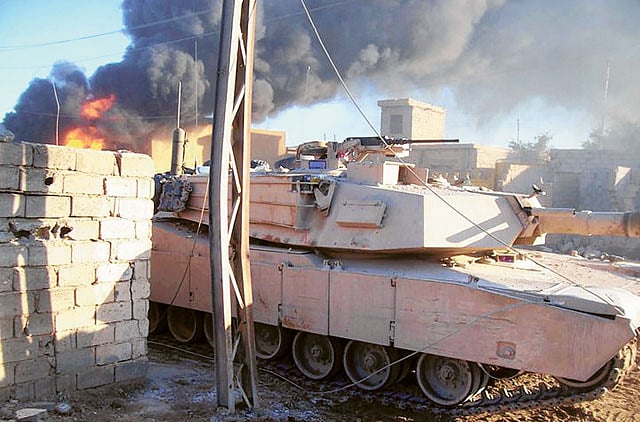
Los Angeles: An ex-Marine filmmaker whose unit carried pocket digital cameras into some of the worst fighting in Iraq is using that footage, and post-war interviews, to open viewers' eyes about combat and help himself deal with the lasting emotional impact.
The videos are stark. One Marine is so badly hurt he filmed himself giving himself the last rites.
Some of the fighters seem unaffected years later in civilian life, while others have gone through severe bouts of post-traumatic stress and one man, who in Iraq saved fellow Marines' lives, wound up in prison back home.
Garrett Anderson hopes to show this all up close with And Then They Came Home, a documentary he is making from footage he and his comrades gathered on November 22, 2004, one of the bloodiest days of fighting during Iraq's second battle of Fallujah.
One of Anderson's comrades died that day and six others in his platoon were wounded as they fought building to building in the city of Fallujah, searching for snipers. One of those shot was so badly wounded that he pulled out his digital camera and hit the record button as he gave himself the last rites so his family would have a record of it. Anderson plans to include that footage in his film.
"We were probably the first group of people who were allowed to go into combat with a digital camera in your pocket," Anderson said recently from his home in Portland, Oregon.
The Marines carried their own pocket cameras from their private lives and never saw a reason to leave them behind. Anderson said their commanders never said anything about it or tried to stop them.
"And so the whole battle was documented from the perspective of the guys who fought it, and we're going to be able to use some of that footage," he said.
Long-term effects
Anderson and his colleagues hope it will be a healing experience for them, as well as an eye-opening one for those who have never seen war.
"I hope that they see how it really affects these young men that come back," said Nathan Douglass, who was badly wounded on that day and is one of the twelve Marines who will recount their experiences in interviews Anderson plans to film this summer.
"It's not just a video game," Douglass added. "There are long-term effects, whether you are physically wounded or not. Sometimes I think the mental effects can be so much worse."
Sign up for the Daily Briefing
Get the latest news and updates straight to your inbox
Network Links
GN StoreDownload our app
© Al Nisr Publishing LLC 2026. All rights reserved.