What 50C overheating does to your phone, and the 15-minute fix that works in the UAE
Extreme UAE temperatures can overheat smartphones and permanently shorten battery life
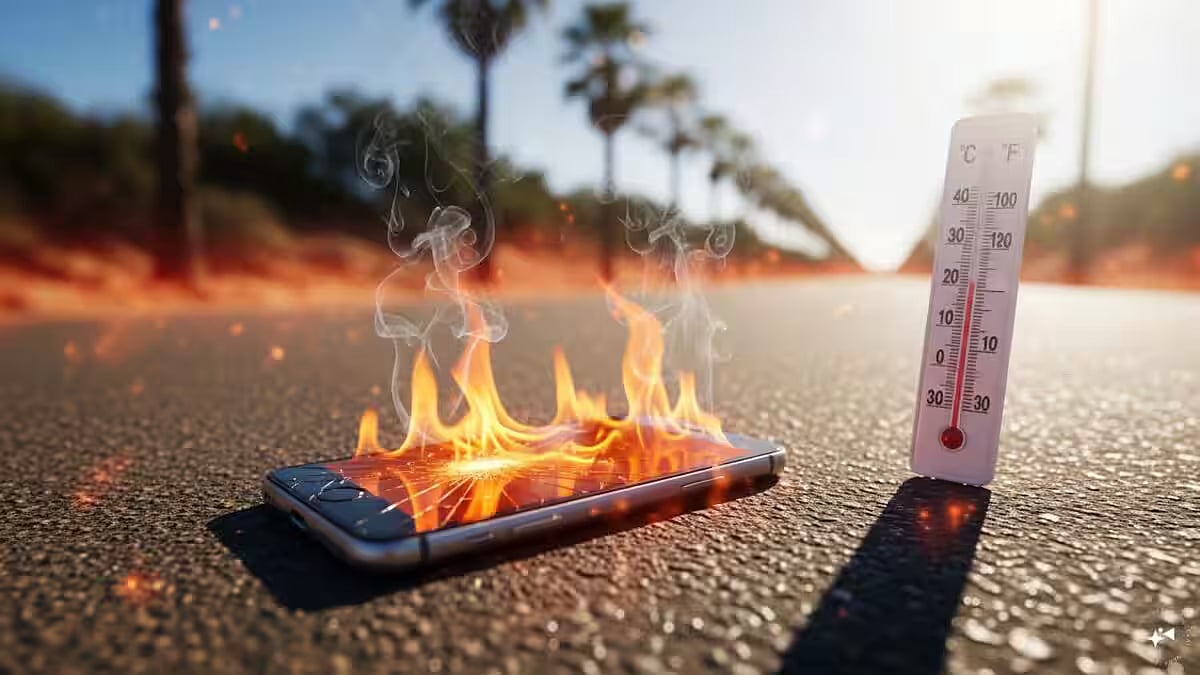
Dubai: Buried in Apple's support pages is a line most people have never looked at. The recommended ambient temperature for using an iPhone is between 0C and 35C. Samsung and most other manufacturers publish a near-identical range.
Now look at this week's forecast. Dubai is around 40C today and stays near that through the weekend, with overnight lows around 35C. In the desert, surface readings climb past 50C at the peak of the afternoon.
So your phone is above its recommended operating temperature outdoors at midday, and it is still at the ceiling at 3am. That is worth knowing before you blame the phone for behaving strangely.
Get updated faster and for FREE: Download the Gulf News app now - simply click here.
What your phone does when it gets too hot
It is not breaking. It is defending itself, and the symptoms are deliberate.
Screen dimming, sometimes to black. Charging slowing or stopping entirely. Camera flash and torch disabled. Apps slowing or pausing. The cellular radio dropping to a low-power state, which is why your signal looks terrible on a hot afternoon.
Navigation is the one that catches people out. If the phone overheats while you are driving, the map disappears and a cool-down message replaces it. Voice directions keep working and the screen wakes briefly for turns, so you are not stranded, but the map is gone until the phone recovers.
None of that causes lasting harm on its own. The damage happens elsewhere.
The battery is what you are actually protecting
Heat is the single biggest factor in how quickly a lithium battery loses capacity, and unlike a temporary shutdown, that loss does not come back.
A phone that spends a summer being cooked on a dashboard will hold noticeably less charge by winter, and there is no software fix for it.
Watch out for a case that suddenly does not fit, a screen lifting at the edges, or a phone that rocks when placed flat on a table. Those are signs of a swelling battery, which needs a service centre rather than an experiment.
The car is worse than the beach
Ambient air at 45C is one problem. A closed car is another category entirely, with interiors routinely passing 60C and dashboards, where the sun lands directly, going higher still.
Do not leave a phone on the dashboard, in a windscreen mount in a parked car, or in the glovebox, which is not the safe cool spot people imagine. If you have to leave it, under a seat is the least bad option, though the honest advice is to take it with you.
The same goes for power banks, which contain the same chemistry with fewer safeguards. A power bank left in a parked car all afternoon is a genuine fire risk, not a theoretical one.
The things not to do
The instinct when a phone gets hot is to cool it fast. Resist it.
Do not put it in the freezer. Rapid temperature swings can cause permanent damage, and you will trade a temporary problem for a lasting one. The fridge is the same mistake in a milder form. Ice packs, cold water and air-conditioning vents pointed directly at the phone all create condensation inside the casing, which is how heat problems turn into water damage.
What works is dull. Move it into shade or indoors, take the case off, and leave it alone for fifteen minutes.
Practical rules for being outdoors
Take the case off when you are out in the sun. Thick protective cases are excellent at surviving drops and terrible at letting heat escape, and a black case in direct sunlight is effectively an oven.
Drop your screen brightness. A bright display generates real heat, and auto-brightness will push it to maximum in sunlight.
Avoid stacking all the demanding stuff. Video recording, GPS navigation, hotspot and a poor signal all at once is what pushes a phone over the edge fastest.
Keep it out of your pocket if you can. Your body is another 37C heat source pressed against it. A bag in shade is better.
Do not charge a hot phone. Charging generates heat of its own, and the phone will likely refuse anyway.
If you are shooting photos or video outdoors, work in short bursts and let the phone rest between them rather than running the camera continuously.
For people who work outside
Between 15 June and 15 September, the midday break rule keeps outdoor workers off the job during the hottest part of the afternoon. Delivery riders, site staff and anyone whose phone is essentially a work tool are the group most likely to see heat shutdowns at the worst possible moment.
A light-coloured phone pouch, a habit of parking the phone in shade rather than on a bike seat, and a spare battery kept indoors rather than in a vehicle will all do more than any app claiming to cool a device down. Those apps do not work. There is no software route to lowering a phone's temperature beyond closing what is running, which you can do yourself.
When it has already shut down
Get it out of the sun. Leave the case off, leave the screen alone, and give it time. Most phones recover fully within twenty minutes or so.
If it will not turn on after cooling completely, if it gets hot while doing nothing at all, or if the body has changed shape, stop charging it and take it in. Every major brand has authorised service centres across the Emirates, and a battery replacement costs a fraction of a new handset.
The phone is telling you something when it dims and slows. Summer here simply asks more of it than it was designed for.
Network Links
GN StoreDownload our app
© Al Nisr Publishing LLC 2026. All rights reserved.