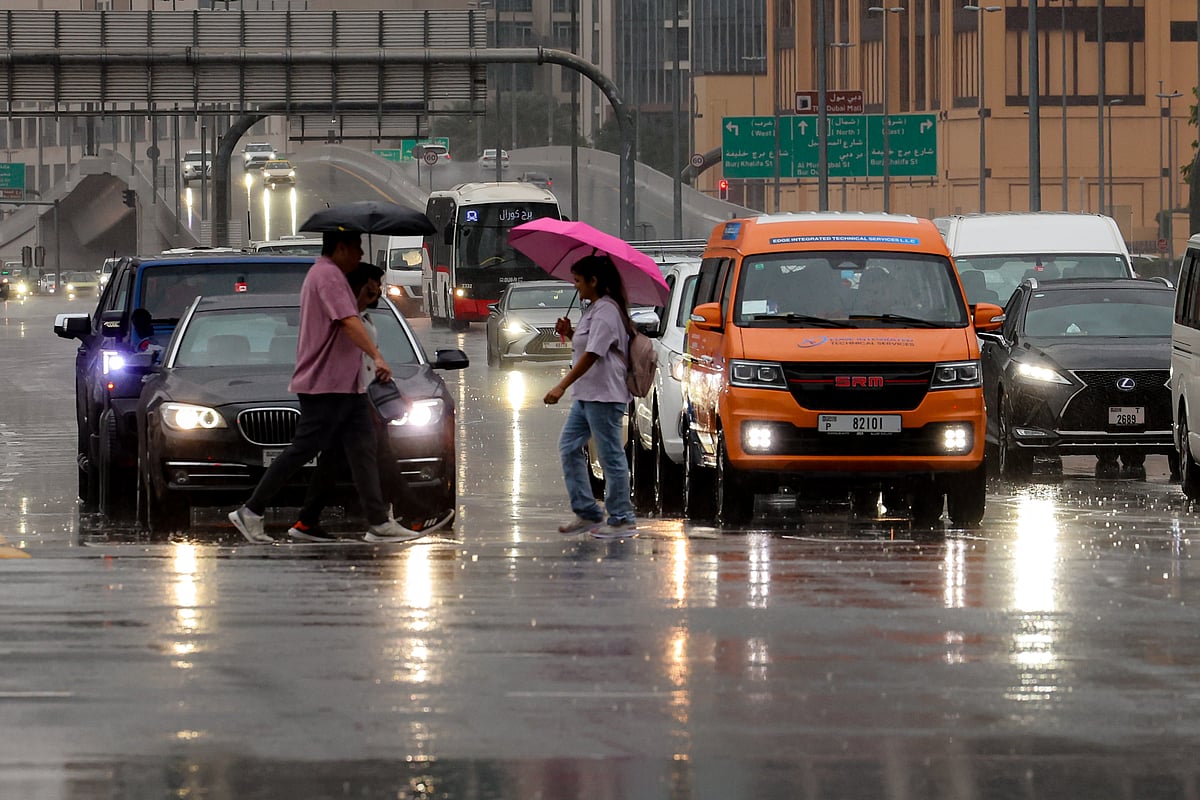
Cleanup in full swing as workers clear waterlogged stretches of Ittihad Road following the recent rains in Sharjah.
Dubai: Every year, as winter fades and temperatures begin to climb, the UAE enters one of its most unpredictable weather periods.
Sudden thunderstorms, short but intense downpours, strong winds and even dust storms can appear with little warning.
Locally, this seasonal transition is known as the Sarayat season, a period that helps explain why spring weather in the Emirates can feel so changeable.
The Sarayat, sometimes also referred to as Al Marawih, typically runs from about mid-March until early May, bringing intermittent atmospheric instability driven by shifting seasonal conditions.
Meteorologists say the period is a transitional phase between winter and summer, when rising surface temperatures combine with cooler air in the upper atmosphere. This contrast creates instability that can trigger the rapid formation of thunderclouds and short-lived but sometimes intense rainfall.
Get updated faster and for FREE: Download the Gulf News app now - simply click here.
During this period, convective clouds can form quickly, sometimes within less than an hour, producing thunderstorms, heavy showers and strong downdraft winds.
Unlike winter rain systems that are often associated with large frontal systems, Sarayat storms are typically more localised and sudden, which explains why rainfall may affect one area while nearby locations remain dry.
The science behind Sarayat weather lies in the interaction between different air masses. As spring advances, land temperatures often exceed 30°C while colder air remains present in higher atmospheric layers. This temperature contrast helps moist air rise rapidly, forming towering thunderclouds.
At the same time, warm and humid air masses moving from the Red Sea and East Africa can increase moisture levels across the region, further enhancing the potential for storm development.
This combination of heat, humidity and upper-level cooling creates ideal conditions for unstable weather, a pattern commonly seen across the Arabian Gulf during this time of year.
The Sarayat season is not only associated with rainfall. Strong and shifting winds are another defining feature, sometimes exceeding 50km/h and generating dust storms, particularly in desert and open areas.
These shifting winds can change direction within the same day, adding to the unpredictability of conditions. This often means clear skies in the morning followed by thunderstorms or dust later in the day.
Although heavy rain during spring can sometimes appear unusual, meteorologists say such events are part of a natural seasonal cycle. In recent years, the UAE has recorded several notable rainfall events during this period, including intense storms in March and April 2024 that brought heavy downpours and localised flooding.
Sign up for the Daily Briefing
Get the latest news and updates straight to your inbox
Network Links
GN StoreAbout Gulf NewsTerms & ConditionsReach by GNSitemapContact usPrivacy PolicyGN FocusHave your sayWork with usAdvertise with usGulf News epaperPrinting Services
Download our app
© Al Nisr Publishing LLC 2026. All rights reserved.