US-Iran war: Tanker hit in Hormuz as oil falls towards $100 — what UAE residents need to know tonight
Hormuz traffic remains restricted as UAE flight schedules stay mixed on some routes
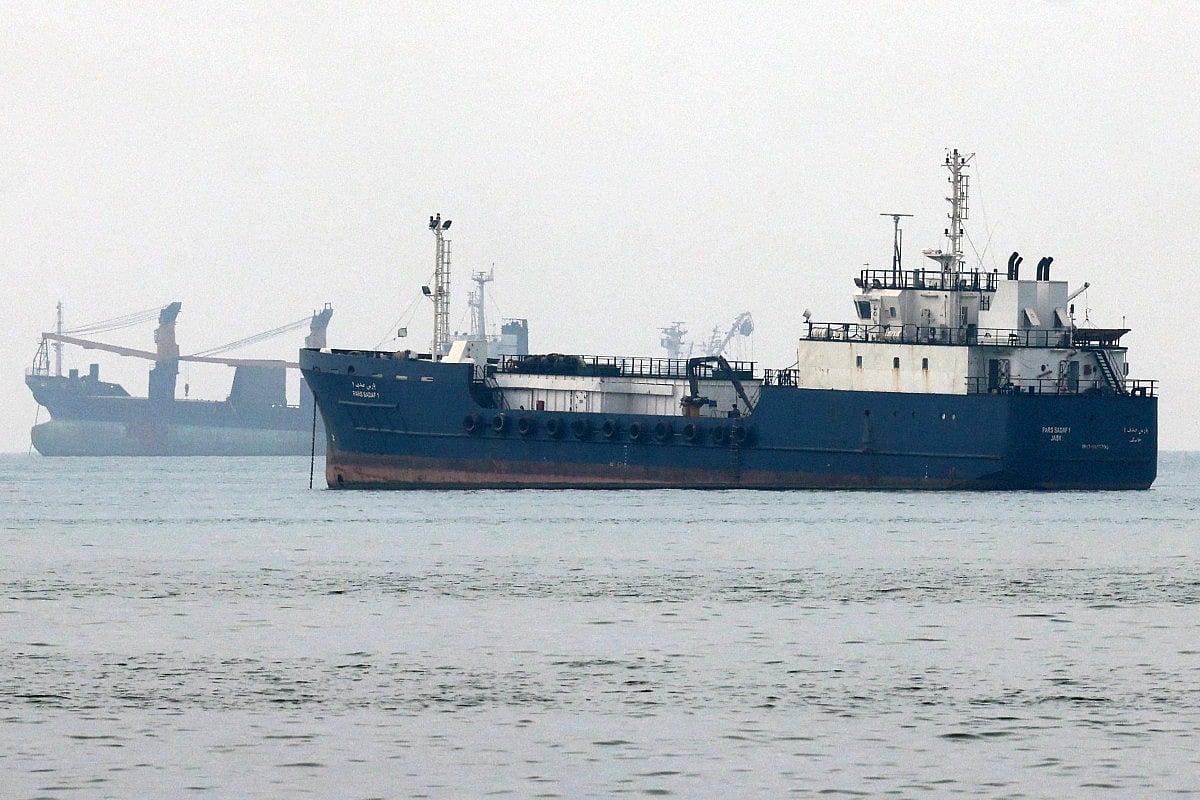
The US-Iran conflict remains tense on Monday, with a tanker struck while entering the Strait of Hormuz, Iran warning against renewed US attacks and attention increasingly turning towards possible diplomacy at the UN General Assembly in New York.
Oil prices, meanwhile, have fallen towards $100 a barrel as markets weigh hopes of diplomatic progress against continued disruption to shipping and Saudi energy infrastructure.
Get updated faster and for FREE: Download the Gulf News app now - simply click here.
For UAE residents, the main issues to watch this afternoon and evening are developments around Hormuz, regional flight schedules, oil prices and whether this week’s gathering of world leaders in New York creates an opening for diplomacy.
Here are the key developments on September 21.
US Treasury chief says Iran airlines to be 'shut down' Sept 23
US Treasury Secretary Scott Bessent said Iranian airlines could effectively be cut off from global operations from September 23 as Washington intensifies sanctions pressure on Tehran.
Bessent told CNBC that companies providing Iranian carriers with fuel, landing services or ticket sales could risk being excluded from the US dollar system. The US has also targeted companies outside Iran accused of supporting its aviation sector.
The warning comes as Washington steps up economic pressure on Tehran, with China — a major Iranian economic partner — also in focus ahead of President Donald Trump's meeting with Chinese leader Xi Jinping.
Tanker struck entering Strait of Hormuz
A tanker was struck by an unknown projectile while entering the Strait of Hormuz on Monday, according to the United Kingdom Maritime Trade Operations centre.
Two crew members suffered minor injuries, but the vessel remained operational and continued towards its next port under its own power. No environmental impact was reported.
Responsibility for the incident was not immediately established.
The attack underlines the continuing risks around Hormuz even as some commercial vessels have resumed moving through the waterway.
Hormuz traffic falls sharply
Visible commercial traffic through the Strait of Hormuz remains far below pre-war levels.
A total of 17 commodity vessels crossed the strait over the weekend, according to shipping data cited by Reuters, down from 37 the previous weekend.
Before the war began in February, around 125 large commercial vessels typically passed through Hormuz each day.
However, publicly visible ship-tracking figures do not provide a complete picture. Some vessels are moving through the region with their transponders switched off.
US Central Command has also continued redirecting commercial vessels as part of Washington’s naval blockade of Iran.
Together, these developments mean Hormuz remains one of the biggest uncertainties for global energy and shipping markets.
Trump open to meeting Pezeshkian as UN takes focus
Diplomacy could take centre stage this week as world leaders gather in New York for the UN General Assembly.
US President Donald Trump has said he would be open to meeting Iranian President Masoud Pezeshkian, who is also expected to be in New York.
Iranian security official Mohsen Rezaei has said Tehran has conveyed seven conditions for returning to negotiations through mediators.
The complete list has not been made public, but Rezaei has identified demands including an end to fighting on all fronts, the release of frozen Iranian assets and an end to the US naval blockade.
Iran, however, continues to warn of a major response if Washington resumes large-scale attacks.
Trump is expected to discuss the Iran conflict with Gulf Cooperation Council leaders during his visit to New York.
UAE pushes diplomacy at UN
The UAE will also use this week’s UN General Assembly to push for dialogue and de-escalation.
Sheikh Abdullah bin Zayed Al Nahyan, Deputy Prime Minister and Minister of Foreign Affairs, will lead the UAE delegation during the high-level meetings in New York.
The Ministry of Foreign Affairs said the UAE’s participation comes after nearly seven months of regional conflict and reflects the country’s commitment to diplomacy, international law and maintaining open channels of communication.
The UAE delegation’s priorities include conflict resolution, global stability and peaceful coexistence.
Oil slides towards $100
Oil prices fell to their lowest levels in 11 days on Monday as traders weighed hopes of US-Iran diplomacy and signs that Saudi crude exports were recovering.
Brent crude fell more than 2 per cent to around $101 a barrel during Monday trading, while US crude also declined.
Saudi Arabia has increased the amount of crude it is moving through Hormuz following Houthi attacks on its East-West pipeline, which had provided an important alternative export route to the Red Sea.
Despite Monday’s decline, oil prices remain significantly elevated because of continuing uncertainty around both Hormuz and Red Sea shipping.
Houthis, Saudi Arabia and Yemen remain another flashpoint
The widening conflict in Yemen remains another major regional risk.
The Iran-backed Houthis claimed missile and drone attacks on Riyadh and an Aramco facility in Yanbu over the weekend. Saudi authorities said a ballistic missile targeting Riyadh was intercepted and other attacks were thwarted.
The Houthis have also expanded their control along Yemen’s western coast near the Bab Al Mandeb Strait, another strategically important shipping route.
The humanitarian impact is worsening. The World Health Organisation said 164 people were killed and 516 injured in fighting across Yemen between September 13 and 18.
The International Organisation for Migration said nearly 130,000 people have been displaced across seven provinces.
A senior Houthi official, meanwhile, told the Associated Press that the group had no intention of attacking US vessels in the Red Sea and said indirect contacts with Washington had taken place through Oman.
UAE flights: What passengers need to know
UAE air travel remains operational but uneven, with selected regional services delayed or cancelled.
The latest Gulf News flight tracker shows Etihad largely maintaining services to Bahrain, Kuwait and several Saudi destinations, although some flights face delays. Emirates has Bahrain and Kuwait services scheduled, while flydubai and Air Arabia have selected cancellations involving Bahrain, Kuwait and Saudi Arabia.
Several international airlines also continue to suspend or restrict UAE services as they gradually reassess regional operations.
Not all cancellations or delays are related to the US-Iran conflict; operational and technical factors are also affecting schedules. Passengers should check their individual flight directly with their airline before travelling to the airport.
Flight status alert: Always check official airline websites for real-time updates, as flight schedules and conditions can change rapidly.
What UAE residents should watch this evening
The Strait of Hormuz remains the immediate focus after Monday’s tanker incident. Any further attacks could quickly affect shipping confidence and oil prices even if more vessels continue to make the crossing.
Diplomatic attention will increasingly shift towards New York, where Trump, Pezeshkian and Gulf leaders will be present during UN General Assembly week.
For UAE travellers, airports remain operational, but individual regional and international services can change at short notice.
Oil is another key indicator. Prices have eased toward $100, but continued fighting around Hormuz, Saudi Arabia, or the Red Sea could quickly reverse that decline.
Network Links
GN StoreDownload our app
© Al Nisr Publishing LLC 2026. All rights reserved.