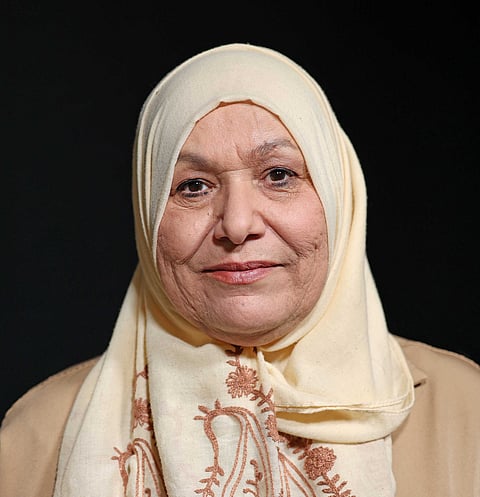
Anwar Gargash: The UAE is committed to deterrence, dialogue with Iran as it pushes ahead with development
Presidential adviser says de escalation must precede talks on a new regional future

Dubai: The UAE will combine deterrence and defence of its sovereignty with dialogue with Iran while ensuring that regional tensions do not derail its economic and development agenda, Dr Anwar Gargash, Diplomatic Adviser to the UAE President, said on Thursday.
Speaking at a session titled “Media Reinvented: Navigating an Era of Transformation”, on the final day of the Arab Media Summit in Dubai, Gargash said: "The UAE's current strategy centers on two parallel tracks: balancing immediate crisis management with long-term regional diplomacy and economic growth. This dual-track approach ensures the nation stays secure while continuing its push as a global economic leader."
Get updated faster and for FREE: Download the Gulf News app now - simply click here.
Geography and the region’s deeply interconnected relationships made it necessary to look beyond the immediate confrontation, he said, adding that the collapse of the previous regional security order required new understandings suited to the next phase.
Gargash said the UAE’s approach rested on deterrence and the defence of its sovereignty, combined with the flexibility needed to maintain dialogue with Iran and explore a new framework for future relations.
He said the UAE leadership’s first commitment was to the country’s sovereignty and its people and to taking the measures necessary to protect them. At the same time, the UAE would continue with its “geo economic” policy, maintaining its economic and development trajectory and engagement with countries around the world despite regional turbulence.
Gargash cited His Highness President Sheikh Mohamed bin Zayed Al Nahyan’s recent visit to Germany as an example of Abu Dhabi’s determination to ensure that the crisis did not obstruct its broader international and economic agenda.
He drew a distinction between maintaining a relationship with Iran and rebuilding trust. Geography, history and intertwined interests made communication and dialogue between Iran and Gulf states necessary, he said. But rebuilding trust would take “many years”, given what he described as the major aggression faced by GCC countries.
Dialogue, the diplomatic adviser added, should extend beyond day to day issues such as trade, aviation and shipping to more fundamental questions, including guarantees against attacks and arrangements capable of delivering long term stability for both sides and the wider region.
Gargash said the first requirement was to stop the tensions “in any form and by any means”, arguing that negotiations over a new regional future could not proceed while threats and attacks continued.
Asked what immediate steps Iran should take, Gargash said Iranian President Masoud Pezeshkian had himself publicly described Iran’s attack on Gulf states as a “major mistake”. Gargash characterised it as a strategic mistake that may have achieved short term objectives but left Iran facing a more complicated long term position.
He said Iranian decision making circles needed to adopt a different approach towards Gulf states, beginning with an end to attacks against them. He also referred to the use of militias and attempts to impose a new reality in the Strait of Hormuz as issues that would need to be addressed.
Gargash said neighbouring countries could ultimately play a role in helping Iran emerge from the crisis and, in the longer term, in restoring its economic and development prospects.
Responding to Iranian accusations against the UAE, Gargash said the country had defended itself and would continue to do so, while also extending “the hand of friendship” and keeping the door to dialogue open.
He also pointed to what he described as differing centres of decision making in Iran, saying some statements reflected more hardline currents. He said the late Iranian Supreme Leader Ali Khamenei had exercised the final say over Iranian decision making for 37 years from 1989, and that it would be difficult for any single person or institution to inherit that position in the same way.
Gargash described the various decision making circles in Iran not as being at war with one another, but as “divergent”, which he said helped explain differences in rhetoric and positions emerging from Tehran.
The Arab Media Summit, held at Dubai World Trade Centre from September 15 to 17, has brought together officials, media executives, writers and experts to discuss political, economic and technological shifts affecting the region and the media industry.