Iran’s attacks on UAE, other GCC countries were premeditated; trust may take decades to rebuild: Anwar Gargash
UAE presidential adviser says practical ties with Tehran remain a geographic necessity
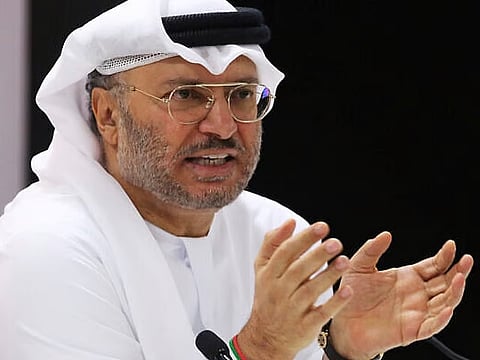
Dubai: Iran’s attacks on the UAE and other Gulf countries were premeditated and planned rather than an impulsive response, and rebuilding the trust destroyed by the conflict could take decades, a senior UAE official said.
Dr Anwar Mohammed Gargash, Diplomatic Adviser to the UAE President, said engagement with Iran remained a central issue for the UAE and its Gulf neighbours because geography left them with little choice but to maintain communication.
Get updated faster and for FREE: Download the Gulf News app now - simply click here.
Speaking at the Hili Forum 2026 in Abu Dhabi, Gargash, however, drew a clear distinction between restoring a necessary working relationship with Tehran and rebuilding trust.
Iran’s attacks involving thousands of missiles and drones against the UAE and other countries constituted a “war of choice”, deliberately planned against neighbours that had not attacked it, Gargash said.
He described the attacks as a flagrant violation of international law and a profound failure of statecraft. “Iran destroyed the bridges of communication that had been built over decades with the Gulf,” Gargash said, adding: “While a practical relationship can and ultimately must be restored, rebuilding trust is something entirely different.”
He said the assumption of good faith that had underpinned much of the Gulf’s engagement with Iran had been “destroyed within hours” and could take years, perhaps decades, to rebuild.
Gulf response fell short at regional level
Gargash also offered a critical assessment of the regional and international response to the crisis, which widened from the war in Gaza, saying it had proved ineffective in preventing threats or protecting energy flows and maritime navigation.
He said individual Gulf countries had demonstrated strength and resolve in responding to Iranian attacks, but that national effectiveness had not translated into a sufficiently strong collective regional response. “Equally important is that we look honestly at the response of the Gulf states themselves,” Gargash said. “A region that cannot accurately assess its position has little chance of correcting it.”
Despite significant cooperation among Gulf and other regional countries during the crisis, Gargash said the response had not matched the scale of the threat in the way Gulf states had responded after the invasion of Kuwait or during periods of upheaval across the Arab world.
The GCC countries broadly agreed on the nature of the challenge posed by Iran, he said, but had fallen short in confronting the structural threat and translating that common understanding into a sufficiently unified and strategic response.
Gargash said the Gulf crisis was unfolding against a wider international order already undergoing profound political, economic and technological change. “In many ways, it is a vortex within a vortex,” he said, adding that regional challenges were now embedded in an increasingly unstable and unpredictable international environment.
The war, he said, had raised fundamental questions about assumptions long taken for granted, including whether existing channels for dialogue and de-escalation remained effective. “The landscape beyond our region is no longer reassuring,” Gargash said.
In its third edition, the Hili Forum 2026 has begun in Abu Dhabi on Monday, bringing together policymakers, government officials, diplomats, academics, business leaders and international experts to discuss key issues shaping the Gulf region and the wider international landscape.
Jointly organised by the Emirates Centre for Strategic Studies and Research (ECSSR) and the Anwar Gargash Diplomatic Academy (AGDA), the forum is being held at The St. Regis Saadiyat Island Resort under the theme "Gulf at Crossroads: Conflict, Consequences and Course Correction."
More than 1,000 participants, over 75 speakers and representatives from more than 35 countries are taking part in the two-day event.