UAE hopes for US-Iran peace breakthrough but ‘braced for worst’: Gargash
It is not in the region’s interest to go through another round, senior UAE official says
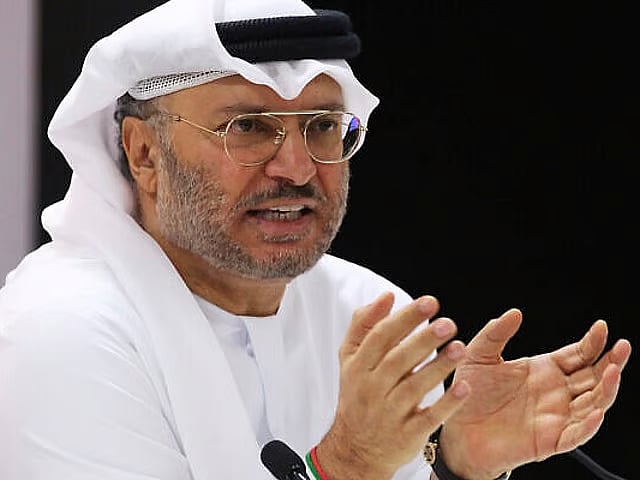
Dubai: The UAE is hoping for a diplomatic breakthrough between the United States and Iran but remains “braced for the worst” amid threats of renewed fighting in the Middle East, a senior UAE official warned on Sunday.
Anwar Gargash, diplomatic adviser to the UAE President, said another round of conflict would not serve the region's interests, even as governments remained alert to the possibility of further military escalation.
“We’re hoping that there is a diplomatic breakthrough,” Gargash said at a conference in Bahrain, according to AFP.
“It is not the interest of the region to go through another round... But I think we’re also, as we’ve shown before, braced for the worst.”
His remarks at the 22nd IISS Manama Dialogue came amid renewed concerns over the US-Iran confrontation and the possibility that another round of hostilities could threaten regional stability.
The UAE has repeatedly called for restraint, dialogue and adherence to international law as essential steps towards resolving regional crises through peaceful means.
In a statement last week, the Ministry of Foreign Affairs reaffirmed the country's commitment to diplomatic solutions, urging intensified regional and international efforts to prevent further escalation.
What is the Manama Dialogue?
What is it? An annual international security summit held in Bahrain, bringing together political leaders, foreign ministers, defence officials and security experts.
Who organises it? The International Institute for Strategic Studies (IISS), a London-based research organisation.
When did it begin? The forum was launched in 2004 and has become a major platform for discussions on Middle East security.
When is the 2026 summit? The 22nd edition runs from October 30 to November 1 at The Ritz-Carlton in Bahrain.
Who is attending? Delegations from more than 50 countries, with over 40 senior ministers and military chiefs expected.
What are the main issues? The US-Iran confrontation, regional defence, maritime security, freedom of navigation, economic recovery and international security cooperation.
Why does it matter? It allows regional and international officials to discuss security challenges, hold bilateral meetings and explore diplomatic solutions amid heightened tensions.
GCC urges Iran to respond
At the same conference, Gulf Cooperation Council (GCC) Secretary-General Jasem Mohamed Al Budaiwi said Gulf countries remained willing to negotiate with Tehran but stressed that diplomatic engagement required a reciprocal response.
“The GCC states have always called for dialogue and negotiation to resolve any issue in the region, and they still do,” Al Budaiwi said.
“But diplomacy needs partners, partners who respond in kind.”
He said the six-member bloc maintained communication channels with Iran while continuing to work with international partners to safeguard regional security.
Al Budaiwi also stressed that GCC countries had neither initiated nor sought the conflict, but had suffered casualties and damage to civilian and critical infrastructure during Iranian attacks.
Saudi Arabia warns over shipping threats
Saudi Vice Foreign Minister Waleed Elkhereiji warned that threats to international navigation through the Strait of Hormuz, the Red Sea and Bab el-Mandeb required coordinated international action.
“Securing navigation in the Red Sea and the Straits of Bab el Mandeb and Hormuz is a shared responsibility that requires regional and international cooperation based on the respect of international law,” he said.
He also condemned renewed Houthi attacks on Saudi Arabia and threats to commercial shipping, accusing the Yemeni militia of undermining diplomatic efforts to resolve the conflict.
The GCC chief called for navigation through the Strait of Hormuz to return to conditions prevailing before February 28, when the US-Iran war began.
The strategic waterway is a major route for global energy shipments, while Bab el-Mandeb connects the Red Sea with the Gulf of Aden and international shipping lanes.
The warnings at the Bahrain summit highlighted the difficult balance facing Gulf governments as they pursue diplomacy with Tehran while preparing for the security and economic consequences of any renewed conflict.

Sign up for the Daily Briefing
Get the latest news and updates straight to your inbox
Network Links
GN StoreDownload our app
© Al Nisr Publishing LLC 2026. All rights reserved.