Tadweer links sustainability with UAE heritage at ADIHEX 2026
Tadweer outlines new technologies to improve waste collection, sorting and recycling
Tadweer Group is participating for the first time in the Abu Dhabi International Hunting and Equestrian Exhibition (ADIHEX 2026), being held at ADNEC Abu Dhabi from August 28 to September 6, with a dedicated pavilion showcasing the deep-rooted connection between sustainability and UAE heritage.
Under the theme ‘Legacy of Sustainability’, Tadweer’s pavilion offers visitors an interactive experience highlighting how sustainable practices have long been embedded in Emirati society.
Get updated faster and for FREE: Download the Gulf News app now - simply click here.
The group is participating as an exhibitor for the first time, while also sponsoring the environment and cultural heritage conservation sector at the exhibition. The move reflects Tadweer’s efforts to raise public awareness about the importance of conserving resources, reusing materials and reducing waste, while linking these modern concepts to practices that have been an integral part of UAE society for generations.
The ‘Legacy of Sustainability’ experience is based on the idea that sustainability is not a new concept for Emirati society. Rather, it has long been reflected in the daily lives of previous generations, who viewed resources as valuable assets that needed to be preserved and used as efficiently as possible.
The experience showcases traditional practices such as reuse, repair, responsible consumption and careful resource management, placing them in a contemporary context to demonstrate how these values can provide a foundation for modern environmental behaviour and contribute to the transition towards a more circular and sustainable economy.
Tadweer’s participation also reflects the evolving approach to waste management — from viewing waste as material that must simply be disposed of, to recognising it as a resource from which value can be recovered and returned to the economic cycle.
The group aims to help divert 80 per cent of municipal solid waste in Abu Dhabi away from landfills by 2031, by expanding treatment, resource recovery and recycling solutions and strengthening the circular economy.
Speaking to Gulf News, Etienne Petit, Chief Executive Officer of Tadweer Group, outlined the latest technologies being deployed by Tadweer to improve waste collection, sorting, treatment and recycling operations across Abu Dhabi.
“We are developing an integrated system in which technology supports every stage of the value chain, from collection and tracking through to sorting, treatment and resource recovery.
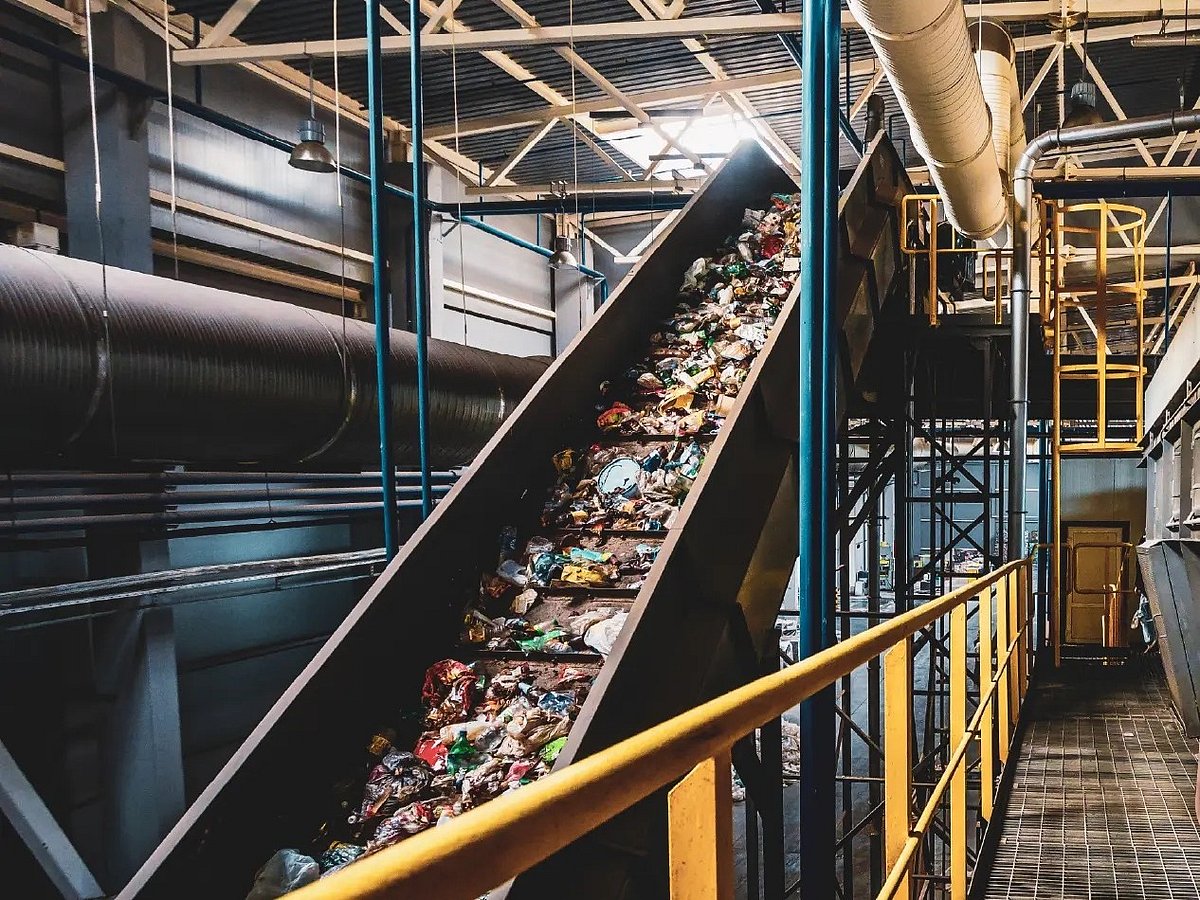
“The material recovery facilities we are developing in Abu Dhabi and Al Ain will use advanced mechanical sorting, sensors and optical sorting technologies. Each facility will have an annual processing capacity of up to 400,000 tonnes.
“For residual waste that cannot be recycled, Abu Dhabi’s first waste-to-energy plant will process up to 900,000 tonnes annually, with a proven electricity generation capacity of 80 megawatts.
“Together, these investments will strengthen Abu Dhabi’s ability to recover valuable resources and support our ambition to divert 80 per cent of municipal solid waste away from landfills by 2031.”
Asked how Tadweer is using artificial intelligence, automation, robotics and data analytics to improve waste management efficiency and reduce operating costs, Etienne Petit said:
“We are investing in artificial intelligence, automation and data analytics to enhance operational efficiency, increase resource recovery rates and create sustainable long-term value.
“Our new facilities will use advanced sorting technologies to recover greater quantities of materials with higher levels of accuracy. Data analytics will also help optimise collection planning and asset utilisation, while robotics will provide opportunities to reduce hazardous manual handling operations.”
On the most promising waste streams in Abu Dhabi that can be transformed into new products, energy or other forms of economic value, the Tadweer CEO said the group’s priority is to make resource recovery commercially viable at scale.
“Our priority is to make resource recovery viable at scale. This means producing materials suitable for industrial use, strengthening local supply chains and reducing reliance on landfills.
“Preventing food waste remains the highest priority. Unavoidable food and green waste can be converted into compost and other useful products, while non-recyclable residual waste can be used to generate electricity."
“Metals, paper, cardboard and certain types of plastics can provide manufacturers with secondary raw materials. Construction and demolition waste can be processed into recycled aggregates and other materials, while electronic waste contains valuable metals that can be recovered.” He said.
Asked about Tadweer Group’s targets for increasing recycling and resource recovery over the next five years, Chief Executive Officer of Tadweer Group
said:
“Our ambition is to divert 80 per cent of municipal solid waste in Abu Dhabi away from landfills by 2031.
“We are aligning our infrastructure investments with this ambition. The material recovery facilities in Abu Dhabi and Al Ain, together with Abu Dhabi’s first waste-to-energy plant, will significantly expand our resource recovery capabilities.
“These investments support a long-term objective of retaining value from materials within the local economy and reducing Abu Dhabi’s reliance on landfills.”
Network Links
GN StoreDownload our app
© Al Nisr Publishing LLC 2026. All rights reserved.