Ramesh Shrestha, founder President of Nepal Association and Middle East President of NRNA
‘More painful than social media’: Dubai-based Nepali expat recalls flood rescue
A business trip to Nepal turned into a humanitarian mission for flood-hit families
Last updated:
5 MIN READ
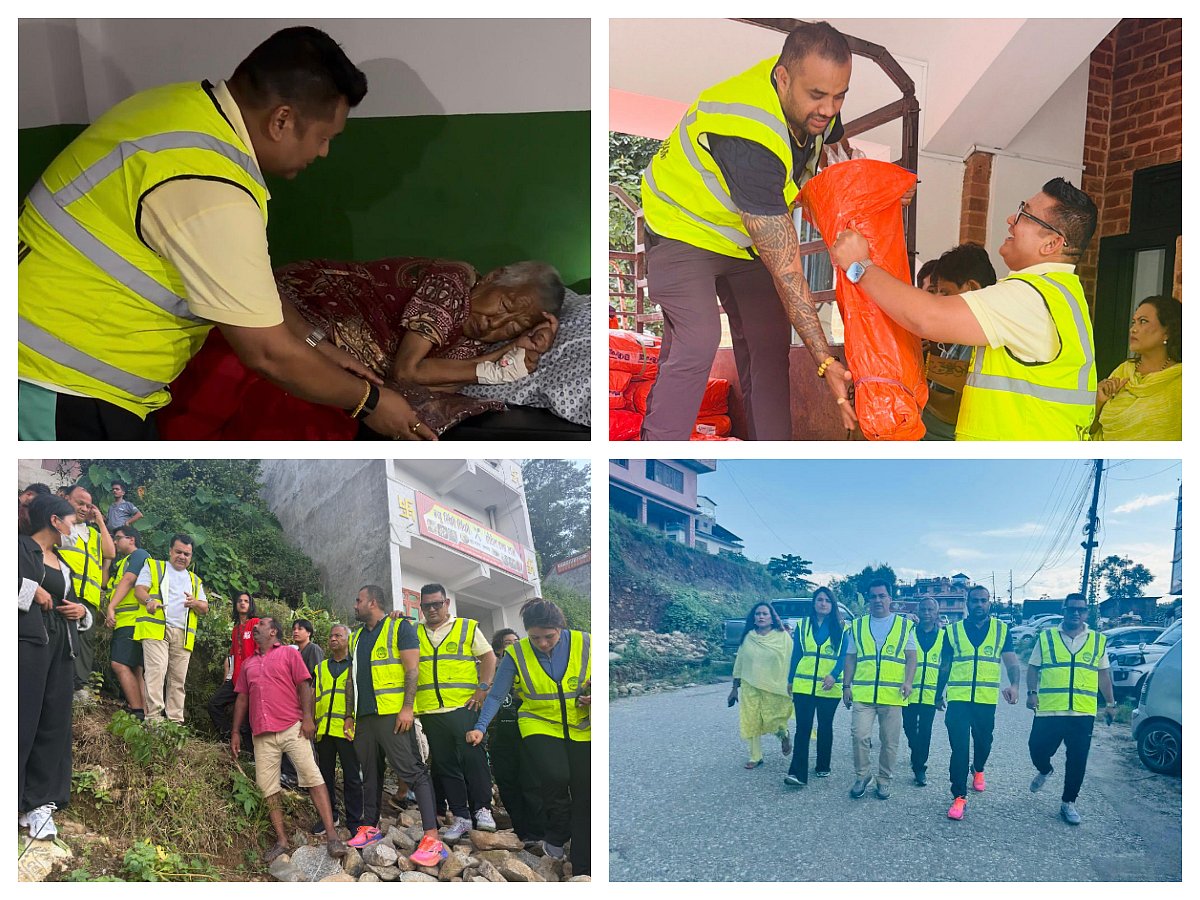
Ramesh Shrestha shares his humanitarian mission, together with a dedicated team of approximately 35 to 40 members, to flood-affected areas in Nepal
Supplied
Dubai: The first images Ramesh Shrestha saw of the floods in Nepal came through social media and messages from friends. They were frightening. But when the 46-year-old Dubai-based Nepali later travelled into the flood-affected areas himself, he realised that no video could fully capture what had happened. (Have you been affected by the floods in Nepal? Write to us here and tell us your story.)
“What we witnessed there was far more painful and heartbreaking than anything we had seen in videos or on social media. The real situation on the ground was truly devastating and difficult to describe in words,” Shrestha told Gulf News.
The Nepali expatriate, who has lived in Dubai for 18 years and works in business outsourcing, was in Nepal on business when the floods struck the Trishuli and Rasuwa regions on August 26.
His home area in Bheerkhot Municipality-8, Syangja District, in Gandaki Province, was not affected, and his family was safe. But the news has left him anxious.
“I felt very bad and nervous to know about the devastating floods.”
Shrestha family
Get updated faster and for FREE: Download the Gulf News app now - simply click here.
Emergency meeting
That evening, the Non-Resident Nepali Association (NRNA) held an emergency meeting at its head office in Kathmandu. The plan has been to leave for the affected areas the following morning.
At 10am on August 27, the team has set off with three trucks loaded with relief supplies. Around three hours later, they reached Trishuli in Nuwakot. Shrestha has spent the two days travelling through communities affected by the flooding along the Trishuli River.
He has been part of a humanitarian team of about 35 to 40 people, comprising NRNA leaders, former presidents, the current president, office bearers, members, and others from the wider Nepali community.
NRNA and volunteers
The journey has not been simply about delivering supplies. In places, reaching people itself has been a challenge.
“The situation was extremely serious. The floods had destroyed roads and blocked transportation routes, making rescue and relief operations extremely difficult. In some areas, rescue operations were still continuing, while in other places, there were still missing persons and bodies that had not yet been recovered,” described Shrestha.
‘The real situation was devastating’
The team has carried tents, mattresses, and food supplies. A medical team also travelled with them, bringing essential medicines.
Relief assistance has been distributed to approximately 300 affected families, while another 300 families have been relocated to the safety of Nepal Army barracks.
“Many flood victims were taken to a safer location near an ayurvedic hospital and school. However, there was no electricity, and internet and communication services were very limited. These challenges made the situation even more difficult for both the affected families and the rescue teams,” revealed Shrestha.
Ramesh Shrestha (right) helping unload relief goods
For him, it has been the human suffering that stayed with him most.
“After personally visiting the flood-affected areas and being involved in helping the victims, I realised that disasters are not just about damaged houses, roads, and property, they are about people’s lives, families, and dreams being destroyed within a very short time.”
He added, “Seeing the pain and helplessness of the people with my own eyes was a deeply emotional experience for me.”
Lesson beyond relief
Moreover, the experience has left Shrestha thinking about what should happen before the next disaster.
According to him, relief after a catastrophe is vital but preparation before one strikes is even more important.
“We need stronger early-warning systems, better evacuation plans, trained emergency teams, and essential food, medicine, and shelter ready for immediate use,” explained Shrestha.
Around 300 families were safely relocated and taken to the Nepal Army barracks for shelter and protection
He has stressed that communities should not have to wait for help when their lives are already in danger.
“When a disaster happens, every minute matters. We must learn from these experiences and work together, government, communities, organisations, and individuals, so that in the future we can protect more lives and reduce the suffering of innocent families.”
Nepali community keeps helping
The relief effort did not end with the two days Shrestha has spent in the affected areas. Nepalis and Nepali community organisations have continued supporting affected communities.
“We remain committed to supporting the affected communities and standing with them during this extremely difficult time,” exclaimed Shrestha.
He has personally contributed NPR 511,111 (around Dh12,364) to the relief efforts.
Many flood victims were taken to a safer location near an ayurvedic hospital and school
Additionally, Shrestha has expressed his gratitude to the UAE government for its support to Nepal during the “difficult and heartbreaking” time.
“I would like to sincerely thank the government and people of the UAE for their generous humanitarian support, friendship, and solidarity with the people of Nepal.”
‘Humanity, unity, and compassion’
For Shrestha, the journey into the flood-hit areas has changed the way he sees disasters.
Being there has brought a different reality. He has returned from the mission learning that preparedness can save lives and communities must be ready before disaster strikes.
“In times like these, humanity, unity, and compassion are our greatest strengths. Together, we stand with the flood-affected people of Nepal,” said Shrestha.
Network Links
GN StoreAbout Gulf NewsTerms & ConditionsReach by GNSitemapContact usPrivacy PolicyGN FocusHave your sayWork with usAdvertise with usGulf News epaperPrinting Services
Download our app
© Al Nisr Publishing LLC 2026. All rights reserved.