Mohammed bin Rashid sets out seven rules for life in Dubai
New letter addresses Dubai’s citizens, residents, visitors and everyone who loves the city
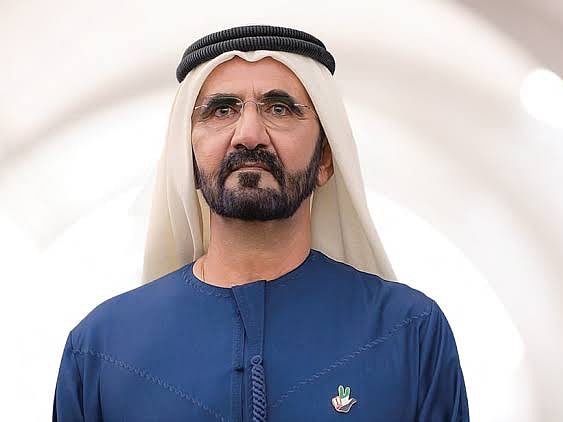
Dubai: His Highness Sheikh Mohammed bin Rashid Al Maktoum, Vice President and Prime Minister of the UAE and Ruler of Dubai, has set out seven principles for life in Dubai, calling on everyone who lives in, visits or feels an attachment to the city to help preserve the values that have shaped its development.
The message, titled “A Letter to the Dubai Community”, is the latest in a series of reflections from Sheikh Mohammed’s recently launched book, The Letters, the second part of Lessons from Life.
Get updated faster and for FREE: Download the Gulf News app now - simply click here.
The book contains 26 letters addressed to his family, his team, UAE citizens and readers around the world, drawing on nearly six decades of public service.
In a post introducing the letter, Sheikh Mohammed said Dubai had built “a beautiful city, a harmonious society and an example for the world”.
“Dubai is a home for the world, a home for people and a home for life,” he wrote, describing the city as a human experience that he wanted to remain enduring and inspiring.
The letter is addressed to the people of Dubai, those who have made the city their home, its visitors and those who love it.
“Everyone who lives here feels that they are at home,” Sheikh Mohammed wrote.
He said the purpose of setting down the seven principles was to ensure that Dubai remained an inspiration, preserved what made it exceptional and continued to offer people an outstanding place to live.
1. Life is responsibility and responsibility gives life meaning
Sheikh Mohammed’s first rule places personal responsibility at the heart of the city’s continued success.
The stature Dubai seeks to preserve, he wrote, comes with a price: responsibility, beginning with every individual.
That means an employee taking responsibility for their duties, a leader for their team, a father for his family and an individual for their city. It also means a person standing by their word, a merchant acting with integrity, a teacher taking responsibility for their pupils and a doctor for those in their care.
Responsibility, he wrote, also runs between generations, from older people towards the young and from the young towards their elders.
Above all, government bears responsibility for every person: for their wellbeing, security, rights and happiness.
“We are all responsible, and always will be,” he wrote, invoking the principle that everyone is entrusted with something and accountable for that trust.
When every individual carries that responsibility properly, he said, society can live with dignity and balance.
2. Respect recognises the value of every person
The second rule centres on human dignity.
The foundation, spirit and essence of civilisation, Sheikh Mohammed wrote, is respect for people, their faith, values, culture, time, feelings and lives.
The highest form of coexistence begins with seeing every person simply as another human being, entitled to their own identity, dignity and rights.
That principle extends to everyone: women should be respected and valued, older people honoured, workers appreciated and those who hold different opinions treated fairly.
Sheikh Mohammed said his experience had taught him that an exemplary city should not be judged by its buildings or physical development, but by the respect it affords human dignity.
3. Excellence is the finest message we can send the world
The third principle is Itqan, a deeply rooted Arabic concept of doing something with precision, care and mastery.
Excellence, Sheikh Mohammed wrote, is visible through accumulation: in the beauty and cleanliness of a city, its parks and facilities, its buildings, the quality of its services and experiences, and ultimately in the people who live there.
The world will form its view of Dubai through the quality of work it encounters, from employees at its airports and workers on its roads to engineers responsible for its infrastructure and companies delivering services.
“Excellence is the finest message we can offer the world,” he wrote.
It earns respect, he said, and demands a person’s full presence in every task, role and responsibility.
“To pursue excellence is to put something of ourselves into our work.”
Sheikh Mohammed stressed that excellence is a daily, cumulative process rooted in attention to detail. Small acts of quality, repeated over time, can build strength and civilisation, just as millions of drops form a river.
The opposite is also true: small instances of disorder can accumulate until they begin to erode achievements already made.
Dubai is therefore more than a place. It is a culture carried within its people and a spirit that runs through the city, visible in how people work, the quality of what they produce and the belief that every small task done well is another brick in the building of civilisation.
4. Humility elevates us
“We rise through humility,” Sheikh Mohammed wrote in his fourth rule.
Humility towards other people raises a person in their eyes. Humility in the face of achievement encourages greater ambition; humility before knowledge deepens the desire to learn; and humility before the truth restores balance and strengthens justice.
Humility is a form of greatness and civilisation, and a means of freeing people from ego and arrogance, which can eat away at the foundations of nations.
Dubai understands both its present position and the modest circumstances from which it began.
“We began with nothing, and God blessed us,” he wrote.
That history should reinforce an awareness that much remains unknown, learning must never stop and the journey ahead remains long.
For all that has been achieved, Dubai should regard itself as still near the beginning.
5. Optimism is our way of life
The fifth rule is optimism, not simply as an outlook, but as a way of approaching work and the future.
“We believe that what lies ahead will be more beautiful and our future will be better, because we never stop working and we never stop hoping,” Sheikh Mohammed wrote.
Every challenge can contain an opportunity, while every crisis can become a test of creativity, an opportunity to sharpen skills and a way to renew energy.
Young people are a source of optimism because of their energy. The experiences of others offer lessons. And the future, while bringing major changes, also carries enormous opportunities.
Sheikh Mohammed repeated a principle long associated with his approach: that impossibility is ultimately a point of view.
Experience has shown that determination and belief can overcome what once appeared impossible.
Optimism also means being able to imagine an achievement before it exists, to see its details, its beauty and its impact and then work towards making that vision real.
Dubai’s community is optimistic by nature: confident in its abilities, believing in itself and unwilling to stop, hesitate or simply wait.
6. Doing good is both our path and our way
The sixth rule focuses on kindness, generosity and service to others.
Sheikh Mohammed said Dubai is a community that values doing good, helping others and supporting friends, neighbours and those in need.
Doing good brings happiness. Helping others is a virtue, while meeting people’s needs carries blessing and mercy.
The blessings the community has received bring with them a responsibility to become “a bridge for good, a river that gives people water and a source of hope”.
But generosity should not be reduced to occasional charitable donations.
A kind word is an act of goodness. So is a smile, removing something harmful from a road, helping someone who is lost or encouraging a young person.
Life is filled with opportunities to do good, while societies that lose the meaning of goodness risk losing part of the meaning of life itself.
7. A country that embraces us deserves our loyalty
The final rule is loyalty to the country that provides people with safety and belonging.
A nation that embraces and protects its people deserves their loyalty and sacrifice.
Loyalty means respecting its constitution and laws, safeguarding its achievements, honouring its flag and living by values that include sincerity, justice, truthfulness, integrity, respect, excellence and responsibility.
A country is not merely geography or a collection of symbols.
“It is a heart beating within us and a spirit running through us.”
It is expressed through the values people live by and the sacrifices they make to protect its security, institutions, achievements, reputation and standing.
Life had taught me that serving one’s country was among the highest responsibilities a person could undertake.
There is nothing stronger than a people who love their country, believe in it and live for it.
‘Society is built on meaning, not buildings’
Sheikh Mohammed closed his letter by returning to the idea underpinning all seven rules.
Experience, he wrote, had taught him that the life of a society rests not on its physical structures, but on the meaning behind them.
Constructing buildings and designing cities is not the real miracle.
“The true miracle is building a society founded on great meanings, principles and values.”
The Letters was launched by Sheikh Mohammed on September 6. Its Arabic edition went on sale in major UAE bookstores on October 1, while an English edition is scheduled for October 15.
Network Links
GN StoreDownload our app
© Al Nisr Publishing LLC 2026. All rights reserved.