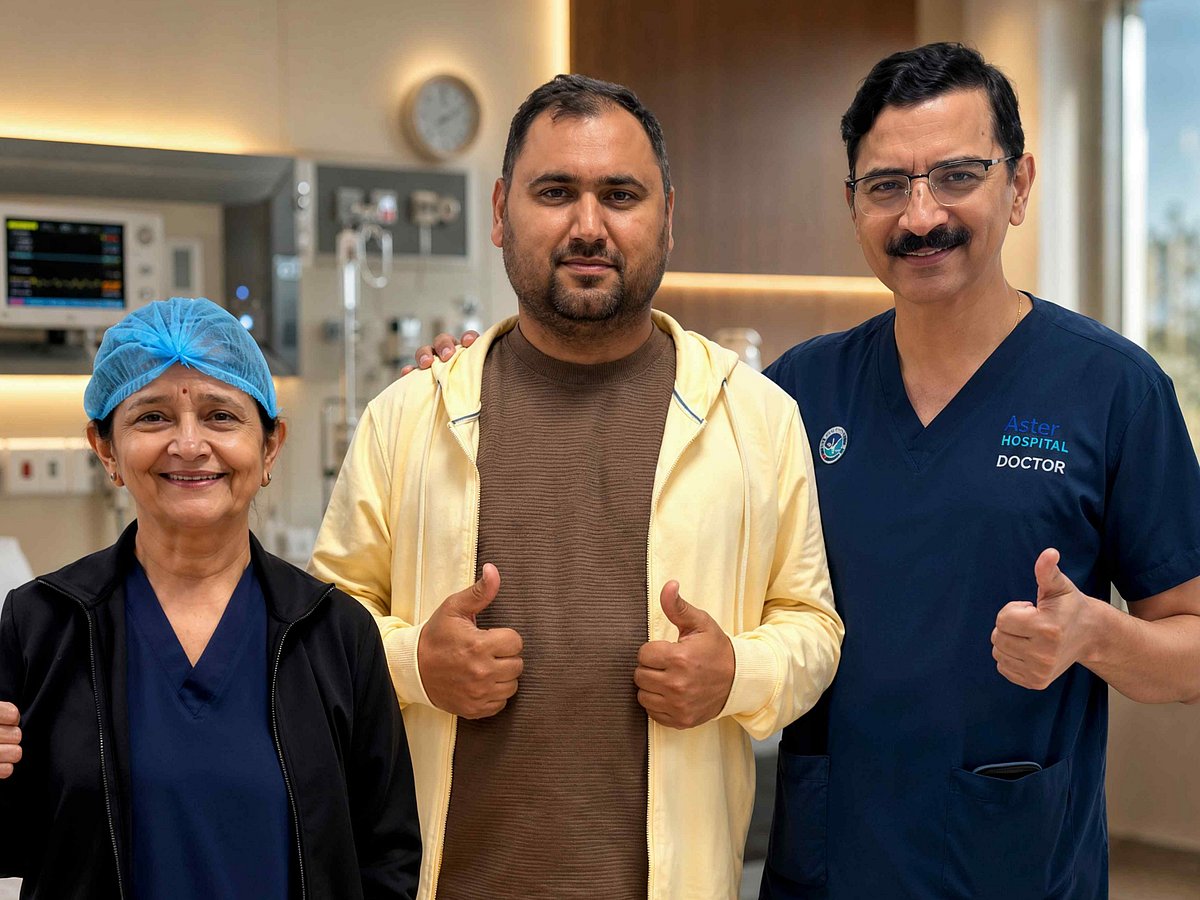
Aster Hospital, Al Qusais has successfully treated a 32-year-old man suffering from a severely narrowed heart valve caused by rheumatic disease (rheumatic mitral stenosis) using a highly specialised and innovative surgical approach known as the “Ship Technique.”
This case highlights how timely diagnosis and specialised treatment can lead to excellent outcomes, even in complex heart conditions. The case is particularly relevant for patients with valvular heart disease, families seeking advanced cardiac care, and the wider community, especially when families are apprehensive about valve replacement surgeries and their associated drawbacks.
Get updated faster and for FREE: Download the Gulf News app now - simply click here.
The patient, Ijaz Mehmood Rana Mehmood, a Pakistani father of two residing in Dubai, had a history of rheumatic valve disease along with a history of stroke. He was admitted to Aster Hospital, Al Qusais for heart valve repair after his symptoms, such as shortness of breath and fatigue, became worse. The stroke in this patient was a consequence of his worsening heart valve condition, which caused clot formation in his heart leading to his neurological symptoms. This patient was advised valve replacement with mechanical valve at another facility.
Patients with advanced rheumatic heart valve disease often experience severe shortness of breath and fatigue due to long-term damage to the heart valve and surrounding heart structures.
Rheumatic heart disease continues to be a significant health concern across the Middle East and North Africa (MENA) region, affecting nearly 4 in 1,000 people.1 Early diagnosis and access to specialised care remain critical in managing such complex cardiac conditions effectively.
Dr Shipra Shrivastava, Consultant Cardiology & Thoracic Surgery at Aster Hospital, Al Qusais, performed a mitral valve repair surgery using the innovative “Ship Technique,” which offers excellent results in complicated mitral valve disease. This technique repairs key parts of the heart valve that are often overlooked in conventional valve repair surgeries, allowing the valve to function more like a healthy, natural valve and improving its long-term durability.
The patients post operative recovery was uneventful. He was discharged in stable condition with follow-up guidance.
The case was managed using a multidisciplinary approach involving teams from cardiothoracic surgery, cardiology, and neurology. The team included Dr Shipra Srivastava, Dr Sandeep Srivastava, Dr. Jaffar Vali Sayyed (Neurology) and Dr Anil Prahalada Rao Kumar (Cardiology), ensuring comprehensive perioperative care and enhanced patient safety.
Commenting on the case, Dr Sandeep Shrivastava, Consultant Cardiothoracic Surgeon at Aster Hospital, Al Qusais, said: “Rheumatic mitral valve disease can be particularly aggressive, especially in the Asian population, and often affects younger individuals. Timely intervention and the right surgical strategy are crucial. In this case, we were able to repair the valve and restore its function effectively. This helped the patient avoid long-term complications associated with valve replacement and lifelong blood-thinning medication.”
Dr Shipra Shrivastava, Consultant Cardiothoracic Surgeon at Aster Hospital, Al Qusais, who performed the specialised repair technique, added: “The ‘Ship Technique’ allows us to address the full complexity of rheumatic valve damage by reconstructing the commissures, which are essential for normal valve movement. Besides conventional repair, the Ship technique of commissural augmentation method restores the natural dynamics of the mitral valve. It offers durable results and significantly improves quality of life. This approach also helps patients avoid complications associated with blood-thinning treatment, such as stroke or bleeding, while preserving their native valve.”
Expressing his appreciation, Rana Mehmood said, “I am extremely grateful to the doctors and the entire medical team at Aster Hospital, Al Qusais for their care and support throughout my treatment. From diagnosis to surgery and recovery, everything was handled with professionalism and compassion. Today, I feel much better and have returned to my normal life without any symptoms.”
The patient recovered fully after Mitral valve repair surgery, and returned to his normal activities. Follow-up tests revealed normal heart valve function.
Sign up for the Daily Briefing
Get the latest news and updates straight to your inbox
Network Links
GN StoreDownload our app
© Al Nisr Publishing LLC 2026. All rights reserved.